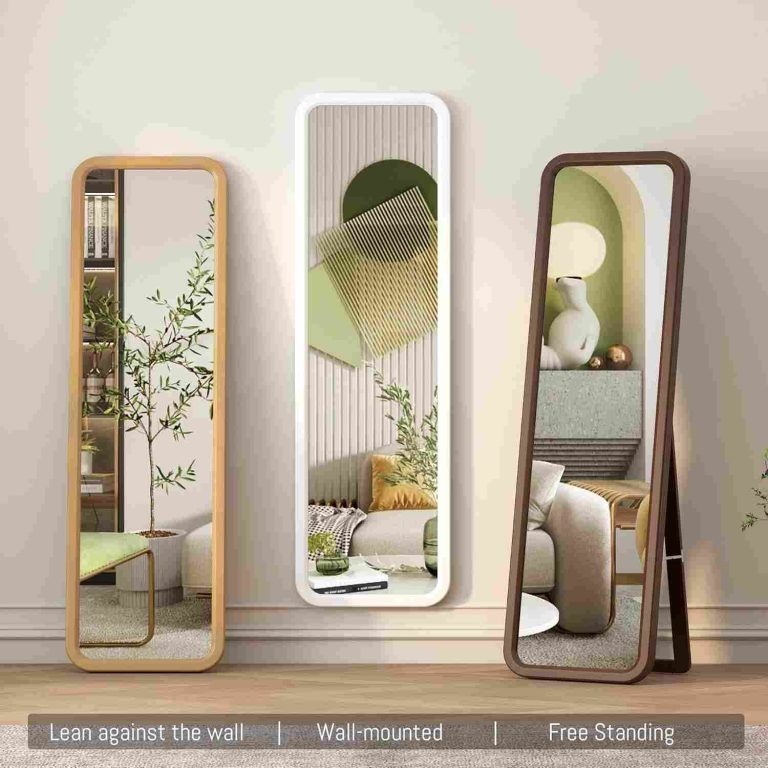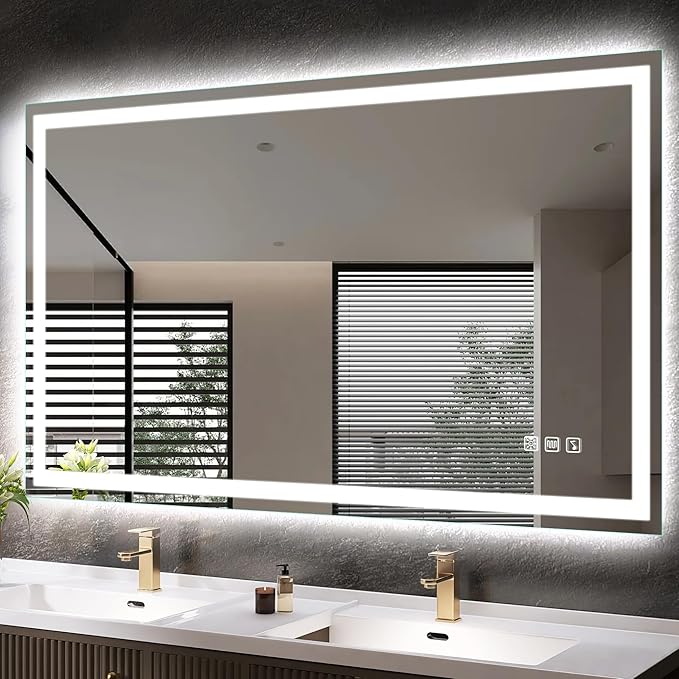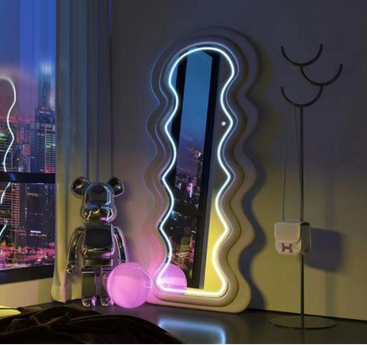
A floor-standing sample leaves one buying question unanswered: how will it hang? Before we discuss the frame colour, your team needs to know whether the proposed room calls for a dressing view, a horizontal reflection over furniture or a decorative outline. For wholesale buyers, modern wall mirror design comes down to matching a shape with a real room and a clearly specified product. Here is how we approach that choice at Kingwin Decor.
What gives a mirror a modern character?
A rectangle belongs in a contemporary collection too. With a plain finish, its straight edge follows the lines already present in a cabinet or doorway. Scallops do the opposite visually: the repeated curves pull your attention towards the perimeter, even before you notice the reflection. We would treat those as different display roles when discussing your range, rather than ask which outline is more modern.
Our range includes rounded corners, long rectangles and wavy frames. An outline gives us a design direction, but no sales forecast. You can compare that direction fairly in a simple display: keep the furniture and wall finish in place, then change the mirror. A different sofa, paint colour and lamp would make the comparison much harder to read.
Finish changes the same silhouette again. Against pale paint, a black edge is easy to pick out; a wood tone gives you grain and colour to consider alongside the outline. We separate the finish name from the frame material in that discussion. For example, ‘walnut colour’ tells you the intended appearance, without identifying the timber underneath.
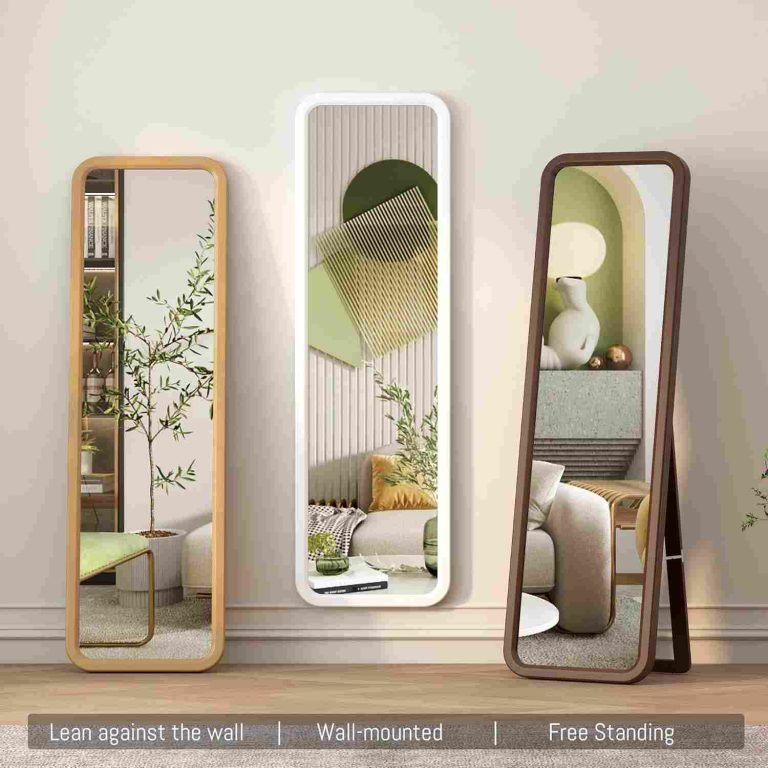
Rounded corners for a quieter full-length shape
A long mirror can serve a dressing area without becoming the room’s most decorative object. Our rounded-corner dressing design is one example for a large wall mirror assortment. At 56 × 16 inches, this design offers a tall, narrow format. Floor-standing, leaning and wall-hanging arrangements are available for the design.
The mounting configuration needs attention when you specify the order. A photograph of the mirror on its stand doesn’t tell your team which fittings will arrive for wall use. Match the selected version to its installation instructions, especially if your product listing will offer several ways to position it.
The narrow format also affects merchandising. For a dressing-room display, keep that tall format visible in the photograph. A cropped close-up of the corner won’t explain how the full mirror sits beside a wardrobe. Include the whole outline and enough of the room to show its intended position.
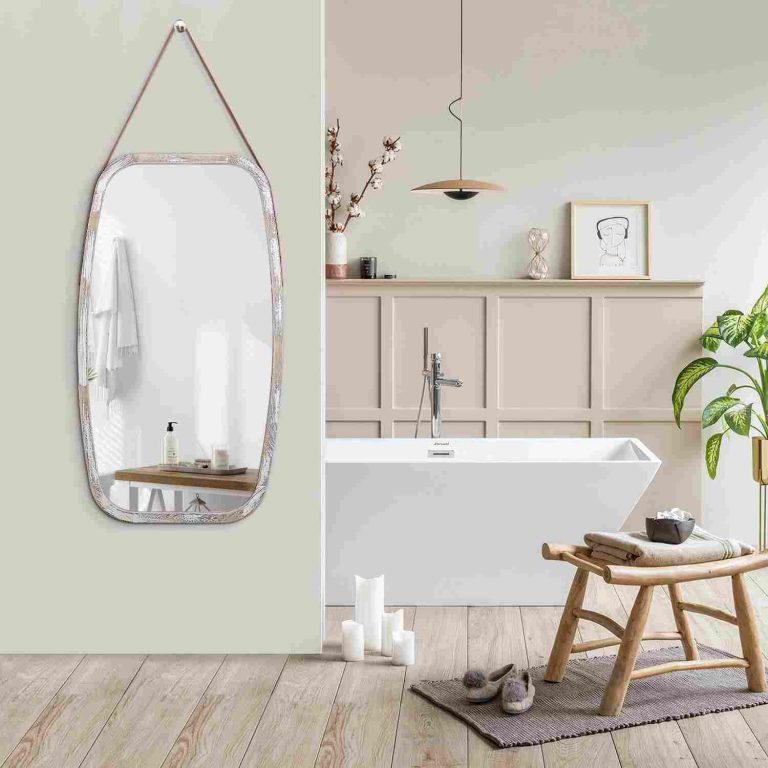
A rectangle that can change orientation
A shorter rectangle gives your collection another room role. Our 30 × 17-inch hanging design can be presented vertically or horizontally, making the rectangular wall mirror a useful option when your range needs something other than a tall dressing mirror.
Orientation changes the outline without changing the product’s dimensions. Turn the rectangle horizontally and the long edge runs with a console or cabinet. Turn it vertically and the same outline suits a narrower wall composition. Neither position establishes a universal sizing rule for furniture beneath it.
Frame dimensions and reflective dimensions deserve separate fields in your specification. Take our separate WM3518 wood-framed model: its outside measurement is 400 × 1,600 mm, with 370 × 1,570 mm of mirror. We specify both measurements because the frame occupies some of the visible outline. Keep these WM3518 figures separate from the 30 × 17-inch hanging design when comparing your options.
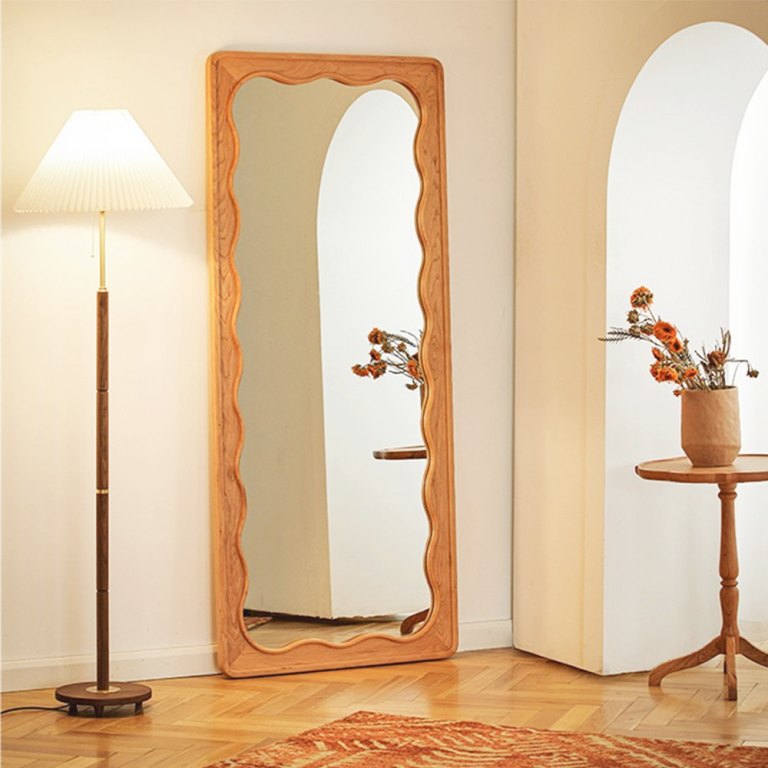
Wavy frames when the edge is the feature
A scalloped outline needs room around it. We offer the engineered-wood wavy design at 165 × 80 cm or 180 × 90 cm, for floor or wall placement. For a modern wall mirror display, that undulating edge can be the main decorative feature.
Moving to 180 × 90 cm adds 15 cm vertically and 10 cm across the outline. In a proposed display beside a doorway, those extra centimetres use up part of the remaining wall. Mark out the outer dimensions first. Then check the gap to the door trim and any lamp before committing to the larger size for that setting.
An engineered-wood frame also needs accurate naming. For this wavy design, we describe the construction as engineered wood. Your product copy can describe the wood-like appearance too, provided the material field still names the construction correctly.
How we connect the design to inspection
Inspection should follow the chosen construction and mounting arrangement. Our factory has equipment for suspension, load-bearing, adhesive-firmness and drop testing, among other checks. Our inspection process includes checks during production, a check of every unit before packing, and final inspection. The equipment list describes what our factory can check. To establish a result for your selected design, we need its own test schedule and report.
|
Question raised by the design |
Relevant check |
What still needs definition |
|---|---|---|
|
Will the hanging assembly hold as intended? |
Suspension or load-bearing test |
Assembly, load and acceptance criteria |
|
Will bonded parts remain attached? |
Adhesive-firmness test |
Bonded materials and test conditions |
|
Will the packed mirror withstand the agreed handling test? |
Drop test |
Pack configuration, drop conditions and result |
A test name alone leaves too much open. The report needs to identify the actual mirror and configuration. A drop result for one carton arrangement doesn’t describe a different pack, just as a suspension check doesn’t approve every wall fixing or wall substrate.
Build the collection around a clear room role
Give the rounded-corner design its dressing-room setting, consider the shorter rectangle where orientation matters, and leave enough wall around the scallops to show the edge. With those placements settled, we can discuss construction, inspection and packing for the actual versions your team wants to carry. That gives your sales team something more useful than a fashionable shape name.
Share your intended room setting and preferred frame finish with our team to discuss a suitable Kingwin Decor sample and the checks needed for that configuration.
FAQ
Does a modern mirror have to be frameless?
No. We include framed designs in our contemporary range. A plain rectangle and an undulating frame create different outlines, so compare each against the furniture in your intended setting.
Can we specify our own logo?
Yes. We can discuss custom text or a logo when you send your artwork. The quotation depends on the design for the mirror you’ve chosen.
Is a floor mirror automatically ready to hang?
No. Confirm wall use for the exact version and obtain its fitting instructions. A stand in the product photograph doesn’t establish the supplied wall hardware.
Can we request a sample before the order?
Yes. We charge for the sample and its freight. After you place an order, we return the sample fee; check the details for the design you’re considering.
Does a frame finish determine its material?
No. We list colour separately from construction. A wood-like finish may sit over engineered wood, so use the material description when comparing it with a solid-timber frame.