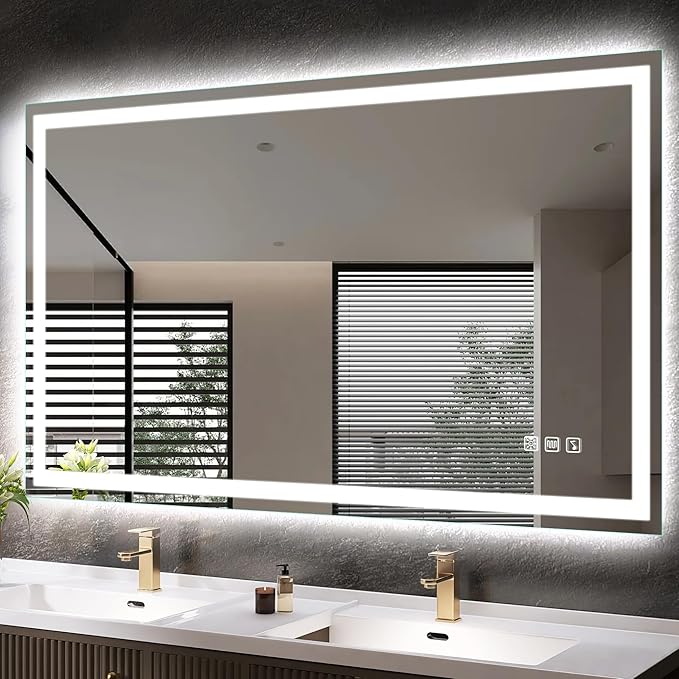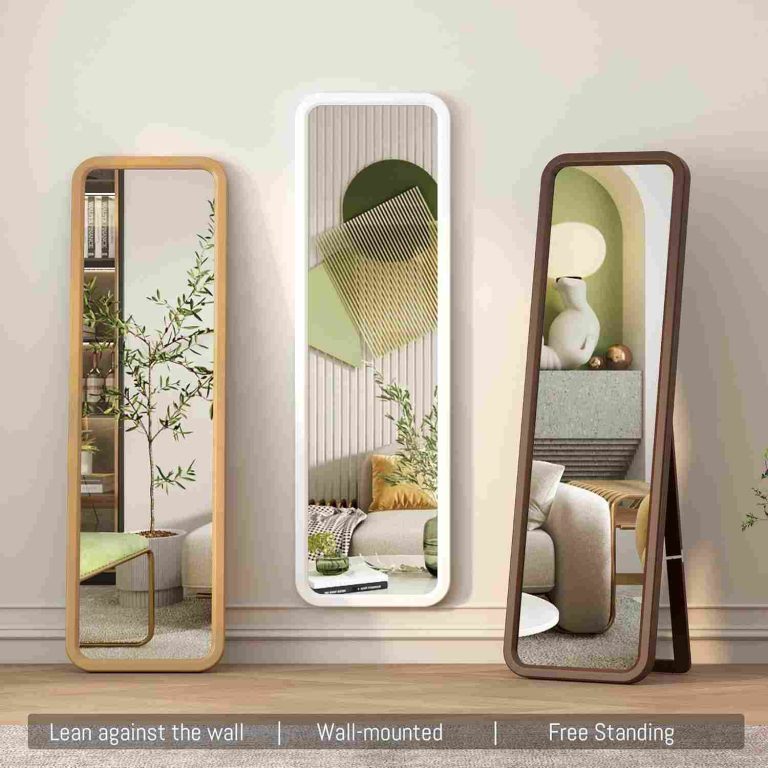
How much wall space have you actually allowed for the wood frame mirror? Start there. Save the finish discussion until you know the outline and dimensions. We need those details to understand what your fixture can accommodate; the photograph is only showing you an appearance. Then make the material and finish choices explicit in the quote.
Three shapes, three starting points
Kingwin offers full-length, round, and arch formats. Their size and frame-material options are below. Circle the options that suit your display and include those choices in your enquiry to us.
|
Kingwin model |
Listed dimensions |
Frame materials shown |
Shape |
|---|---|---|---|
|
Rounded-corner full-length mirror |
56 × 16 in; custom sizes |
Oak, pine, ash, plastic, paulownia |
Full length |
|
Handmade round wall mirror |
60 cm or 80 cm diameter; custom |
Oak, ash, birch, plywood, beech, pine |
Round |
|
Oak-frame arch wall mirror |
48 × 16 in or 55 × 23 in; custom |
Oak, pine, ash, plastic |
Arch |
These dimensions describe options; availability needs separate confirmation. An availability enquiry needs quantities against the model and size. For a mixed order, list all the codes you intend to buy and ask us to reply against each line. Keep that reply with the quotation, including its date, so your buyer can see when the information was confirmed.
Stock can change, and an old email can be mistaken for a current answer.
Don’t let one measurement do two jobs
On a wall drawing, the outside frame controls the footprint. The glass controls the reflective opening. Record both; label both. The full-length format of our mirror with wooden frame gives you a starting point for the display. For the drawing, ask us for the outer and glass measurements of the version being quoted.
Your request can give the frame and glass their own width and height fields. Write the unit against each, with orientation and mounting alongside. If the size needs to change, write the requested dimensions beside the published choice. “Custom” by itself doesn’t tell us the wall space you have.
Carton dimensions belong in another field. Is receiving working to a maximum carton size? Give us that limit with the enquiry. Give packaging its own dimensional check. Your drawing shows the mirror on the wall, whereas receiving has to handle the packed item, with whatever space the carton requires.
Read the unit before copying a size: the full-length dimensions use inches, and the round dimensions use centimetres. Copy the published unit with the number. If your team adds a conversion for planning, keep both values and label the converted column. That way a rounded conversion doesn’t quietly become an order dimension.
Name the frame; name the look
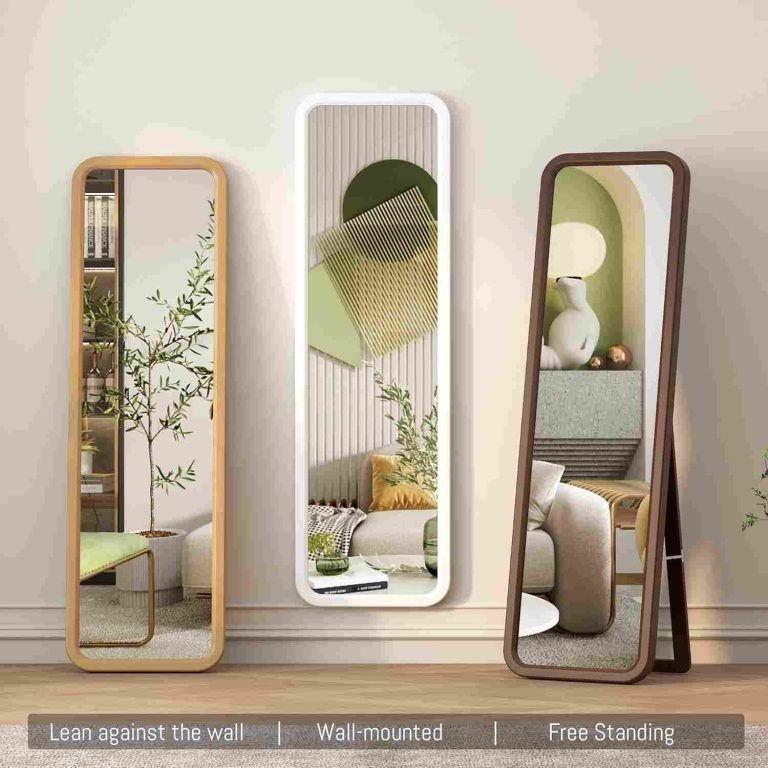
Paulownia is among the rounded-corner model’s frame options; birch, plywood, and beech are among the round model’s options. Confirm the size and material together, since the options are model-specific. An oak option alone does not establish that two models share a construction.
Take an enquiry for our Round Wall Mirror: you want the 80 cm diameter, with beech as the frame material. Put both choices on one quote line. That is the pairing we need to answer, before sample approval.
If that pairing isn’t available, tell us which requirement you can reconsider. Perhaps the display needs the diameter to stay fixed; perhaps beech is the part of the brief that matters. That decision belongs with your team before another version is proposed.
Finish is a separate conversation. Oak is a listed material. “Black” and “walnut” are examples of an appearance a buyer might request, subject to finish confirmation. Send a physical reference or sample for confirmation.
For mirrors displayed together, compare samples under similar lighting. Record the accepted finish reference by item code. A screen image is a shortlist tool, not a color standard.
Specify the arch mirror separately
The name Oak Frame Mirror needs the same check. The arch model also has pine, ash, and plastic among its frame options. Have the quote identify the material for your selected size, then carry that wording into your purchase description. Product names are helpful labels, but the chosen specification still needs to be written out.
This matters when building a wood framed mirror range with several price points. Compare prices against the actual request: 80 cm, beech. If another quote is for 60 cm with a different frame material, flag both changes in your sheet before comparing the amounts. Similar photographs can hide a different specification.
Put unanswered choices back to us as questions. For a collection, mark the pieces intended to hang together. We then know which models your finish-matching request covers. Have each proposed finish confirmed and bring the corresponding samples into the same review. A shared finish name alone is too little information for that decision.
Keep the sample tied to the order
Put one item code on the drawing, the sample label, and the quote. At approval, a code mismatch is a reason to go back to the documents. Read the quotation against the labeled sample.
On its record, separate the frame measurements from the glass opening; enter the chosen material and finish reference, then the orientation and agreed mounting and hardware. Add carton data if receiving needs it.
When a custom sample changes a listed size, show both figures: listed width and approved width. Leave the original value readable. A material or finish change needs to appear in the sample reference and sales description, as does a mounting change. Check that revision against the earlier approval instead of relying on a visual resemblance.
A mirror choice that survives the reorder
A suitable outline is only the first decision. The mirror that fits your display also needs an agreed frame material and finish, all tied to one approved version.
Open the approved record when the reorder quote arrives. Look for differences in the dimensions, frame choice, and finish reference. Send any discrepancy back to us and keep the reply with the order record before release. If the physical mirror will differ, review a new sample. That check is less work than sorting out why the replacement doesn’t match the display.
Frequently Asked Questions
Are the listed sizes confirmed as stock items?
Treat availability as unconfirmed until you receive an answer for the selected version. For that answer, your enquiry should identify the model plus the size and frame material you want to buy.
Which measurement belongs in the fixture drawing?
Show outside frame dimensions for the wall footprint and glass dimensions for the reflective opening. Keep units with both.
Can every listed material be ordered in every listed size?
Each size-and-material pairing needs confirmation. Put the requested size and material together in the quote so we can verify that version.
Does “oak frame” mean every arch mirror uses oak?
No. Pine, ash, and plastic are also frame options for the arch model. Have the quote name the material selected for your version.
What information should stay with an approved sample?
Keep the item code, outside and glass dimensions, material, finish reference, orientation, mounting, hardware, and relevant carton data with the sample. Add later changes to that version’s record.