A custom mirror collection often starts with a mood board, competitor reference, sketch, or request to modify an existing shape. That creative starting point is useful, but it does not yet tell a manufacturer what the brand expects to launch. Before development begins, the buyer needs to decide who the collection is for, how many distinct products are actually needed, which design features are essential to the brand, and which details can change during manufacturing discussions. Without those decisions, sampling can become a cycle of unrelated revisions rather than a controlled product-development process. For home décor brands, retailers, and private-label buyers, the strongest custom mirror projects usually begin with a commercial brief first and a technical drawing second.
What Should a Brand Define Before Asking a Manufacturer to Develop Custom Mirrors?
The first development document does not need to contain every factory detail, but it should explain the commercial purpose of the collection. A manufacturer can respond much more effectively when the target market and product role are clear.
This avoids treating customization as little more than changing a shape or finish.
Start With the Customer and Sales Channel
A custom mirror collection for an online home décor brand may require different product decisions from a hotel-focused program, furniture retailer, or boutique interior label.
The buyer should define the target customer, expected price position, primary sales channel, intended rooms or applications, and general design direction.
Those points influence later choices about size, frame material, finish, glass, and the degree of visual complexity that makes commercial sense.
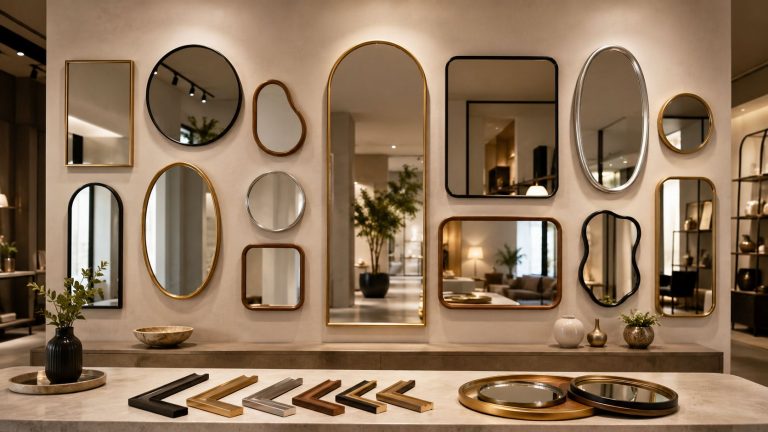
Brands can review the manufacturer’s mirror category to separate wall décor, bathroom, floor, and full-length mirror directions before deciding which category belongs in a new collection.
A Reference Image Is Not Yet a Product Specification
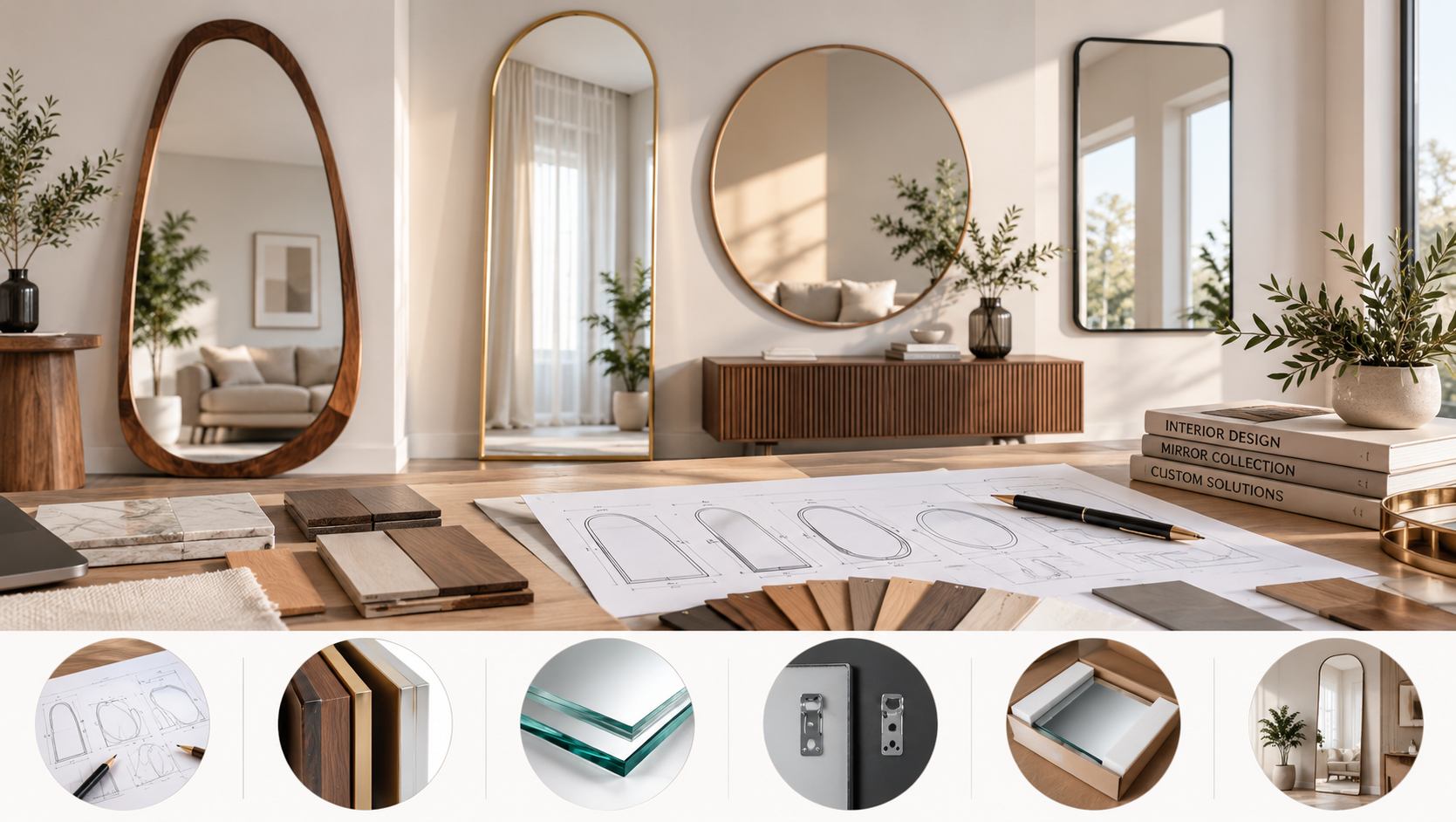
Reference images help communicate proportion and style, but they often leave construction unanswered. A photograph rarely confirms exact dimensions, glass thickness, rear structure, mounting method, finish standard, or packaging requirement.
The buyer should explain what must remain visually recognizable and what may be adapted during development.
This gives the manufacturer room to discuss feasibility without changing the design elements that define the collection.
How Many Designs Should a Custom Mirror Collection Start With?
Adding more designs can make a range look impressive on a presentation board, but it also multiplies samples, materials, approvals, forecasts, and inventory decisions.
For a first development, assortment discipline is often more valuable than sheer variety.
Each Design Should Have a Clear Role
Two mirrors that differ only slightly may compete for the same customer rather than broaden the collection. A stronger assortment gives each design a reason to exist.
One item might be a broadly commercial wall mirror, another a larger statement piece, while a third may target a different room or design style. The exact combination depends on the brand, but the internal logic should be visible.
Buyers can use the wall décor mirror category to review how shape, frame, and proportion create different visual positions without treating every variation as a separate product concept.
Development Complexity Should Be Considered Early
Every additional size, finish, frame material, or shape creates another combination that may need approval.
A brand planning three shapes in four finishes is no longer developing three commercial variants; operationally, it may be managing twelve.
That does not mean variety should be avoided. It means the range should be built deliberately so that customization supports the brand instead of producing unnecessary complexity.
Which Design Details Should Be Fixed Before Sampling Starts?
Some creative decisions can remain open during early discussion, while others should be fixed before the first serious sample is produced. The buyer needs to distinguish between design exploration and approval-stage development.
Doing so reduces revisions that come from changing the brief rather than correcting the product.
Size, Shape, Frame Direction, and Finish Need a Common Reference
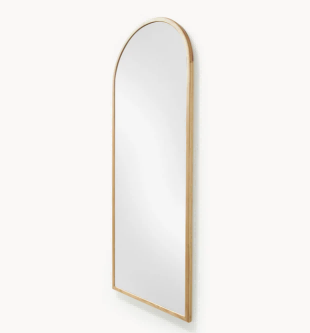
The manufacturer needs sufficiently clear dimensions and proportions to develop the construction. If the shape is irregular or asymmetric, a controlled drawing becomes more important than a verbal description.
Frame direction should also be defined. Wood, metal, MDF, or another construction can create a very different result even if the external shape remains similar.
Finish references deserve the same care. Terms such as “warm gold,” “natural wood,” or “matte black” can mean different things to different people. A physical reference, approved sample, or clearly controlled visual standard gives both sides a more useful target.
The company’s products collection can provide buyers with a broader view of existing construction directions before they finalize a custom brief.
Functional Requirements Should Be Separated From Styling Preferences
A mirror may need to hang vertically and horizontally, stand on the floor, fit a vanity width, or meet a particular project installation condition. These requirements should be stated separately from styling preferences.
That distinction matters when changes are proposed. A factory may be able to adjust a hidden structural detail without changing the visible design, while a seemingly small visual change may alter the identity of the collection.
Separating the two makes development conversations much clearer.
How Should Brands Evaluate Custom Mirror Samples?
A custom sample is not only a visual preview. It is the first opportunity to determine whether the design works as a product that can be manufactured repeatedly.
Evaluation should therefore combine design judgment with practical review.
Review the Sample From the Customer’s Point of View
The buyer should first look at what a customer will notice: overall proportion, reflection, frame appearance, finish consistency, visible joints, and whether the design feels appropriate for the intended price position.
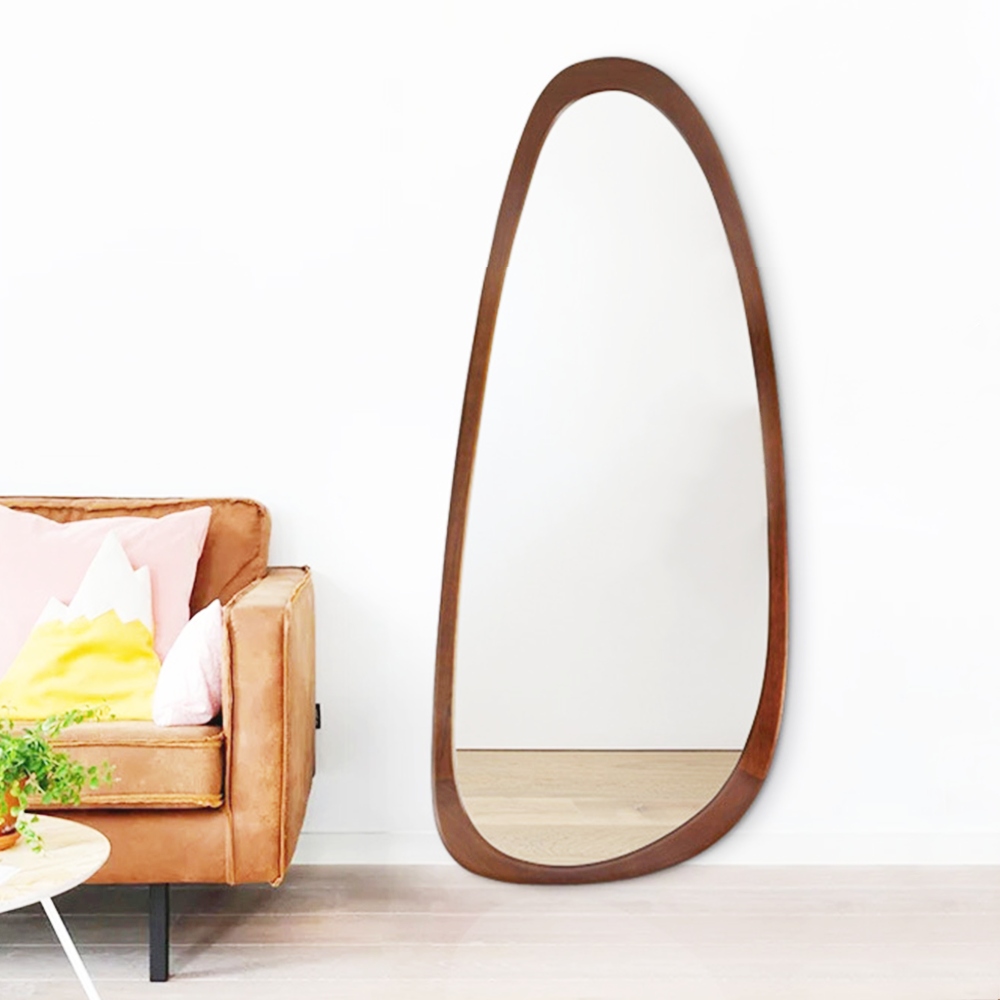
It helps to evaluate the sample in a relevant environment rather than only on a factory inspection table. A mirror intended for a living room, hotel room, or dressing area can look different once placed in a space with normal lighting and furniture scale.
Then Review What Must Remain Consistent in Production
After the visual decision, the buyer should identify which details become production controls. Dimensions, finish, frame construction, glass specification, mounting arrangement, visible workmanship, and other agreed points should be recorded.
Comments such as “make it more premium” are difficult to reproduce. “Match approved finish sample,” “keep opening dimension within agreed tolerance,” or “use approved frame profile” provide clearer production references.
If development questions remain unresolved, buyers can use the manufacturer’s contact page to clarify capabilities before approving the final version.
What Should Be Agreed Before a Custom Collection Moves Into Bulk Production?
A successful sample does not automatically make a collection ready for production. Before the purchase order is released, the brand needs one final version of the product record and a clear understanding of which approved details cannot change without review.
This is particularly important when several customized designs are being launched together.
Final Approval Should Close the Open Decisions
The final file should identify dimensions, materials, glass, finish, installation format, packaging requirements where relevant, and the version of the physical sample being approved.
If multiple finishes or sizes are included, the buyer should confirm whether every version has been sampled or whether some are being approved from controlled references.
The aim is to prevent development decisions from remaining hidden in scattered email threads.
Repeatability Matters More Than a Perfect One-Off Sample
A beautiful sample has limited commercial value if the factory cannot reproduce its essential characteristics consistently.
For this reason, brands should ask themselves a simple question before release: which features must look the same across the whole order for customers to perceive the collection as consistent?
Those features become the most useful inspection points.
The same record also supports future replenishment. When a collection performs well, the brand should be able to reorder it without starting development from the beginning or trying to remember which version was finally approved.
Professional Technical Support
Custom mirror development usually works best when design intent and production requirements are discussed together rather than one after the other. Qingdao Yinlongfei Handicraft Co., Ltd. works with overseas buyers on OEM and ODM mirror projects involving customized shapes, sizes, frame directions, finishes, sampling, and production preparation. Brands looking for a concrete visual reference during early design discussions can review the Manufacture Irregular Decorative Wood Floor Mirror page. A custom project should still be developed from the buyer’s own market brief and approved specification so the finished collection reflects the intended customer, price position, and brand identity rather than simply reproducing an existing catalogue item.
Conclusion
Developing a custom mirror collection requires more than sending a design reference to a factory. Brands need to define the customer, sales channel, assortment role, design priorities, and approval process before technical development becomes efficient. A smaller group of well-positioned designs can often create a clearer collection than a large set of minor variations. Once the chosen concepts move into sampling, the buyer should convert visual preferences into controlled specifications that can be reproduced. That approach keeps customization connected to commercial strategy instead of turning it into an open-ended series of sample revisions.
FAQs
1. What Information Should a Brand Send Before Requesting a Custom Mirror Sample?
Provide the intended market, target customer, approximate dimensions, shape, frame direction, finish references, installation format, sales channel, and any design features that must remain unchanged.
2. Does Every Custom Mirror Design Need Its Own Sample?
Not always, but meaningful changes in shape, construction, materials, finish, or installation may justify separate approval. Buyers should decide which variants can safely share controlled references.
3. How Can Brands Avoid Too Many Custom Mirror SKUs?
Give each design a distinct commercial role and limit unnecessary combinations of size, finish, and shape. Variety should broaden the assortment rather than create nearly identical products.
4. What Should Buyers Check on a Custom Mirror Sample?
Check proportions, reflection, frame construction, finish, visible workmanship, dimensions, installation format, and whether the finished mirror still matches the intended market and price position.
5. When Is a Custom Mirror Collection Ready for Bulk Production?
It is ready when the final sample or approved references, technical specification, materials, finishes, dimensions, and production acceptance points all describe the same confirmed product version.