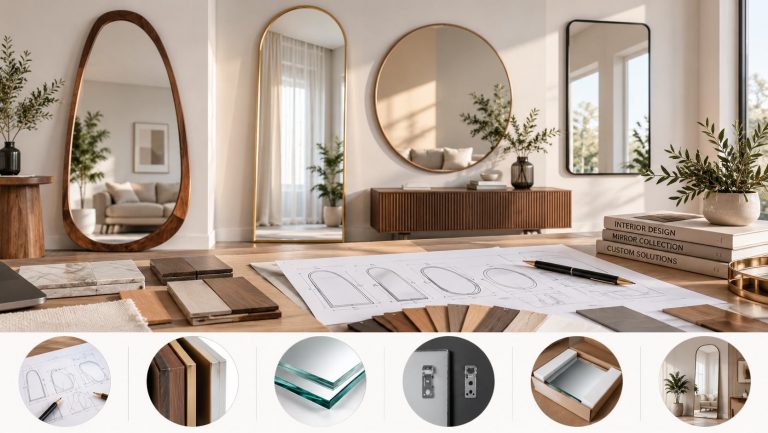
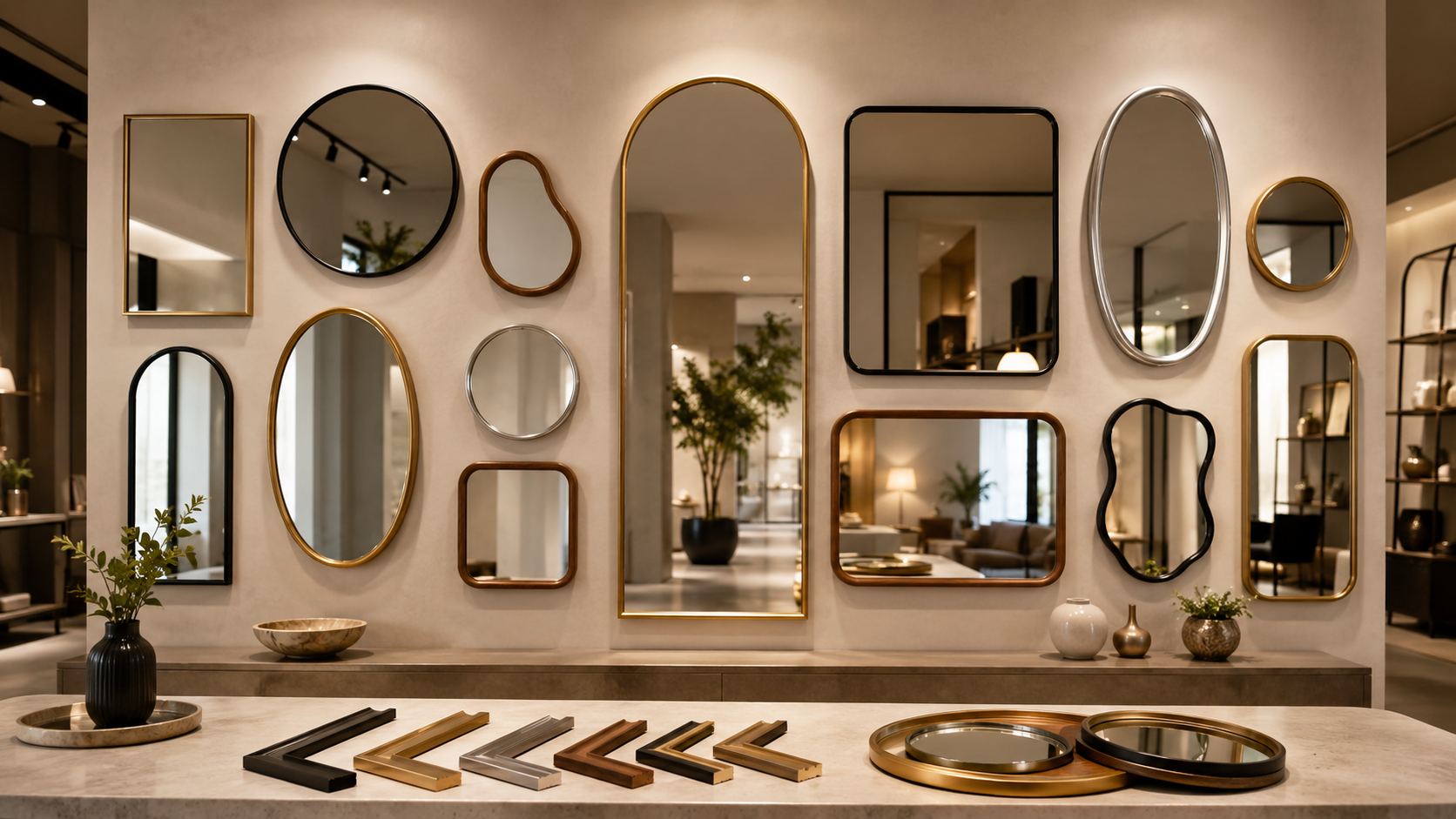
A wall mirror range can look broad on a spreadsheet and still feel repetitive in a store. If most SKUs use the same shape, finish, and size, customers may see little real difference between them. On the contrary, a collection in which items are presented randomly may be confusing as it will lack coherence. Thus, in the case of Home furnishings retailers, furniture stores, and private label producers, diversity in a number of wall mirror offerings is not critical. Instead, having a range in which each item has its place sorted by shape, size, finish, purpose, and price category is essential.
Why Should Retailers Plan Wall Mirrors as a Collection?
Assortment planning should be driven by the customer and not by individual product photographs. A retailer would benefit from a mix of reliable core designs, a couple of trendy items, and one or two statement mirrors for showrooms or campaign pictures.
This approach is usually much better than choosing ten beautiful frames in isolation and crossing your fingers that they will complement each other.
Too Many Similar Designs Can Compete With Each Other
Imagine a range with five round mirrors in similar natural-wood finishes. Each product may look good, but customers have little reason to distinguish between them. Sales are then spread across several SKUs that perform almost the same job.
A stronger range gives each item a reason to exist. One mirror may suit compact entryways, another may work above a console, while a more decorative design may become the visual focus of a living-room collection.
Retail buyers can first review the available mirror product range and then narrow the selection according to the roles they actually need.
Core Products and Statement Products Serve Different Purposes
Core wall mirrors usually rely on familiar shapes and easy-to-coordinate finishes. They are designed to work across different rooms and furniture styles.
Statement mirrors have another job. Their shape, frame, or finish is more noticeable, so they can attract attention online or in a physical display. A balanced assortment normally needs both rather than forcing every product to compete for attention.
How Should Retailers Balance Different Mirror Shapes?
Shape is often the fastest way a customer differentiates one wall mirror from another. It also strongly affects how the full collection looks when several SKUs appear on the same category page or showroom wall.
The aim is not to stock every possible silhouette. Instead, choose enough variation to cover different interior styles without making the range feel disconnected.
Round and Rectangular Mirrors Can Form the Core
Round and rectangular mirrors are familiar and relatively easy to place in different interiors. That makes them useful as dependable core products.
A round frame can add much needed softness in a room with lots of angular furniture and a rectangular mirror can be the perfect complement above a console, dresser, or cabinet. As such, retailers can rely on these basics to differentiate their products through the use of size, material, or profile rather than shape.
Arched and Irregular Mirrors Can Add Visual Interest
Arched and irregular mirrors give the assortment a stronger personality. They are particularly useful when a retailer wants a recognisable product for lifestyle images, store displays, or seasonal collections.
For example, the Oak Frame Arch Wall Mirror combines a familiar wooden frame with an arched profile. It can sit between a basic core product and a much more experimental statement mirror.
The important point is proportion. If every SKU is highly unusual, customers looking for easier-to-place products may struggle to find an option.
How Should Size Variation Be Used Without Creating Too Many SKUs?
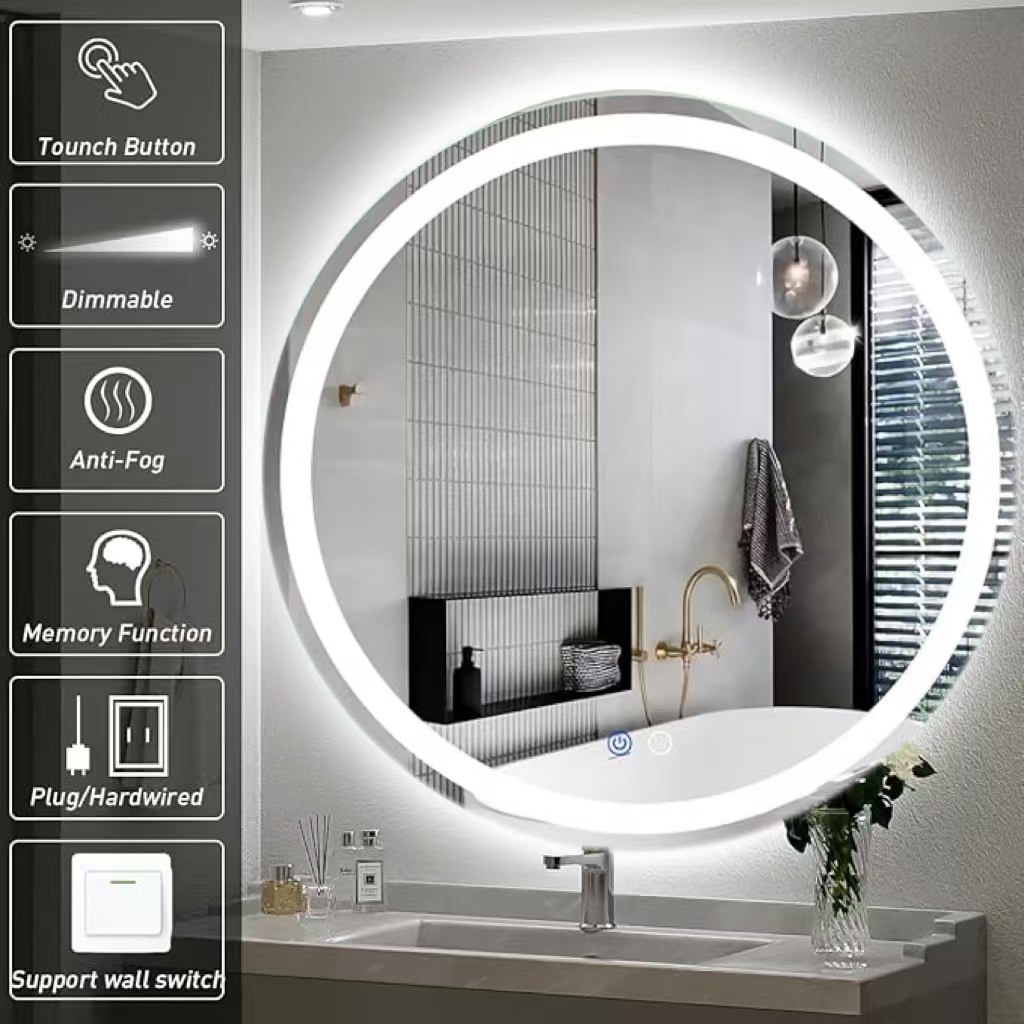
Adding another size seems like an easy way to expand a successful design. In practice, every additional size creates another item code, carton, inventory forecast, and replenishment decision.
Size variation works best when the new dimension serves a genuinely different room or buying occasion.
Different Sizes Should Solve Different Placement Needs
A compact mirror may suit an entryway, powder room, or apartment bedroom. A medium version may work above a console or vanity. A larger model can become a stronger decorative feature.
Not every design needs three or four dimensions. Often, multiple sizes make the most sense for proven core products, while statement pieces can remain in one carefully selected size.
Larger Mirrors Also Change Logistics
Increasing the dimensions affects more than appearance. The carton becomes larger, handling may become more difficult, and freight exposure can increase.
For this reason, merchandising and sourcing teams should review size together. A larger mirror is worthwhile when the visual and commercial benefit justifies the extra logistics burden.
If a retailer wants to extend the collection beyond wall mirrors, a larger format such as the Full Length Wave 160cm x 80cm Floor Leaner Mirror can serve a different room and purchasing need rather than simply duplicating an existing wall-mirror SKU.
How Can Materials and Finishes Create Clear Style Groups?
After shape and size, the frame usually determines how a mirror connects with the rest of a furniture or home décor collection.
A retailer does not need to offer every possible material or color. A small number of well-defined finish families can often create a cleaner assortment.
Wood Frames Work Well With Furniture-Led Collections
Wood-framed wall mirrors naturally coordinate with cabinets, consoles, sideboards, and other furniture pieces. Grain, surface treatment, and stain can give the mirror a warmer and more residential character.
However, natural-material variation also needs to match customer expectations. A rustic range may accept visible grain differences, while a cleaner contemporary collection may require tighter visual consistency.
Finish Families Make Cross-Merchandising Easier
Instead of offering eight unrelated finishes, a retailer might concentrate on three clear directions, such as natural wood, black, and one warmer painted or metallic finish.
That approach makes the mirror range easier to coordinate with lighting, picture frames, furniture, and decorative accessories already in store.
It also gives customers a clearer visual choice rather than presenting several colors that are only slightly different from one another.
How Can Retailers Decide Which Mirror SKUs to Keep or Expand?

The first assortment is only a starting point. Sales data eventually shows which products customers understand, which price points work, and which designs create too much overlap.
A useful review looks beyond unit sales alone.
Evaluate Each SKU by Its Role
A statement mirror may sell fewer units than a basic round mirror but still be valuable if it attracts attention to the whole collection. A larger mirror may perform better online than in compact stores. Another SKU may sell steadily because it coordinates with a popular furniture range.
Sales, margin, inventory turns, returns, and channel performance all help explain whether a product deserves its place.
Expand Winners Without Creating Near-Duplicates
When one mirror performs well, adding several similar designs can seem safe. It can also create internal competition.
Before expanding, identify what customers actually responded to. Was it the arch shape, wood finish, size, or price point? The next product should build on that strength while offering a visible difference.
That keeps the collection coherent without filling it with products that customers see as interchangeable.
How Can Qingdao Yinlongfei Support Wall Mirror Assortment Development?
Qingdao Yinlongfei Handicraft Co., Ltd. supports OEM/ODM development for international home décor customers, including mirror design, material selection, production, inspection, and packaging. Retail buyers can discuss target shapes, dimensions, frame materials, finishes, order quantities, and sales channels when developing a wall mirror collection. Reviewing the assortment as a group rather than as isolated samples makes it easier to identify which designs should become core SKUs, size extensions, or statement pieces.
Conclusion
A strong wall mirror assortment does not depend on having the largest number of designs. It depends on giving customers meaningful choices. Core shapes provide stability, arches and irregular forms add visual interest, size variation serves different rooms, and finishes connect mirrors with the wider décor collection. Before adding another SKU, retailers should ask what new role it fills. If that role is already covered, the assortment may benefit more from refinement than expansion.
FAQs
1. How many wall mirror styles should a retailer launch?
There is no fixed number. The range should cover key shapes, sizes, price levels, and style directions without creating several SKUs that perform the same role.
2. Should every wall mirror come in several sizes?
No. Multiple sizes are usually more useful for proven core designs. Statement mirrors may need only one strong size.
3. Which wall mirror shapes are useful for a basic assortment?
Round and rectangular mirrors can form the core, while arches and irregular designs add differentiation and stronger visual appeal.
4. How can retailers avoid too many similar mirror SKUs?
Give every SKU a clear role based on shape, size, finish, price, room use, or customer group. Remove unnecessary overlap.
5. When should a retailer add new wall mirror designs?
Add new products when sales data, customer feedback, or a clear assortment gap shows a reason for expansion rather than simply because more designs are available.