A buyer comparing two mirror samples may notice the frame, shape, finish, and price first, while the reflective coating behind the glass receives much less attention. Yet “silver mirror” and “aluminum mirror” are not interchangeable descriptions. They refer to different reflective coatings and can lead to differences in reflection quality, price positioning, production specification, and suitability for a particular product line. For importers, private-label brands, furniture retailers, and project buyers, the useful decision is not to declare one material universally better. It is to decide what level of reflection, appearance, cost, and application the SKU needs, then make sure every supplier quotation is based on the same mirror-glass specification.
What Is the Practical Difference Between Silver and Aluminum Mirror Glass?
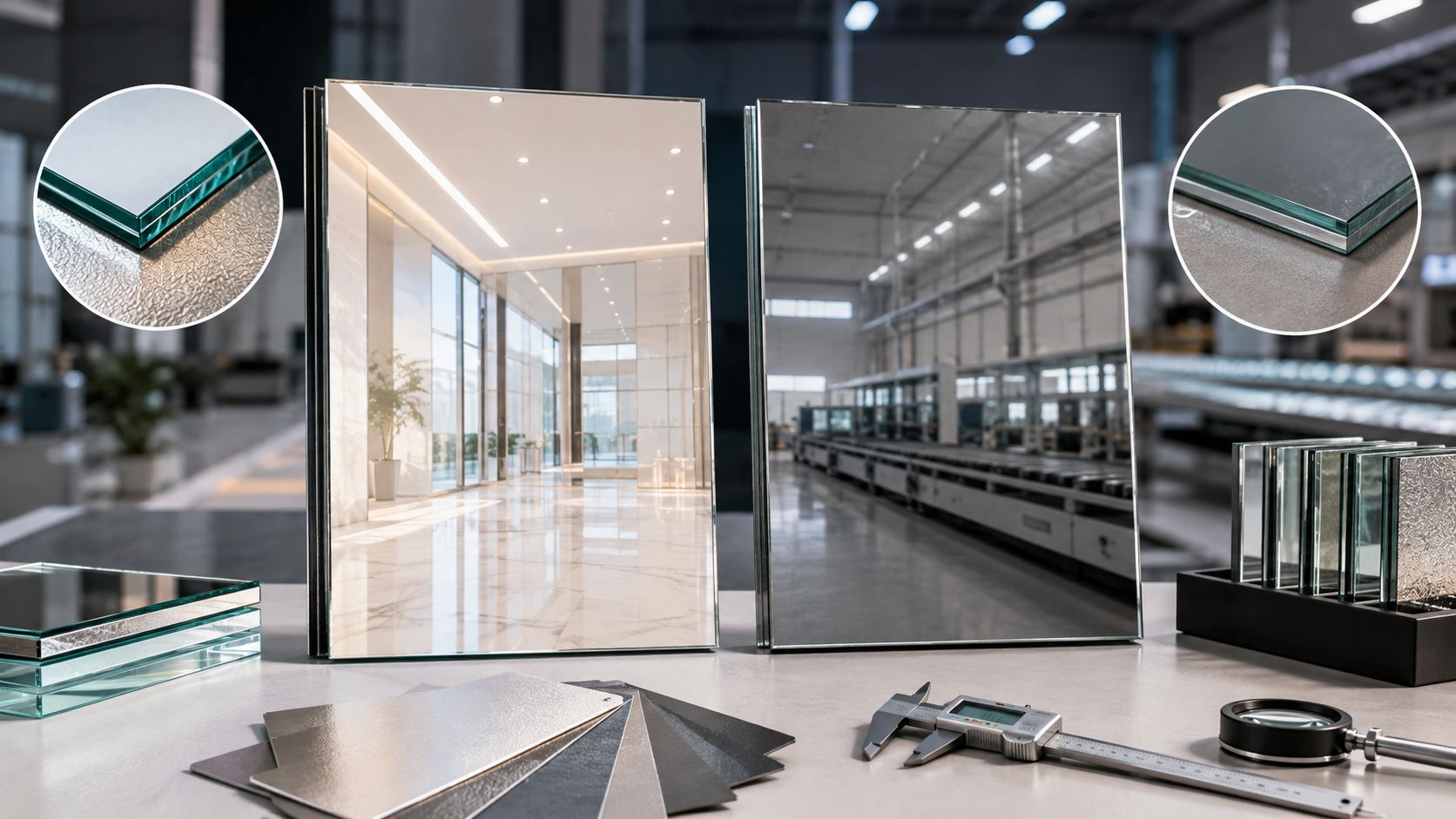
Both products start with glass and use a metallic reflective layer to create the mirror effect. The important difference is the metal used for that reflective coating. Silver generally performs better across the visible-light range, which is one reason it is widely used where a bright, neutral-looking reflection matters. Aluminum can also produce a functional household or decorative mirror and may fit products where cost targets carry more weight.
That basic difference sounds simple, but the purchase decision involves more than the name of the coating.
Why Does the Reflective Layer Matter to the Finished Product?
Customers do not see the metallic layer directly. They see its result every time they stand in front of the mirror.
For a decorative wall mirror used mainly as an interior accent, the visual difference between two acceptable mirror-glass options may matter less than the frame design or selling price. In a bathroom, dressing area, salon, or full-length mirror program, customers may look much more closely at brightness, image clarity, and color appearance.
The official mirror product range includes products specified with silver or aluminum mirror glass, showing why the reflective layer should be treated as an RFQ item rather than assumed from the product photograph.
Why Should Buyers Avoid Using “Standard Mirror Glass” in an RFQ?
“Standard” means different things to different suppliers. One factory may default to aluminum-coated glass for a price-sensitive program, while another may quote silver-coated mirror as its normal construction.
The quotations then appear to describe the same mirror even though one specification has already changed.
A better RFQ states the coating type, glass thickness, edge processing, safety treatment if required, and any application-specific expectation. That small change makes later quotation comparison much easier.
When Does Silver Mirror Glass Make More Sense for a Product Line?
Silver-coated mirror glass is often chosen where the reflected image is an important part of the product’s perceived quality. That can include bathroom mirrors, dressing mirrors, large full-body mirrors, hospitality products, and decorative mirrors aimed at a higher retail position.
The coating is only one part of the final construction, however. Good glass, proper backing protection, edge finishing, and production control still matter.
Products Used at Close Viewing Distance Need More Careful Evaluation
A decorative mirror hanging high above a console is viewed differently from a vanity mirror used every morning at close range. In the second situation, customers are more likely to notice the quality of the reflection.
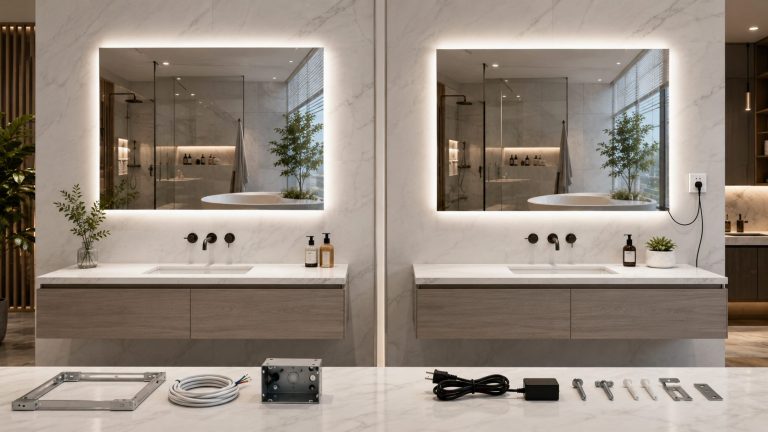
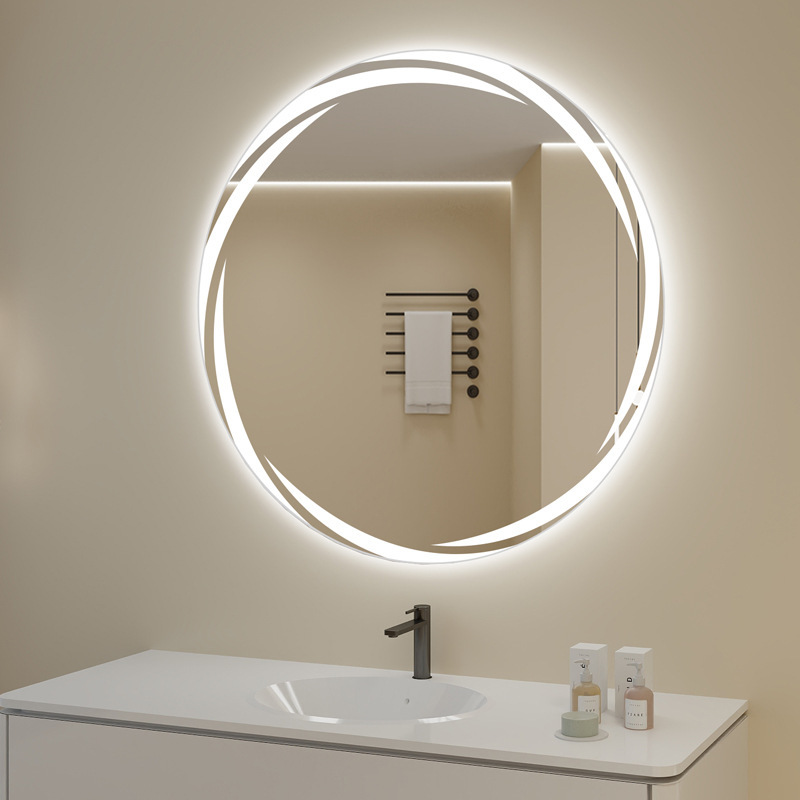
That is why a buyer developing an illuminated vanity line may place greater emphasis on the glass specification. The Bathroom Mirror with LED Light Vanity Defog Mirror is offered with multiple glass thickness options and silver/aluminum mirror specifications, giving project and retail buyers a practical basis for comparing alternatives during product development.
A sample review should therefore include the mirror under the lighting conditions where the product is likely to be used, not only under factory or office lighting.
Large Mirrors Make Reflection Quality Easier to Notice
The larger the viewing area, the easier it becomes to notice visual inconsistency.
For products such as a full-length mirror, the user is not looking at a small portion of the glass. They are using most of the reflective surface at once. Glass flatness, backing, thickness, and coating selection all contribute to the result.
The Full Length Wave 160cm x 80cm Floor Leaner Mirror is one example where glass specification belongs alongside frame size, mounting method, and finish when the buyer compares suppliers.

When Can Aluminum Mirror Glass Be a Practical Commercial Choice?
An aluminum mirror should not automatically be treated as a defective or unacceptable alternative. Product positioning matters.
A high-volume decorative item built around an aggressive target price may have different priorities from a premium hotel vanity mirror. If the approved sample meets the buyer’s appearance standard and the construction suits the intended application, aluminum-coated mirror glass can form part of a commercially workable specification.
Cost Targets Should Be Discussed Before Sampling
Factories make better recommendations when they know the intended selling position.
If a retailer asks for “the highest quality” without sharing the target market, the resulting sample may exceed the price point the product can support. If the request focuses only on the lowest quotation, important specification differences may disappear from the discussion.
The better sequence is to define application, target product level, dimensions, expected quantity, and important quality points first. The supplier can then explain which glass construction it is quoting.
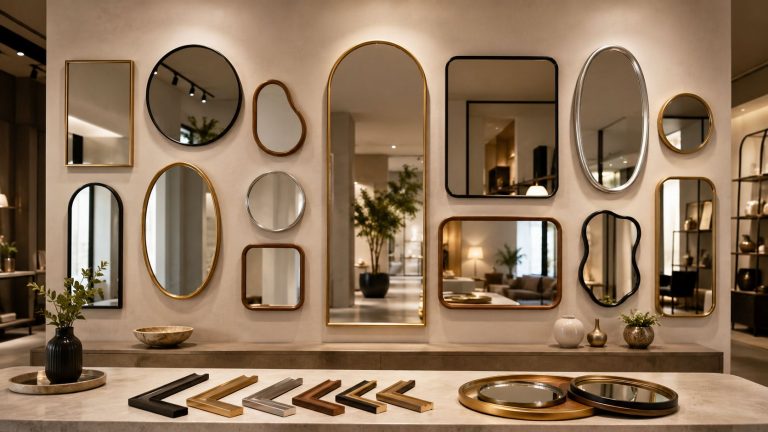
A decorative item such as the European Vintage Large Baroque Hanging Mirror lists both aluminum and silver mirror glass options, illustrating how one visual concept can be developed under different material specifications.
Buyers Still Need to Approve the Actual Reflection
A specification sheet cannot replace the sample.
Two suppliers may both describe their product as aluminum mirror glass and still deliver samples with different overall appearance because the finished result depends on more than the metal name. Glass substrate, coating process, protective backing, handling, and production consistency remain relevant.
View the samples side by side. Use the same lighting and distance. If the mirror will be sold for dressing or grooming, test it from the position a customer would normally use.
That comparison is more useful than making a sourcing decision from coating terminology alone.
What Quality Points Should Buyers Check Before Approving Mirror Glass?
Once the mirror-glass type has been selected, the buyer still needs a repeatable approval standard. The most common mistake is approving the front appearance without recording what the factory is expected to reproduce later.
The specification should connect the visible result with measurable construction details.
Check the Glass Together With Edges, Backing, and Frame
A mirror is a finished assembly, not just a reflective sheet.
Look at edge condition, drilled areas where applicable, backing protection, frame contact points, and mounting construction. Moisture reaching an inadequately protected edge can become a long-term concern, particularly in bathroom environments.
For irregular or wood-framed products, examine whether the glass sits evenly within the structure. The Manufacture Irregular Decorative Wood Floor Mirror is useful as a reference for the way glass, frame, hanging hardware, and large decorative format come together as one finished SKU.
Put the Glass Specification Into the Approved Product File
A simple product file can record:
| Approval Item | What to Confirm |
|---|---|
| Mirror coating | Silver or aluminum |
| Glass thickness | Approved thickness |
| Finished dimensions | Width × height |
| Edge treatment | As required by the design |
| Safety treatment | If required for the market/application |
| Back construction | Approved backing method |
| Visual reference | Signed or approved sample |
| Inspection point | Reflection and surface condition |
The point is not to create unnecessary paperwork. It is to prevent a future order from being reproduced from memory.
How Should Importers Compare Suppliers Offering Different Mirror Glass Options?
The comparison should begin only after both suppliers understand the same target specification. Otherwise, one quotation may appear cheaper simply because it contains different glass.
Ask each factory to state the mirror coating and thickness directly in the quotation rather than leaving them inside a general product description.
Compare the Complete SKU Rather Than One Material
Changing the mirror coating can affect cost, but it is rarely the only difference between quotations. Frame construction, hardware, backing, packaging, finishing, and order conditions may also vary.
When comparing suppliers, put those items into the same sheet. If one quotation leaves the glass type blank, ask for clarification before deciding which offer is actually lower.
Keep the Approved Glass Type Consistent on Repeat Orders
Once a retail SKU or project specification is approved, later orders should refer back to the same glass construction unless a change is intentionally made.
If the factory proposes an alternative, the purchasing team should know about it before production rather than discovering the difference during receiving inspection.
That is especially important when old and new batches may be displayed or installed together.
Company Introduction
Qingdao Yinlongfei Handicraft Co., Ltd. manufactures mirrors and other home decoration products at its Qingdao production base and supports OEM/ODM development through an in-house R&D team. Its mirror range covers wall decor mirrors, bathroom mirrors, full length mirrors, and floor mirrors for international retail, wholesale, and project customers. During product development, buyers can discuss mirror-glass type, dimensions, frame materials, finishes, mounting requirements, packaging, and other SKU details before sampling and bulk production. Providing the intended application and target product position gives the factory a clearer basis for preparing samples and quotations that reflect the actual commercial requirement rather than relying on a generic mirror specification.
Conclusion
Silver and aluminum mirror glass can both belong in commercial mirror programs, but they should never be treated as an invisible detail in the quotation. Silver is often favored when reflection quality carries greater weight, while aluminum may fit programs where an approved appearance and cost position support its use. The purchasing decision becomes much easier when coating type, glass thickness, backing, edge treatment, and visual approval are recorded together. Before comparing prices, make sure each supplier is actually quoting the same mirror.
FAQs
1. Is silver mirror glass better than aluminum mirror glass?
Silver generally offers stronger visible-light reflection, but the better commercial choice depends on product position, application, approved appearance, and cost target rather than the coating name alone.
2. Can aluminum mirror glass be used for decorative mirrors?
Yes. It can be used when the finished sample meets the retailer’s visual and commercial requirements. The coating type should still be clearly stated in the approved specification.
3. Which mirror glass is more suitable for vanity mirrors?
Products used at close viewing distance often benefit from a stronger emphasis on reflection quality. Buyers should compare actual samples under realistic lighting before approving the glass.
4. Should mirror glass thickness be included in an RFQ?
Yes. Coating type and glass thickness should both be specified so different factory quotations describe comparable products.
5. Can a supplier change mirror glass on a repeat order?
Any material change should be communicated and approved before production. Repeat orders should normally follow the approved SKU specification unless the buyer intentionally authorizes a revision.