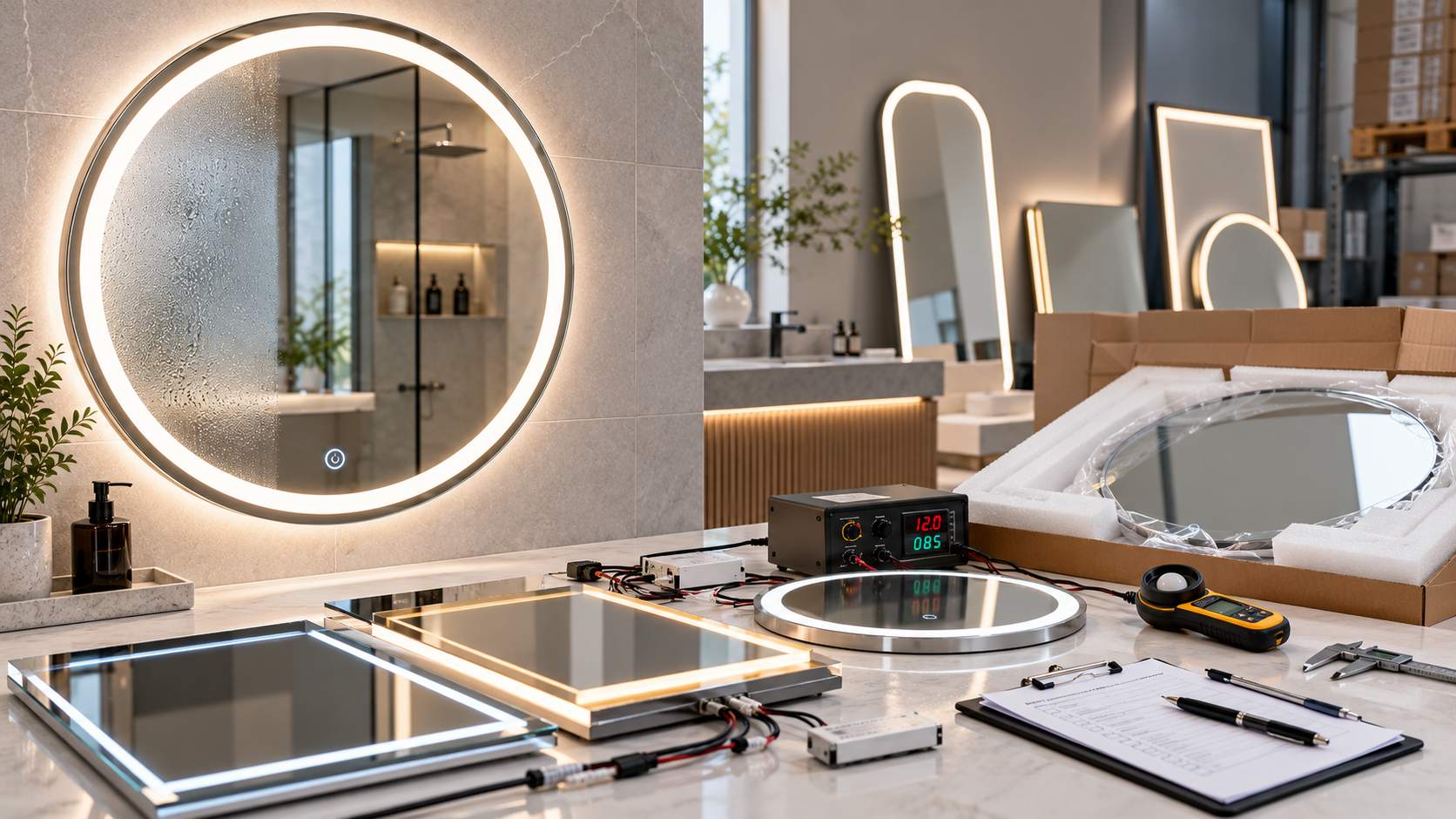
An LED bathroom mirror may look ready for approval after a brief showroom demonstration. The light switches on, the touch button responds, and the reflective surface appears clean. Yet a working demonstration does not confirm that the mirror matches the configuration required for a hotel, apartment project, or retail collection. A buyer may discover that the cable exits in the wrong position, the lighting settings differ from the agreed specification, or the demister covers a smaller area than expected. These issues are easier to resolve with one sample than after several hundred mirrors have been produced. A useful approval process examines the finished construction, lighting, selected functions, and installation arrangement together, then records the results in a form that can be used during bulk-production inspection.
What Should Buyers Examine Before Testing the Electrical Functions?
The first sample review can begin with the mirror disconnected from its power supply. Its dimensions, glass, finish, and rear construction should match the approved design before the functional checks begin.
A working LED system cannot compensate for a mirror that has been manufactured to the wrong dimensions or construction.
Check the Mirror Against the Approved Drawing
The buyer can compare the finished width, height, glass area, frame alignment, and mounting orientation with the requested specification.
The reflective surface should also be examined at a normal viewing distance for visible scratches, coating defects, or other unacceptable appearance issues.
Framed mirrors require attention to how the glass sits within the frame. Where the perimeter is exposed, edge processing should match the approved reference.
These checks are particularly relevant when one mirror design will be supplied in several sizes.
Examine the Rear Construction
The back of an LED mirror can contain mounting brackets, electrical components, cables, and optional demister elements.
Their positions affect installation even though they are not visible in a front-view photograph.
The manufacturer’s mirror category provides examples of different mirror formats, but the sample itself should be checked against the exact configuration being purchased.
A photograph of the approved rear layout can become a useful reference when the production order is inspected later.
How Should LED Lighting and Touch Controls Be Tested?
Lighting approval involves more than confirming that the mirror illuminates. Buyers need to establish whether the sample produces the intended lighting appearance and behaves as expected during ordinary use.
The agreed functions should be tested in their actual operating sequence.
Review Lighting Under Relevant Conditions
An LED mirror can appear different in a bright showroom and a bathroom with subdued ambient lighting.
Where practical, buyers can assess the sample in a setting that resembles the intended installation.
The review should cover visible light distribution, the appearance of the illuminated areas, and the color-temperature settings included in the order.
If the specification includes dimming, the sample should be tested through its available adjustment range.
A manufacturer may offer several lighting configurations, but only the settings agreed for the actual order should become production requirements.
Confirm the Touch-Control Sequence
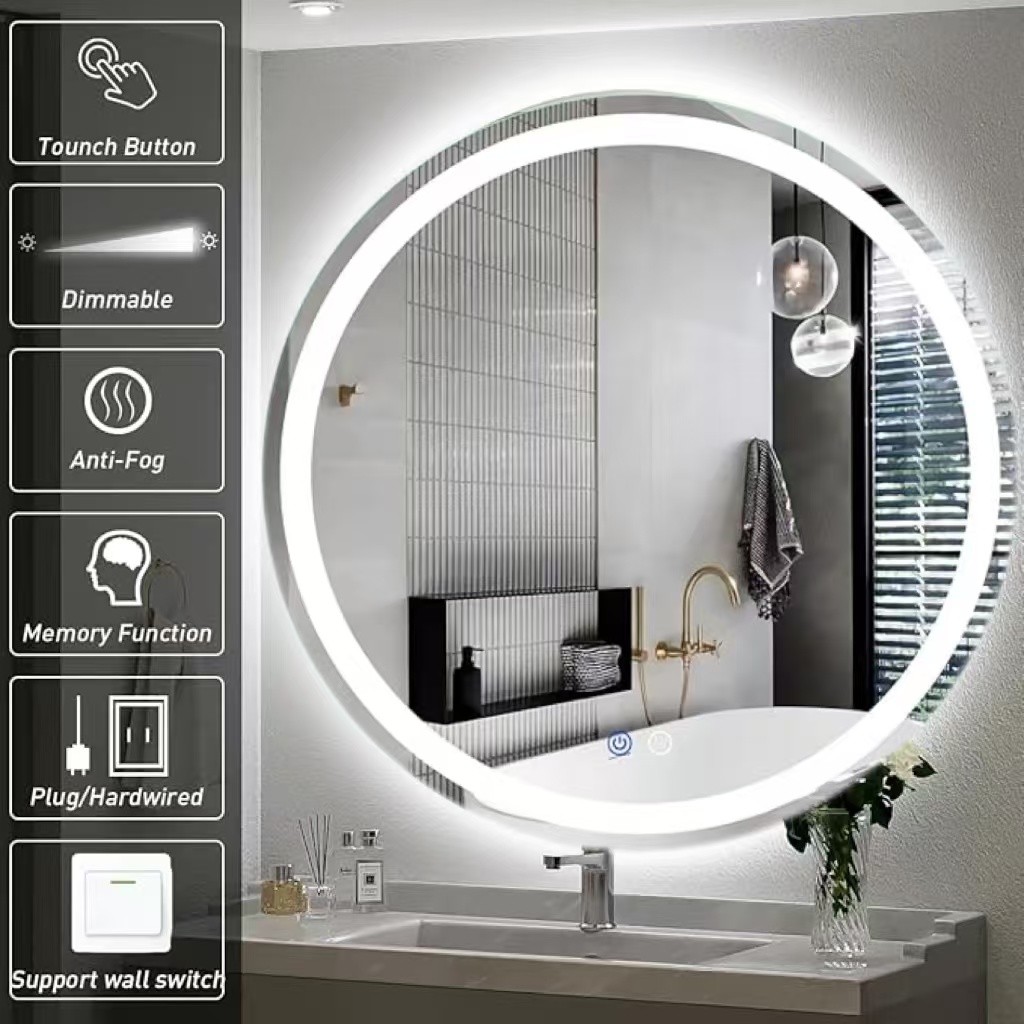
A control that responds once during demonstration has not necessarily passed the intended functional review.
If the mirror changes color temperature through repeated touches, the buyer can check the complete sequence. Dimming behavior should also match the approved configuration.
Where memory functionality has been specified, the sample needs to demonstrate the agreed behavior after power is switched off and restored.
These details should be recorded instead of relying on a general statement that the controls operate correctly.
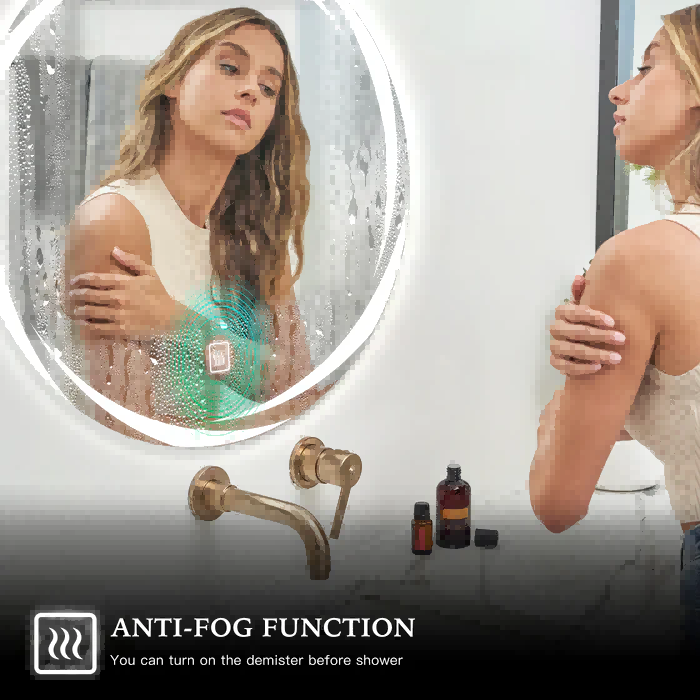
What Should Buyers Verify When the Sample Includes an Anti-Fog Function?
Anti-fog functionality is a separate purchasing requirement from LED illumination. Its operation should be reviewed according to the configuration agreed for the mirror.
The sample may contain a heated demister that covers only part of the reflective surface rather than the entire glass area.
Establish the Intended Demister Area
The buyer should confirm which section of the mirror the demister is intended to serve.
A claim that a mirror includes an anti-fog function does not establish the size of the heated area or the conditions under which its performance should be assessed.
The sample review can include a functional check using the manufacturer’s instructions and agreed operating conditions.
The test result should be recorded alongside those conditions so it can be interpreted correctly during later inspection.
The manufacturer’s LED bathroom mirror product information provides a reference for discussing available lighting and demister configurations.
Test the Controls Together
The buyer should also confirm how the demister interacts with the lighting system.
Some configurations use separate controls, while others combine several functions within one interface.
The approved sample should demonstrate the arrangement specified for the order.
A short recording of the operating sequence may provide a clearer production reference than a written description alone, particularly when several control functions are involved.
How Can Buyers Confirm That the Mirror Fits the Intended Installation?
A mirror can pass its electrical tests on a bench but still be unsuitable for the bathroom in which it will be installed.
Mounting positions, rear clearance, electrical connections, and wall conditions need to be considered before approving a project sample.
Check the Electrical Configuration
The sample should match the agreed destination-market electrical requirements and intended connection method.
A configuration intended for one market should not automatically be assumed suitable for another.
Where electrical documentation or conformity evidence is required, it should correspond to the actual product configuration rather than an unrelated model.
Qualified electrical personnel should review installation requirements that depend on the destination or project conditions.
Review the Mounting Arrangement
For a hotel or apartment project, the sample can be compared with the approved bathroom elevation and electrical drawing.
Bracket positions, cable exit, rear clearance, and mounting orientation should fit the intended wall arrangement.
A mock-up installation may reveal a problem that is difficult to identify from drawings alone.
If unusual site conditions require clarification, the manufacturer’s contact page provides a route for discussing the configuration before mass production.
What Should Be Recorded Before the Sample Is Released for Bulk Production?
A sample approval becomes useful only when the factory and buyer can identify exactly what has been accepted.
Without that record, changes may appear during production even when everyone believes the original sample was approved.
Separate Appearance and Functional Approval
A buyer may approve the mirror’s dimensions and finish while requesting changes to its control sequence or lighting configuration.
The sample should not be treated as fully approved until the final construction and selected functions match the agreed requirements.
The approval record can include the drawing, sample identification, glass and frame specifications, electrical configuration, selected functions, and relevant inspection criteria.
Carry the Same Requirements Into Production Inspection
The final sample provides a reference for checking the bulk order.
Appearance inspection may cover dimensions, glass condition, frame alignment, and finish. Functional inspection should correspond with the approved lighting, controls, and optional demister configuration.
The inspection plan should also identify how production units are selected and how unacceptable results will be handled.
This creates a clearer connection between sample approval and the mirrors eventually delivered to the buyer.
Need Help Matching LED Bathroom Mirror Samples to Your Project Requirements?
Once the required appearance, electrical configuration, and installation details have been established, the next task is preparing a sample against those requirements. Qingdao Yinlongfei Handicraft Co., Ltd. works with overseas buyers on OEM and ODM mirror development involving customized dimensions, glass specifications, lighting configurations, and bathroom mirror functions. Buyers can review the Bathroom Mirror with LED Light Vanity Defog Mirror as a reference when discussing possible configurations. The final sample should nevertheless be evaluated against the purchaser’s own specification and intended installation conditions rather than assuming that every available function is required.
Conclusion
An LED bathroom mirror sample needs to demonstrate more than an attractive reflection and working illumination. Its dimensions, glass, construction, lighting behavior, optional demister, electrical configuration, and mounting arrangement should match the intended order. Reviewing these areas before production gives buyers an opportunity to identify problems while changes remain manageable. A documented approval also gives inspectors a consistent reference for the finished shipment, reducing the likelihood that an acceptable showroom sample becomes a different product when the bulk order arrives.
FAQs
1. Is Testing the LED Lighting Enough to Approve a Bathroom Mirror Sample?
No. The buyer should also review dimensions, glass condition, construction, mounting arrangement, and any additional functions included in the order.
2. Does Every LED Bathroom Mirror Require Anti-Fog Testing?
Anti-fog testing is relevant when the ordered configuration includes a demister. The assessment should follow the agreed function and operating conditions.
3. Should a Project Buyer Install the Sample Before Approval?
A mock-up installation can be useful when mounting position, rear clearance, and electrical connection are important to the project.
4. What Happens if the Lighting Configuration Changes After Approval?
The change should be documented and reviewed before production. An updated sample or functional approval may be required depending on the modification.
5. Which Documents Should Be Kept After Sample Approval?
Retain the final drawing, approved specification, sample identification, relevant photographs, functional test records, and agreed production inspection criteria.