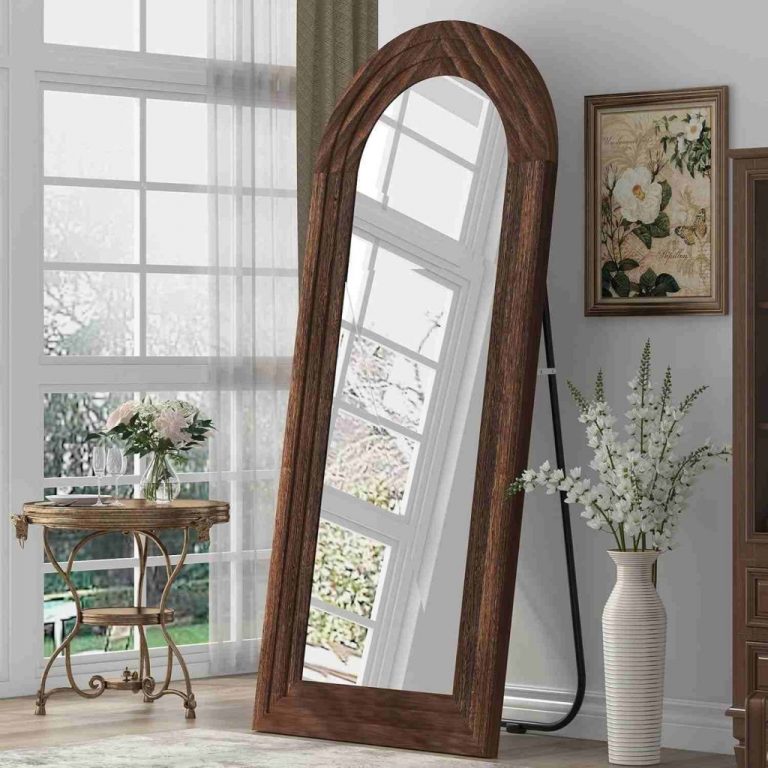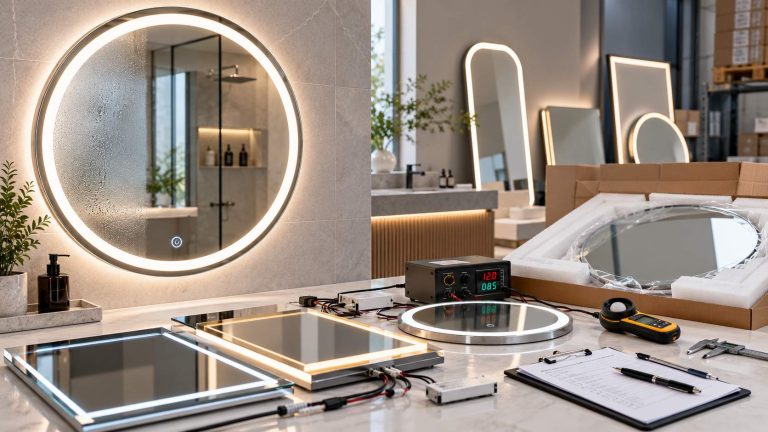
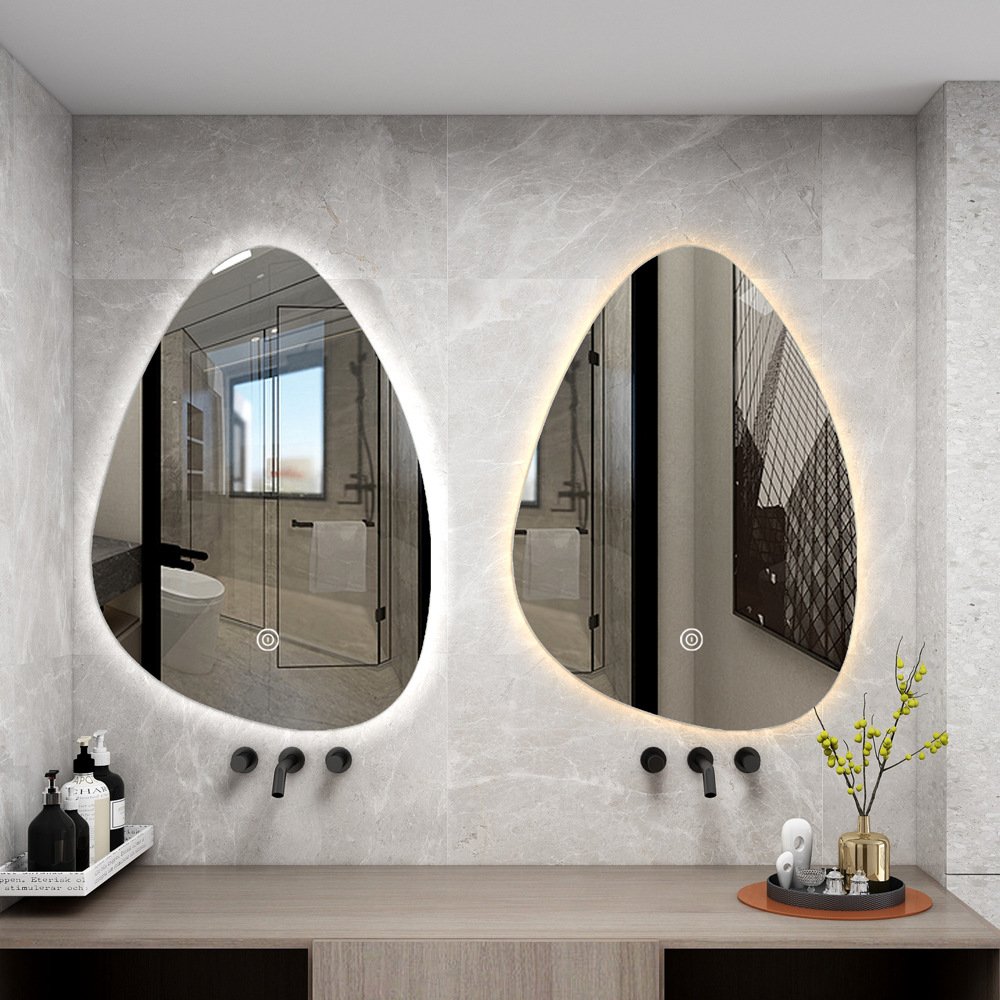
Choosing bathroom mirror sizes for large residential projects, hotels, apartments and other commercial properties is more than selecting nice designs. For repeated ordering by builders and developers alike, we provide a consistent range of sizes suited to various room configurations and building requirements and user expectations.
Establishing a clear standard for bathroom mirror sizes helps the purchasing department to avoid design changes and facilitates communication with suppliers. In addition, it helps to keep a tight grip on stock and to create a uniform visual experience in a project. The mirror sizes can be determined on the basis of the various types of rooms, the size of the vanity unit and the mode of installation.
Why Standardized Bathroom Mirror Sizes Matter for Project Buyers
A sizing plan for bathrooms in large projects helps purchasing teams to avoid being offered to install bathrooms of very different sizes, to get approval faster and to avoid having to order custom articles unnecessarily.
A standardized approach creates several advantages:
Faster product selection during the design stage
Easier quotation comparison between suppliers
Lower production complexity for bulk orders
More predictable installation processes
Better visual consistency across different spaces
In residential projects such as guest bathrooms, average family bathrooms and larger master bathrooms with different functional requirements, a small number of mirror sizes can be sufficient to meet most requirements.
We’re not looking for a one-size-fits-all mirror solution for every room in your home. Rather, a smart range of sizes to cover typical rooms.
Key Factors When Creating a Bathroom Mirror Size Standard
Several practical measurements should be established before purchasing specifications are set.
Match Mirror Width With Vanity Size
The width of your vanity is usually the first factor to consider in selecting a mirror. A narrow mirror can look out of balance on a wall, while an oversize mirror can present installation problems.
A common project guideline is:
| Vanity Width | Recommended Mirror Width |
|---|---|
| 24–30 inches | 20–28 inches |
| 36–42 inches | 30–38 inches |
| 48–60 inches | 40–56 inches |
| 72 inches or wider | One large mirror or two matching mirrors |
A mirror to a vanity does not necessarily have to be the exact width of the vanity. There is often a small gap on both sides of the mirror to make it look cleaner.
Consider Different Room Functions
Bathrooms have different users and purposes. A guest bathroom in a small apartment does not have to have the same mirror standard as a luxury hotel suite.
Typical project categories include:
Compact Bathrooms
For small bathrooms such as those found in apartments, powder rooms or secondary bathrooms, space saving designs are typical.
Recommended considerations:
Keep mirror proportions balanced with narrow vanities
Avoid oversized frames that reduce visual space
Choose simple shapes for easier project repetition
Standard Residential Bathrooms
The largest volume of rooms in housing projects are living rooms. Most buyers choose to offer a few standard sizes to cover the majority of dwellings.
For example, one standard mirror size may be specified for a bathroom with a 36” vanity and a different size specified for a bathroom with a 48” vanity. This simplifies purchasing while maintaining design intent.
Master Bathrooms and Premium Spaces
In larger bathrooms you need more impact, e.g. double washbasins, wider walls and more interior design.
Common solutions include:
One wide horizontal mirror above the full vanity
Two separate mirrors above individual sinks
Larger custom sizes for feature areas
How to Build a Multi-Room Mirror Size Strategy
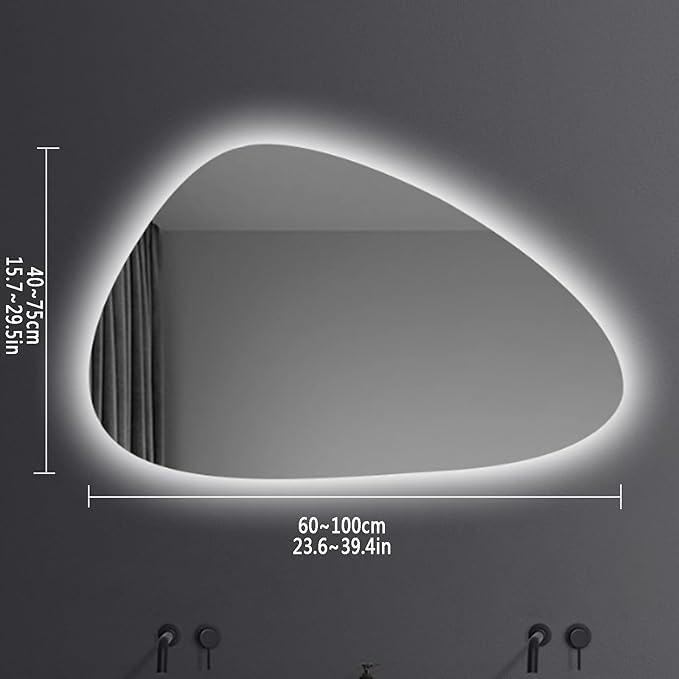
The successful project specification begins before one speaks with suppliers. The simple mirror size matrix for the different room types is all one needs.
Create Room-Based Size Categories
Replace listing of all bathrooms with a listing of similar bathroom configurations within rooms.
A practical example:
| Room Type | Vanity Type | Mirror Standard |
|---|---|---|
| Guest Bathroom | Single vanity | Small standard size |
| Apartment Bathroom | Single or medium vanity | Medium standard size |
| Family Bathroom | Larger single vanity | Large standard size |
| Master Bathroom | Double vanity | Wide or twin mirror option |
All parties – the architect, contractor and purchasing team – work from the one reference.
Reserve Custom Sizes for Special Areas
Custom mirrors are great for unusual areas but don’t overdo too many variations as they increase in cost and production problems.
Buyers should normally reserve custom sizing for:
Luxury suites
Hotel lobby washrooms
High-end residential units
Unusual wall structures
For most repeated room types, using standardized sizes is more controllable.
Include Installation Requirements Early
When specifying mirrors, dimensions alone do not make up the full specification. Installation details also must be considered.
Project buyers should confirm:
Wall structure and mounting method
Distance between vanity and lighting
Electrical requirements for illuminated mirrors
Available wall space around faucets and cabinets
Packaging limitations for transportation
A mirror that looks perfectly fitted in your design drawings could pose problems during installation if these details are not attended to.
Common Mistakes Buyers Make When Ordering Bathroom Mirrors
Even experienced buyers have problems when the specifications for mirrors are drawn up without a complete sizing plan.
Choosing Sizes Only Based on Appearance
A nice looking mirror in a catalog may not always fit in your bathroom. Functional measurements first.
Creating Too Many Size Variations
While ordering many sizes to meet all needs appears to be smart, excessive sizes create production complexity which negatively affects quality control.
Use several core sizes in various room categories instead of one core size per room category.
Ignoring Future Maintenance Needs
Convenience of replacement is particularly important for Hotels and for properties rented out. The ability to replace quickly using standard sizes means no delay for special production.
Failing to Confirm Sample Approval
Before mass production, buyers should check samples for:
Actual dimensions
Frame proportions
Mounting position
Reflection quality
Packaging protection
Sample approval can prevent costly change orders after production has begun.
Introducing Qingdao Yinlongfei Handicraft Co., Ltd. as a Reliable Supplier
Qingdao Yinlongfei Handicraft Co., Ltd. is a leading China manufacturer for home decoration products such as mirrors. Qingdao Yinlongfei provides OEM/ODM services for global customers. It supports various projects by developing products, having rich production experience and a complete quality control system.
With years of experience in the mirror and home decoration industry, Qingdao Yinlongfei Handicraft Co., Ltd. focuses on stable production capability, flexible customization, and long-term cooperation with international buyers. The company can provide solutions for different project applications, helping customers select suitable mirror sizes, designs, and specifications based on their market and construction needs.
Cooperating with a supplier who is familiar with both standard production and individual special products for project buyers simplifies the purchasing process and increases the efficiency of their projects.
Conclusion
By standardizing the sizes of bathroom mirrors across different types of rooms, the purchasing process for projects can be made more efficient and property interiors can be kept consistently up to standard. Instead of choosing a single mirror size to fit all bathrooms, a structured set of sizes can be created that relates to the size of the bathroom vanity and the room’s purpose as well as the methods of installation and the maintenance that will be required.
Standard bathroom sizes are combined with limited customization for special areas to keep things simple while still achieving great bathroom looks for common spaces.
FAQs
What is the most common bathroom mirror size for residential projects?
Bathroom mirrors generally come in sizes to match the width of the vanity. The medium-sized mirror is the most popular for standard residential bathrooms, as it complements most single vanities and bathroom configurations.
How wide should a bathroom mirror be compared with the vanity?
A bathroom mirror is typically a little narrower than the vanity to allow for some sides to the mirror to not be against the wall. The size will also depend on the design of the room, lighting etc. to complete the look.
Should project buyers use the same bathroom mirror size for every room?
No, each room type has its own requirements. Instead create a number of standard sizes for bathrooms of different sizes – compact bathrooms, standard bathrooms and larger premium bathrooms.
How can buyers reduce costs when ordering bathroom mirrors in bulk?
Reduce costs by avoiding unnecessary size variations, approving a sample early in the buying process, selecting dimensions that will repeat, and purchasing from a supplier who can produce items both standard and custom-made.
Can suppliers customize bathroom mirror sizes for large projects?
Yes. Many professional mirror suppliers provide custom sizes and designs to suit individual projects. It is always wise to check for the required technical drawings, samples and production details before placing a large order.