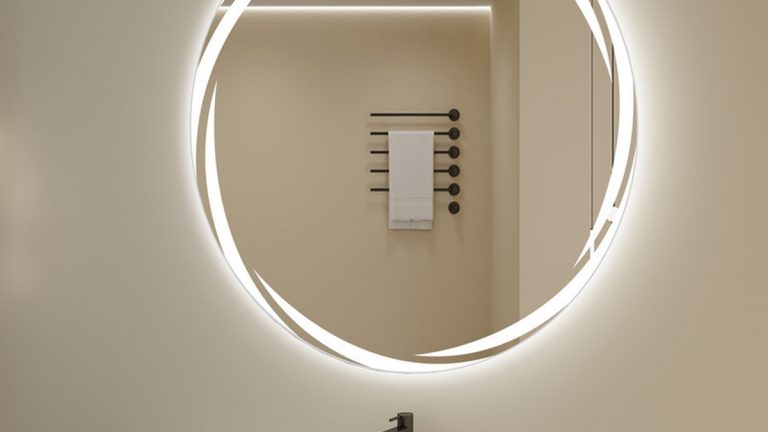
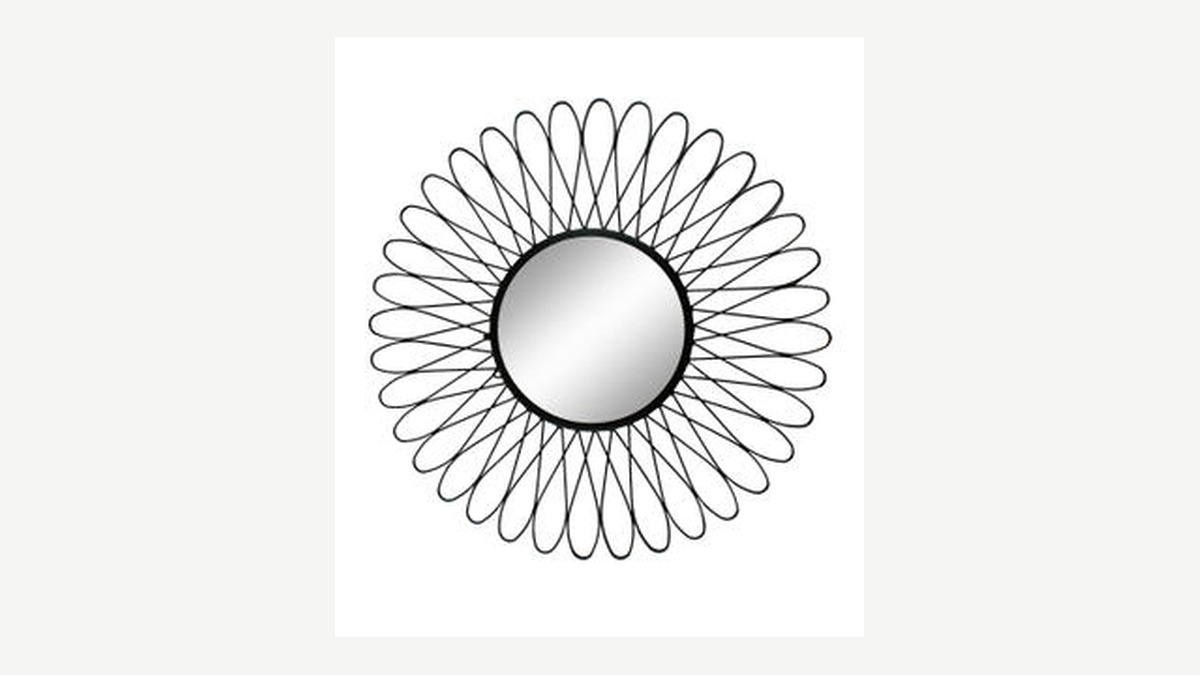
In the photographs, model 8M12016 has a small circular mirror inside a broad black frame. Its wide frame supplies most of the visual weight. From the rear, the important details change: joints, the exposed glass edge, MDF back, hanging points and carton support.
Kingwin’s metal wall mirror page supplies a useful set of model details. It identifies the frame and mirror sizes, glass, backing, hardware, intended rooms and packing choices. The page also refers to recurring test reports. Read together with the company’s factory and audit information, these details show what a buyer can confirm before a purchase order is released.
Reading the Model Specification
The table names the product as item 8M12016. It gives a 24 inch frame and a 10 inch mirror, a round shape, black metal frame, 3 mm silver mirror glass and a clean-cut glass edge. MDF is listed for the back. Kingwin places it indoors in homes, hotels and shops.
The listed mounting is on the wall, using the supplied set of screws and plugs. The table also says horizontal and vertical orientation. On a round design that may be describing the back hardware rather than a change in the front view, so the drawing needs to settle the point. The drawing and back photograph should make the intended mounting positions clear.
Resolve the Mixed Page Description
There is one awkward detail on the public page. The page contains a conflict worth clearing up. Its short description says oak and a leather belt; the model table says black metal with screws and plugs. Costing should wait until the supplier confirms which construction is 8M12016.
The signed drawing and sample can then carry the answer. On the drawing, show the outside diameter, mirror opening, depth, joints, backing and hanger spacing; add the finished weight as well. It also gives the packing team a fixed size when the carton is developed.
Define the Metal and Finish
“Black metal” describes the appearance at a distance. No substrate or coating build is identified on the page. If either is part of the sales claim, write it into the order after the factory confirms it. Keep the approved black beside notes on gloss and texture, and photograph what the finish looks like around a joint, hole, edge and the back.
Look at the approval sample under the light used for colour review. Circle the joint and hanger areas on a back photograph. A colour chip settles the front appearance, while the marked photograph shows the smaller places that production inspection must revisit.
Following the Mirror Through Production
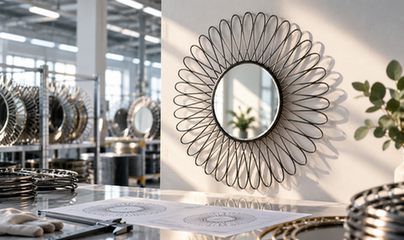
Before assembly, put the frame, glass and back on the bench. Measure the frame and look into the open joints. Check the 3 mm glass and its edge against the drawing, followed by the cut size of the MDF back.
Assembly and Final Appearance
Once assembly starts, watch where the glass meets the frame. It needs secure support without one small hard point pressing on an edge. The back and hangers also need to land where the mounting drawing puts them. Afterward, place the completed mirror upright and look at its circle, joints, black finish, reflection and rear attachment before taking the final measurements.
These observations need an agreed limit. “Good quality” leaves two inspectors with two different standards. A signed sample, drawing and a few close photographs give them the same reference. If the finish code or joint construction changes, the new version can be identified instead of mixed with the earlier approval.
Mounting Hardware and Packing
Screws and plugs are the hardware named online. Before the instruction sheet is printed, match its diagrams to the actual hangers and finished weight, and state the wall assumptions behind the supplied set. The installer still has to judge the actual wall, yet the supplied set and printed information must agree with the product in the carton.
The page offers display packing for stores and mailbox packing for online orders. The frame, mirror, backing, hardware and instructions should be inside the test pack. Check that the piece cannot move into the carton wall and that the glass face, frame edges and accessories remain separated. An e-commerce route may need a different pack from a unit moved on a retail pallet.
Understanding the Test Report Statement
The page makes two broad test statements: reports every three months, and testing for markets in Europe, North America and Australia. It does not display the report, covered model, test method, named standard or laboratory. A buyer needs the actual record before using the wording in a tender or retail listing.
Connect the Report to 8M12016
When the report arrives, find its sample description and item number. Read the report date and method, who issued it and what result was recorded. If it contains photographs, compare them with the order. Work on another size or carton may be useful background, but call it evidence for 8M12016 only when the report scope permits that link.
Finish, wall mounting and the packed carton are viewed in different conditions, so keep a record for each one. Dimensions and finish can be recorded during inspection. Mounting evaluation concerns the complete back and hardware. Packaging work concerns the packed product and its shipping route. One general test statement cannot replace all three records.
Read Factory Credentials by Scope
On its website, Yinlongfei names ISO 9001 and ISO 14000 alongside BSCI, Sedex and HIGG. The homepage separately mentions FSC-certified material. A certificate for a management system, a social audit and a material claim answer different questions, so retain their exact wording. The metal mirror page does not show that every credential covers model 8M12016.
The public certification page shows where to start the conversation. The current document still needs to identify its holder and site, the issuer, number, dates and scope. An FSC claim may be relevant to an MDF back only if that material and the finished-product claim are inside the certified chain of custody. It is not certification of the metal frame or mirror glass.
Qingdao Yinlongfei as the Manufacturer
Mirrors and framed mirrors appear in the home-decoration business described by Qingdao Yinlongfei Handicraft Co Ltd. Its profile says the company began in the early 1990s, was re-established in 2003 and now has a 10,000 square metre production base. The same profile mentions an R and D team, OEM and ODM work and customers in over 40 countries.
For 8M12016, that capability should leave a visible paper trail. Put the confirmed material, drawing, finish sample, inspection note, hardware and pack under one item number. That file can follow the product through a repeat order even if a buyer changes size or colour later.
The wall decor mirror range shows other shapes and frame ideas, but each remains its own construction. A request through the contact page can include the target size, finish reference, quantity, mounting plan, sales route, destination market and documents required.
Conclusion
The published specification for 8M12016 is a round indoor piece with a black metal frame, 3 mm silver mirror, MDF back and wall hardware. Its approval file should resolve the mixed page description and then hold the drawing, finish reference, signed sample, inspection limits, packing and applicable reports together. Credentials describe the factory background. The drawing, approved sample and test records describe the mirror on the purchase order.
Common Buyer Questions
1 How should the mixed description be resolved
Have the supplier resolve the wording first. Transfer the answer to the signed drawing and material list, then use those records during sample approval.
2 What should final inspection cover
Check dimensions, roundness, joints, finish, reflection, glass edges, backing, hanger position, accessories, labels and the approved pack.
3 Does a three month test report cover every metal mirror
Not by default. Link it to the order only after its model, sample, method, date and scope have been read.
4 Can an FSC claim certify the complete metal mirror
No. FSC concerns eligible forest-based material moving through a controlled chain of custody. The claim does not turn into certification of the metal, glass or the mirror’s overall performance.