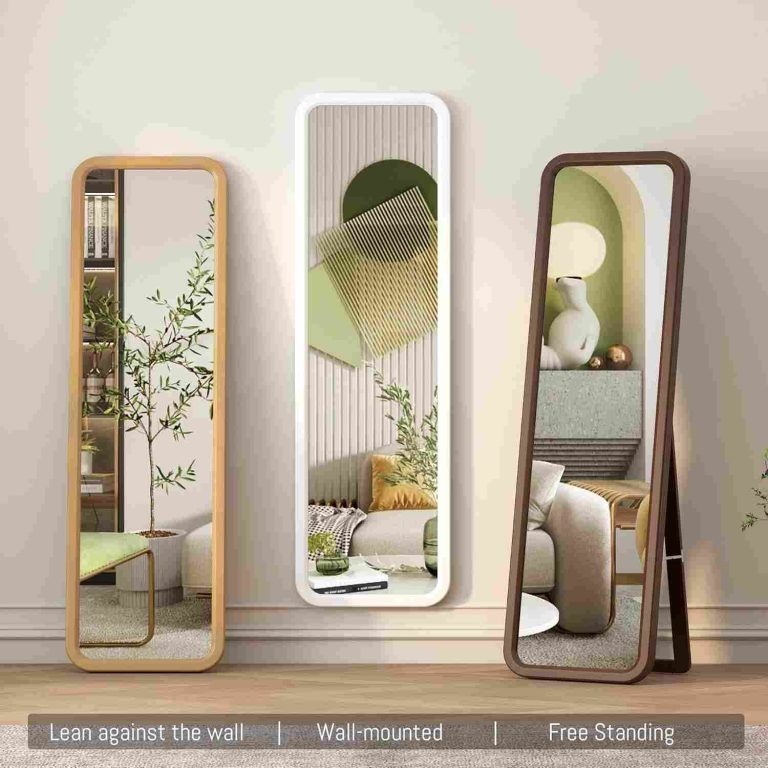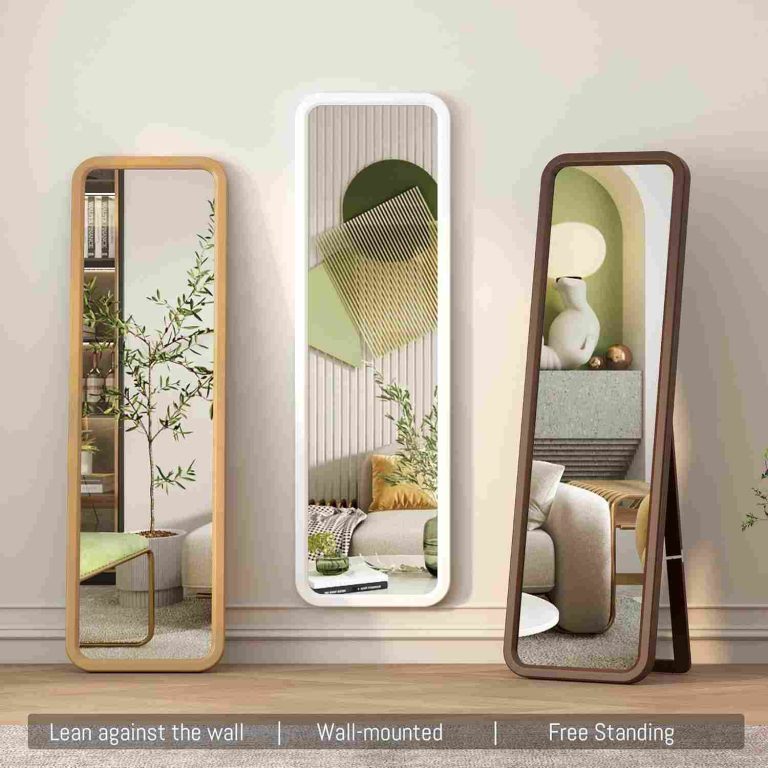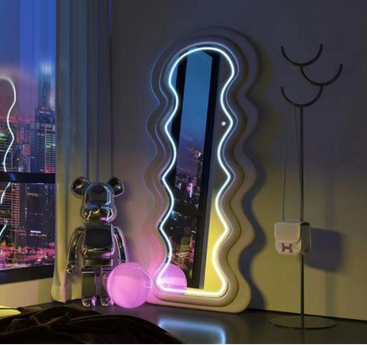
The wall glows. Is the face lit too? That is the question behind a useful comparison of backlit and front-lit mirrors. For your trade collection, a bathroom mirror with lights has to do the job described beside its photograph. Our rectangular, pebble and irregular designs help explain why the position of an LED strip matters, and why a halo around the glass tells only part of the story.
Where the light goes changes the job
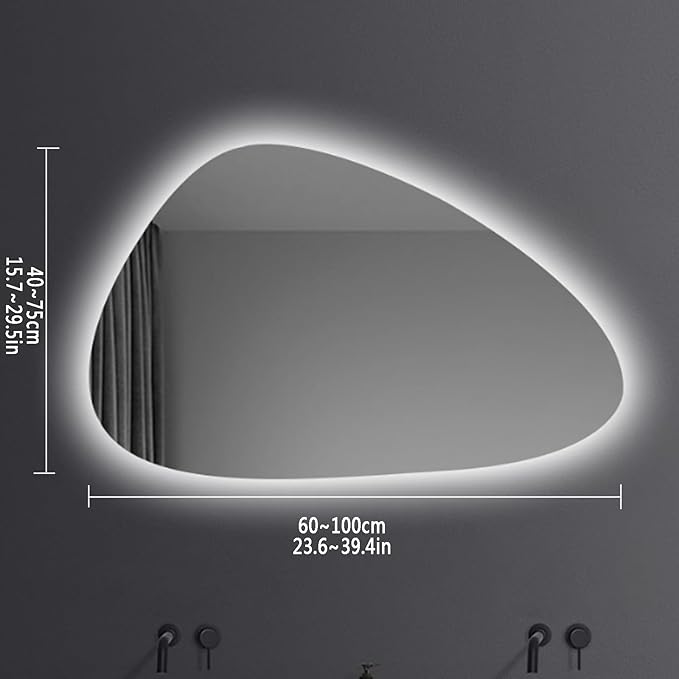
The halo comes from LEDs aimed at the wall, tucked behind the glass. Light escaping around the perimeter creates the floating effect. The wall then reflects some of it back into the bathroom. A different wall finish or mounting gap changes how that pool of light looks. The LEDs are still behind the mirror, so your face receives reflected light rather than the light pointed directly toward you.
With front lighting, the luminous band faces you across the basin. Its light travels toward the person looking into the mirror, which is the useful distinction when shaving or applying makeup. A band across the top lights from a different position than one surrounding the reflection. You still need to stand in front of the mirror to judge glare and facial shadows; the label ‘front-lit’ cannot settle either question.
We would separate the lighting function from the styling decision. A trade collection can use either arrangement well. The mistake is assigning the same grooming promise to both without checking the actual configuration.
Dual lighting brings the comparison into one mirror
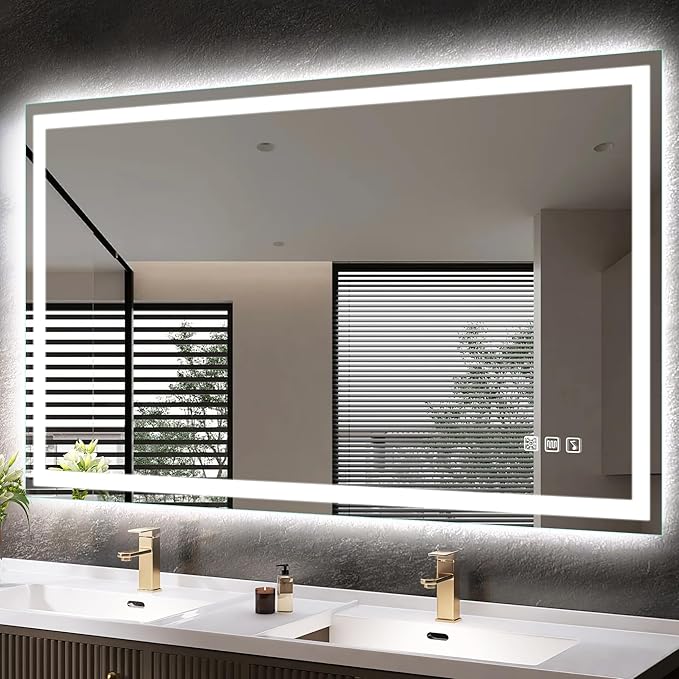
Two light paths can coexist in one product. At Kingwin Decor, our rectangular backlit bathroom mirror combines front lighting and rear lighting. For this rectangular design, our size options include 48 × 36 inches and the smaller 36 × 28 inches. You can dim the light and switch its colour between 3000K, 4000K and 6000K. The larger glass gives you a different outline over the vanity; we aren’t attaching a measured facial-lighting advantage to the extra inches.
The two light paths answer different needs. The rear strip defines the wall feature; the front strip directs light toward the user. Your collection description can explain both without promising that the mirror will replace every other bathroom light.
|
Configuration |
Light direction |
Useful evaluation |
|---|---|---|
|
Rear lighting |
Toward the wall behind the glass |
Observe the halo against the intended wall finish |
|
Front lighting |
Toward the person at the mirror |
Check facial detail and uncomfortable glare |
|
Combined front and rear lighting |
Toward the user and the background |
Evaluate both effects together in the room |
The table describes where light travels. We use the rectangular model to illustrate the combined arrangement, without assigning a brightness ranking to it or carrying its two-strip construction across to the other shapes.
A pebble outline puts the wall in the picture
An irregular outline changes the visual role of backlighting. For our pebble-shaped wall mounted lighted makeup mirror, the LED band sits behind the curved glass and faces the wall. At 80 × 55 cm, this option can be hung vertically or horizontally. That choice lets you turn the pebble outline to suit the space over the basin. It doesn’t turn a rear-facing strip into front lighting.
The background does some of the visual work here. For the pebble display, put a representative wall finish behind the sample. A pale, smooth backdrop and a dark, textured one won’t return light in the same way. The photograph of one combination can’t show you the result of the other. That difference follows from the light returning off the wall.
The word makeup still needs a practical check. With the room lighting planned for the display, look into the pebble mirror and compare the view of your forehead with the area beneath your chin. If not, the display needs another source of face lighting. Colour adjustment and the heated demister are useful functions on this design, but the LED band remains behind the glass.
A taller silhouette needs its own lighting check
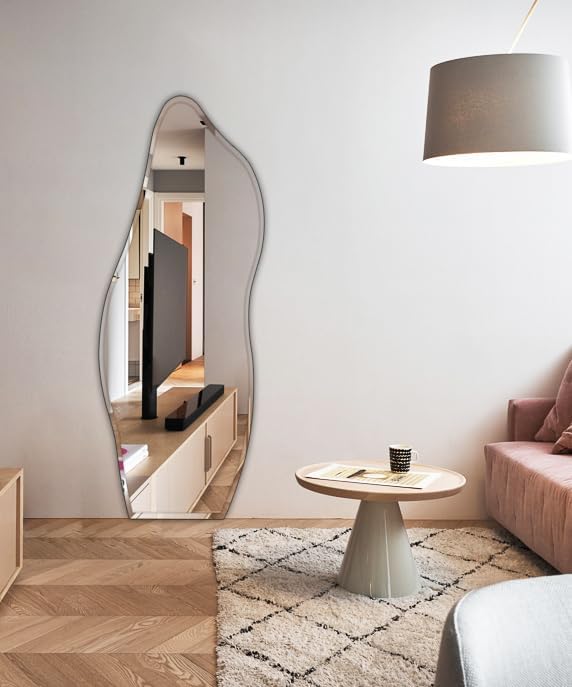
Scale adds another reason to evaluate the complete configuration. In a backlit mirror bathroom display, our irregular LED model offers 160 × 50 cm and 170 × 70 cm size options. These taller formats create a different relationship between the mirror, wall and user than the pebble example. A larger mirror isn’t evidence of greater useful light at the face.
Colour adjustment is another part of our irregular design: 3000K gives the warmer appearance, with 4000K and 6000K offering cooler settings. None of those numbers measures light arriving at your face. Compare mirrors from the same position and at comparable colour settings, so you can concentrate on where shadows fall instead of being distracted by a warmer or cooler glow.
Anti-fog operation clears a different obstacle to the reflection. The heater warms the glass to help disperse condensation; it isn’t an extra lamp. In your product description, explain what keeps the mirror clear separately from what lights the user. Otherwise, two useful functions become one vague promise about visibility. The customer benefits from understanding both functions independently.
Match the lighting promise to the reflection
The useful choice follows the bathroom’s purpose. Rear lighting makes the mirror’s outline and wall treatment part of the design. Front lighting addresses the person at the basin more directly. A combined model gives you both light paths in the same mirror. The collection decision then becomes concrete: will you demonstrate the wall glow, the grooming view, or both? Build the display around that answer and describe the selected configuration accordingly.
Tell our team whether your collection needs a wall halo, light toward the user, or both, and we can discuss the relevant Kingwin Decor configuration.
FAQ
Can a backlit mirror be the bathroom’s only light?
Don’t assume so from a product photograph. A mirror could light its own wall while leaving the shower or doorway dim. Check the whole proposed bathroom, as well as the reflection, before relying on that single light source.
Does a frameless edge mean the mirror is front-lit?
No. The edge treatment tells you about the glass surround, not the LED location. A mirror without a frame may illuminate the wall behind it, the person in front, or both.
Does 6000K mean brighter light than 3000K?
No. The larger number means a cooler colour appearance. Brightness is a separate question, requiring output data or an appropriate measurement. Turning the colour control to 6000K isn’t proof of more usable light.
Are front and rear lights always controlled separately?
No. A combined lighting arrangement doesn’t establish independent switching. Confirm the control behaviour of the selected configuration before promising separate operation in a collection description.
Can a demister replace bathroom ventilation?
No. A demister addresses condensation on the heated mirror area. It doesn’t remove moisture from the room, so ventilation remains a separate part of the bathroom design.