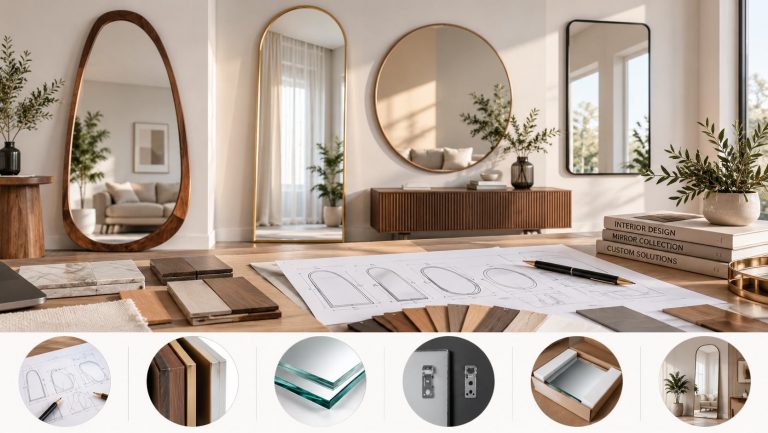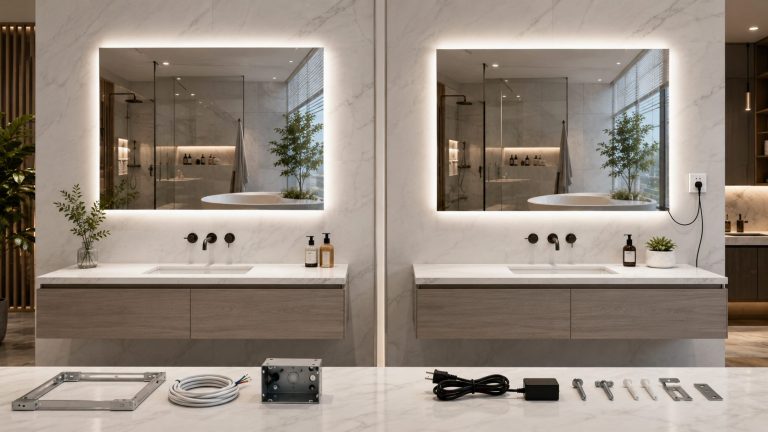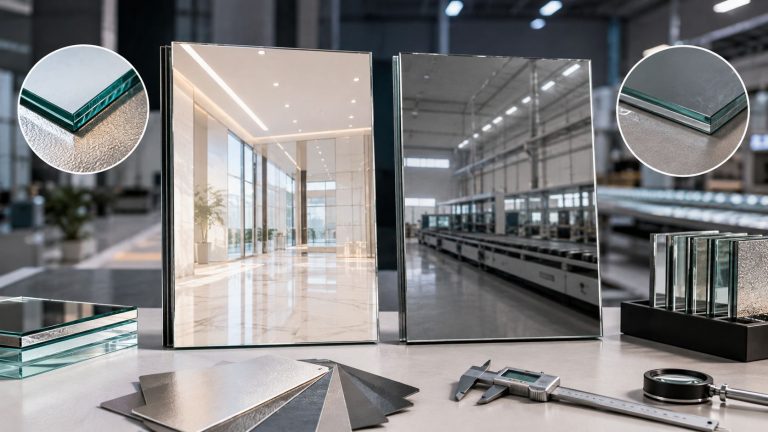

A full length mirror can look straightforward in a catalogue, but bulk purchasing quickly becomes more complicated once several constructions are placed side by side. Two mirrors with similar dimensions may use different glass thicknesses, frame materials, backing structures, hanging systems, or floor-support methods. Those differences affect more than appearance. They influence how the mirror is handled, where it can be sold or installed, how consistent the finished product feels, and whether a repeat order can match the first shipment. For importers, furniture retailers, home décor brands, and project buyers, the useful comparison is therefore not simply “Which full length mirror looks better?” The purchasing decision should start with how the mirror will be used, then move through structure, glass, frame, stability, and the details that need to stay fixed from sample approval to mass production.
What Type of Full Length Mirror Fits the Intended Sales or Project Use?
Before comparing materials, buyers need to establish how the mirror will actually be used. A mirror designed to lean against a bedroom wall does not create the same requirements as one intended for a retail fitting room, hotel guest room, furniture showroom, or wall-mounted residential application.
That first decision narrows the technical choices that matter later.
Leaning, Standing, and Wall-Mounted Designs Solve Different Problems
A leaning mirror relies on its overall geometry, floor contact, and relationship with the wall. A freestanding design introduces a support structure that must remain stable during normal use. A wall-mounted full length mirror shifts attention toward brackets, fixing points, rear clearance, and installation instructions.
None of these formats is universally superior. The right construction depends on the environment.
A home décor retailer may prefer designs that are visually distinctive and easy for consumers to understand. A contract buyer may place more weight on repeatable installation and consistency across rooms. A furniture chain may want several formats within one collection but still need them to share a recognizable design language.
Reviewing the manufacturer’s floor mirror category can help buyers separate these formats before requesting quotations.
Application Should Be Written Into the Request for Quotation
The RFQ should identify more than dimensions and color. It helps to state whether the mirror is intended for home retail, hospitality, salon, dressing room, boutique, or another commercial environment.
That information gives the supplier context when discussing construction. It also reduces the chance that two factories price visually similar mirrors built for different expectations.
Which Glass Details Matter Most in a Bulk Full Length Mirror Order?
Full length mirrors create a large viewing area, so glass decisions deserve more attention than they sometimes receive during early sourcing. A buyer who approves only the overall silhouette may discover later that the reflective surface does not match the intended product position.
Glass should be reviewed as part of the finished mirror, not as an isolated material line.
Thickness and Reflection Need to Be Judged at Production Size
Glass thickness can affect weight, handling, frame construction, and the overall feel of the product. The correct choice should therefore be connected to the final dimensions and structure.
Reflection should also be checked on a representative finished sample. A small piece of mirror glass cannot show how a large surface behaves when a user stands several feet away and moves across the viewing area.
For this reason, a production-intent sample is particularly valuable for larger formats. Buyers can inspect the center and outer viewing areas, check whether the image remains visually consistent, and examine how securely the glass sits inside the frame.
The wider mirror product range provides useful context when deciding whether one glass specification should be shared across several mirror types or controlled separately.
Backing and Edge Condition Should Not Be Left Undefined
The rear of the mirror may never appear in lifestyle photography, but it still matters during manufacturing and handling. Buyers should know what backing construction is being supplied and whether any additional treatment has been specified.
Edge condition also needs to suit the design. A fully framed mirror hides different areas of the glass from a frameless or partially exposed design.
These details belong in the sample record so that the factory, buyer, and inspector are evaluating the same construction.
How Should Buyers Compare Frame Materials and Construction?
Frame material often has a larger commercial impact than buyers expect because it affects styling, weight, finishing options, perceived value, and the way a mirror behaves during handling.
The correct comparison is not simply wood versus metal or MDF. Buyers should examine what the frame is expected to achieve in the selected design.
Frame Material Should Match the Product Position
A natural wood look may be central to one home décor collection, while a slim metal profile may suit another. Some programs prioritize decorative surface treatment; others need a simpler construction that can be repeated across several sizes.
The frame should therefore be discussed together with target retail position, finish, mirror size, and expected sales channel.
For B2B buyers, consistency is just as important as the first-sample appearance. If several pieces are displayed together, noticeable variation in finish, profile, or assembly can weaken the collection even when each mirror is usable on its own.
Buyers can compare different design directions through the company’s full mirror product collection before deciding which frame approach belongs in an RFQ.
Construction Details Matter More as Mirror Size Increases
Large mirrors place greater demands on joints, backing, support points, and overall frame straightness. A frame that works well at a smaller size should not automatically be assumed to behave the same way when enlarged.
During sample review, buyers should inspect corners, visible gaps, surface finish, frame-to-glass fit, and whether the mirror remains visually straight when positioned as intended.
This is especially relevant when one design will be offered in several dimensions. The buyer should confirm whether all sizes use the same construction or whether larger versions require changes.
What Should Buyers Check About Stability, Installation, and Everyday Use?
A full length mirror is not only viewed; it is moved, positioned, cleaned, and sometimes installed by people who were not involved in the purchasing decision. The practical details of normal use can therefore become important after the product leaves the factory.
For bulk orders, these issues are easier to solve before production than after customer complaints begin.
The Support Method Should Match the Intended Configuration
Freestanding and leaning mirrors should be reviewed in the position in which customers will actually use them. A showroom sample sitting perfectly on a factory floor does not automatically prove that the product will suit every commercial environment.
Wall-mounted designs need their own review. Mounting points, rear construction, and installation guidance should correspond with the approved product.
Buyers should distinguish between hardware supplied with the mirror and final fixing decisions that depend on site wall construction. Project teams remain responsible for confirming the appropriate installation method for their building conditions.
If a project has special installation requirements, the company’s contact page can be used to discuss them before the final construction is released.

Everyday Handling Should Be Considered During Sample Review
Retail products may be moved around showrooms or handled by end customers. Hospitality mirrors may need to stay consistent after repeated cleaning and normal room use.
Sample review should therefore include more than appearance from the front. Buyers can look at rear finishing, exposed edges, support components, overall rigidity, and how easily the mirror can be positioned without putting stress on the frame.
These observations often reveal practical differences between two products that appear almost identical in a catalogue.
What Should Be Fixed Before a Full Length Mirror Moves Into Mass Production?
Once the preferred construction has been chosen, the buyer needs to convert it into a repeatable specification. This is where many sourcing programs become either easier or harder to manage later.
The objective is not to create excessive paperwork. It is to remove the details most likely to be interpreted differently.
The Approved Sample and Specification Need to Describe the Same Product
Dimensions, glass thickness, frame material, finish, rear construction, mounting or standing format, and any agreed safety treatment should appear in the controlled record.
If the physical sample changes during development, the final version should be clearly identified. Otherwise, purchasing may refer to one sample while production works from an earlier drawing.
This becomes particularly important for repeat orders. Buyers should not have to reconstruct the original product from photographs and email threads six months later.
Inspection Should Follow the Purchase Decision
Inspection points should reflect what actually mattered during approval: dimensions, appearance, reflection, frame assembly, stability or mounting arrangement, and other agreed construction details.
The buyer should also define what counts as a material change. A different glass thickness, frame profile, support construction, or finish should not be introduced quietly into a repeat order simply because the overall design still looks similar.
When those decisions remain controlled, suppliers can quote more accurately and buyers can compare future offers on a much more consistent basis.
Professional Technical Support
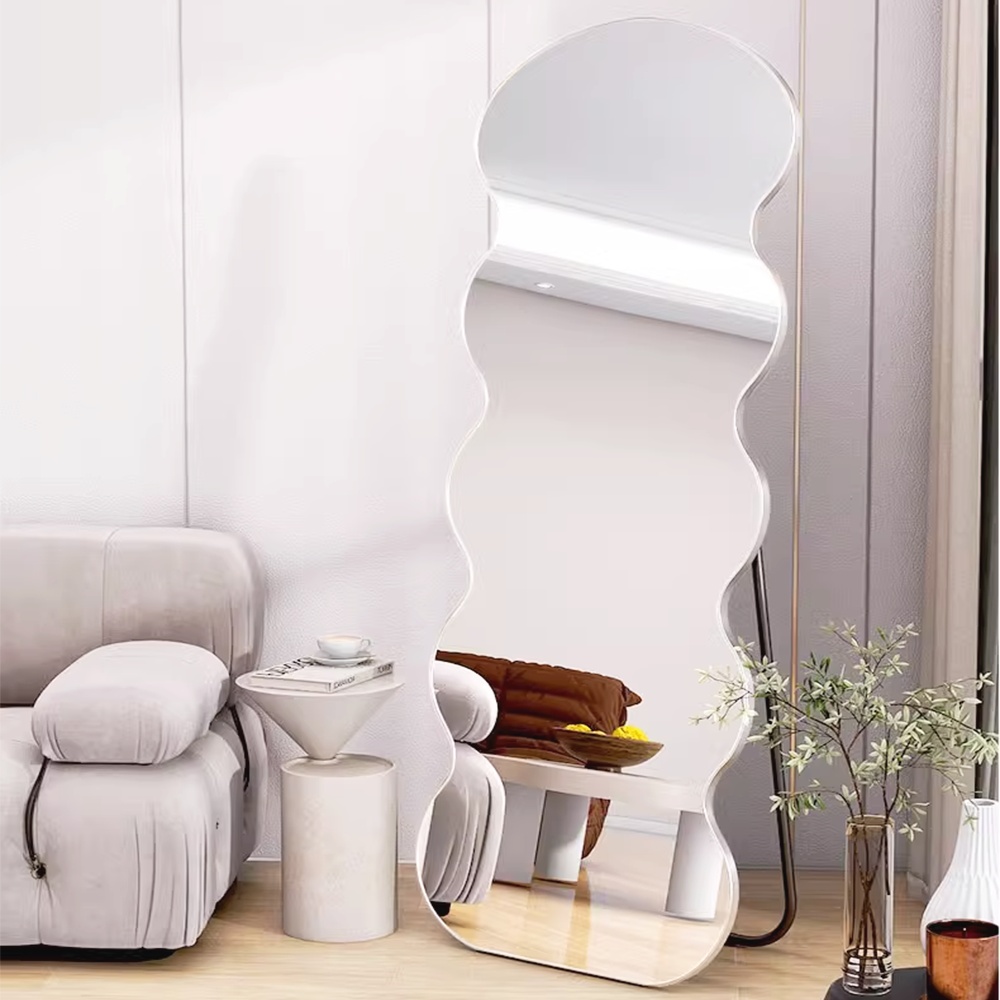
Bulk full length mirror development usually starts with a visual concept but soon moves into questions about glass, frame construction, size, standing or mounting format, finish, and packing. Qingdao Yinlongfei Handicraft Co., Ltd. works with overseas buyers on OEM and ODM mirror projects and can discuss these details during sampling and production preparation. Buyers who need a concrete reference while defining large-format mirror requirements can review the Full Length Wave 160cm x 80cm Floor Leaner Mirror page. The final order, however, should still be built around the buyer’s approved specification rather than assuming that one standard construction is suitable for every market or application.
Conclusion
Comparing full length mirrors for bulk purchasing requires more than choosing a shape and frame finish. The intended application should come first because it determines which glass, frame, support, and installation details deserve the most attention. A retailer may prioritize collection fit and repeatable appearance, while a project buyer may focus more heavily on installation and consistency across multiple rooms. When these requirements are fixed in the sample and carried into the production specification, buyers can compare quotations more fairly and reduce uncertainty on repeat orders.
FAQs
1. What Should Buyers Compare First When Sourcing Full Length Mirrors?
Start with the intended use and mounting format. Once that is clear, glass, frame construction, dimensions, finish, support method, and inspection requirements can be compared on a consistent basis.
2. Is a Thicker Mirror Glass Always Better for Full Length Mirrors?
Not automatically. Thickness should suit the mirror dimensions, frame construction, weight requirements, product positioning, and approved sample rather than being judged as a standalone quality measure.
3. Should Retailers Approve a Full-Size Sample Before a Bulk Order?
For larger mirrors, a production-intent sample is useful because it allows buyers to evaluate reflection, frame straightness, proportions, stability, and overall construction at the intended scale.
4. Can the Same Full Length Mirror Construction Be Used in Several Sizes?
Sometimes, but larger dimensions may change structural requirements. Buyers should confirm whether glass, frame, backing, joints, or support details need adjustment when a design is scaled up.
5. What Should Be Kept for Future Repeat Orders?
Keep the final approved drawing, material specification, finish reference, product photographs, inspection criteria, and the identified approval sample so the next order does not rely on memory.