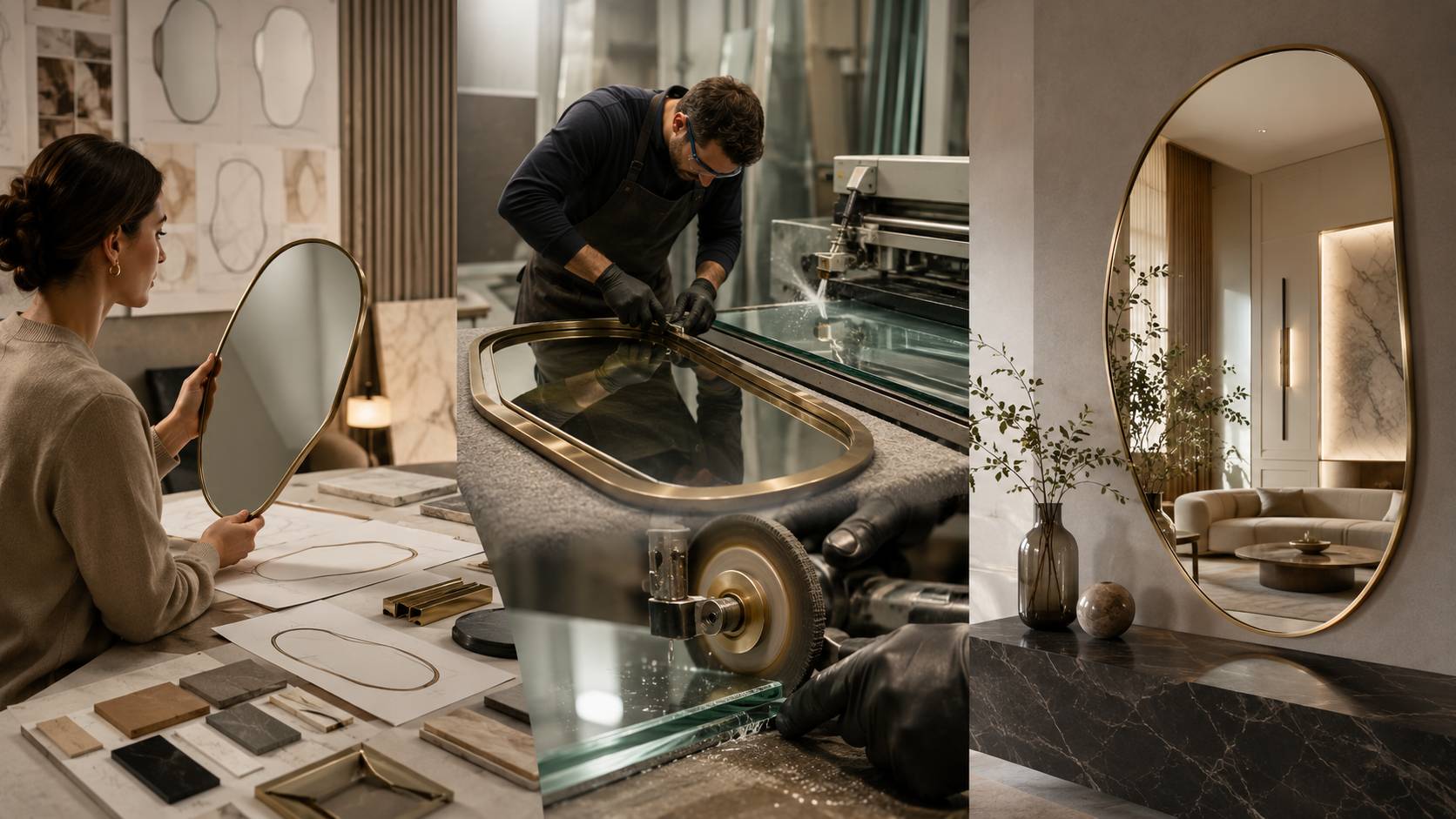
A custom mirror project typically starts with an idea. A buyer can come to a manufacturer with an image of a product found in another market, a designer’s concept, or even a complete vision of an entire furniture collection to bring to life. To realize the design, a factory needs to be able to do more than simply copying the appearance – it has to ask questions about function, materials, structural integrity, production volumes, and logistical convenience. For furniture retailers, manufacturers, and project buyers, a mirror factory’s willingness and ability to engage in this developmental process is the difference between a one-time custom order and the start of an ongoing partnership.
Why Does Custom Mirror Development Require More Than a Product Image?
Many overseas buyers begin a conversation with a reference picture. This is a common situation, especially when a brand wants to create a new collection quickly or a project company needs a specific style for an interior design plan. However, an image only shows the final appearance. It does not explain the frame structure, material combination, production method, or packaging requirements behind the product.
A manufacturer should evaluate the design from the point of view of the production. For instance, a large decorative mirror can be compared to the small one in terms of the similarity of appearance. Nevertheless, there are significant differences between them from the perspective of manufacturing. First, the frame of the large mirror should be reinforced to ensure the stable fixation of the glass part. Second, it is vital to adjust the finishing process since the size of the mirror can affect its appearance. Finally, the packing is another critical aspect that should not be overlooked because global distribution requires special protection of the product during transit.
What Information Does a Factory Need Before Starting Development?
Before a sample is created, buyers usually need to share more than a design reference. The intended application, target market, expected quantity, preferred materials, size range, and packaging requirements all influence the final solution.
A retailer building a home decor collection may focus on appearance and customer preference. A hotel buyer may pay more attention to repeat supply, installation efficiency, and consistency between hundreds of units. These differences change the way a factory approaches the same mirror design.
Early communication also helps prevent a common problem in custom projects: discovering production difficulties after the design has already been approved. Discussing these details at the beginning gives both sides a clearer understanding of what can be achieved.
Why Do Similar Mirror Designs Sometimes Need Different Solutions?
Two similar-looking mirrors may have different production methods due to the distinct purposes they serve. A decorative mirror that will be displayed in a store requires different qualities of manufacturing than a mirror that will be used in commercial projects. For instance, a large mirror with a wooden frame may need extra support during production as compared to a smaller decorative option. Moreover, a mirror with an unusual shape may need to be altered in the cutting process to ensure that it maintains its quality during the manufacturing process.
A good manufacturing partner does not simply follow a drawing. The supplier also helps evaluate whether the design can work in real production conditions.
How Does a Manufacturer Turn a Design Concept Into a Production-Ready Mirror?
The development stage is when ideas meet reality. A product that looks nice on paper has to undergo a series of tests before going into mass production.
The first sample is always crucial since it gives both the buyer and the manufacturer a chance to inspect all details that cannot be grasped from a picture. The frame proportion, surface structure, connection mechanism, and other elements can be reviewed before moving to the next step.
Why Is Sample Development Important for Custom Mirror Orders?
A sample is not only a product approval process. It is also a test of whether the design can be repeated.
For example, a buyer may approve a mirror with a special wooden finish. During sampling, the factory may discover that the finish requires a different processing method to maintain the same appearance across future orders. These adjustments are valuable because they reduce the risk of quality differences during mass production.
For brands developing their own collections, sample development also provides an opportunity to confirm whether the product matches customer expectations before making a larger investment.
How Do Manufacturers Balance Design Ideas and Production Requirements?
Not every design needs to be changed, but some designs need practical adjustments. This is especially common with customized shapes, special materials, and large-size mirrors.
A manufacturer may suggest changing a frame structure, adjusting material thickness, or improving packaging support. These changes are not about reducing design value. They are usually made to improve production stability, control costs, and reduce problems during transportation.
The best result comes from finding a balance between the original concept and the requirements of real manufacturing.
Which Mirror Features Can Be Customized for Different Markets?

Customization allows buyers to create products that match their own customers instead of choosing only from standard designs. For international brands and distributors, this flexibility is often an important reason to work directly with a manufacturer.
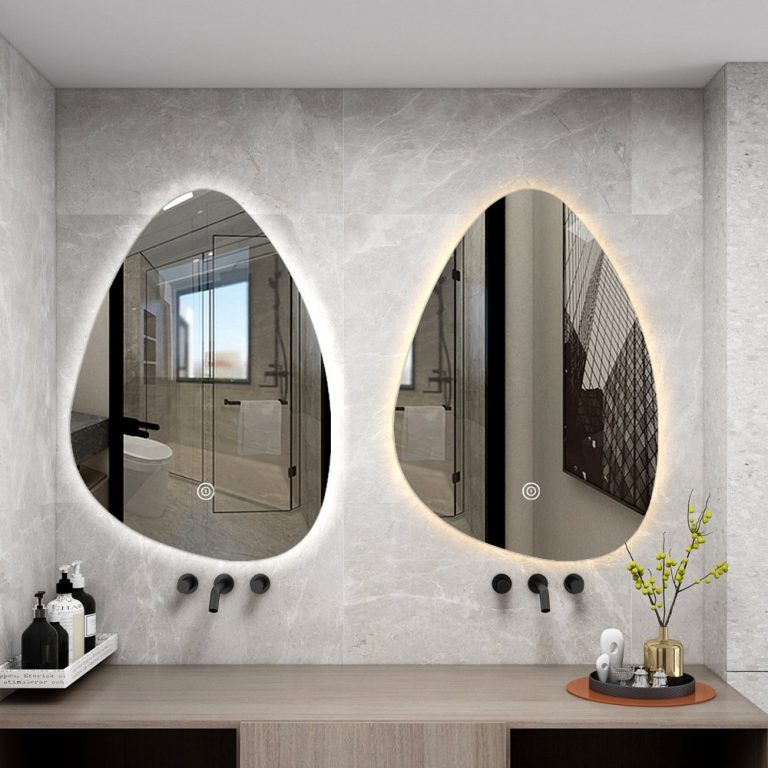
Different mirror categories also have different customization priorities. Wall Decor Mirrors are often developed around frame style, shape, and interior decoration trends. Full Length Mirrors require more attention to size, structure, and transportation because of their larger dimensions. Bathroom Mirrors may involve additional functional requirements depending on the project environment.
How Do Materials Influence the Final Product Positioning?
Material selection affects both appearance and market positioning. A natural wood frame can create a warmer feeling for residential spaces, while a simpler metal frame may better fit modern commercial interiors.
For retailers, these differences can help create product collections with clearer market identities. Instead of selling a standard mirror that looks similar to competitors’ products, customized materials and finishes allow brands to develop something more recognizable.
Why Are Size and Shape Adjustments Important for Project Buyers?
Project buyers often need mirrors that match specific spaces. A hotel renovation may require consistent sizes across multiple rooms, while a furniture retailer may need several dimensions to fit different home layouts.
Manufacturers with customization experience can adjust product dimensions and structures based on these applications. The goal is not only to make the mirror look correct but also to ensure it works well after installation.
What Should Buyers Review Before Moving From Samples to Bulk Production?
A successful sample does not automatically guarantee a successful large order.The challenge becomes one of how to maintain the same standard when production expands from a few examples to thousands of units.
At this stage, buyers become much more concerned with the uniformity of materials, finishes, workmanship, and packing. Thus, minor variations that may not be noticed in single items or small quantities can be glaring when viewed in large displays or installations.
How Can Buyers Check Production Consistency?
Production consistency can be achieved in various ways, depending on such factors as product material preparation, processing technology, inspection procedures, and interrelation between production stages.
Therefore, a reliable supplier should be able to demonstrate the quality control process to ensure that product quality remains consistent, thus eliminating the necessity to inspect every single item upon arrival.
Why Does Packaging Need to Be Considered During Development?
For mirrors, packaging is closely connected with product design. A large or specially shaped mirror may require a different protection method compared with a standard model.
Considering packaging early can reduce transportation risks and avoid situations where a product looks perfect in the factory but arrives damaged after international shipping.
How Can Buyers Select the Right Manufacturer for Long-Term Cooperation?

When it comes to selecting a manufacturer for bespoke mirrors, the question is more complex than buying ready-made products. It is essential to understand whether the selected supplier can work with you further, providing unique products, ongoing cooperation, and an opportunity to adjust to new conditions.
A producer that has been engaged in the production of different categories of mirrors can offer more sensible solutions for a specific task. For example, a complete set of bathroom mirrors, a hotel mirror project, and a collection of mirrors for shops will have individual characteristics despite being used in the mirror industry.
What Capabilities Matter Most in a Custom Mirror Partner?
Production ability is only one competency in the supply base relationship. Other factors such as communication, problem solving, quality control, and experience in international business also contribute to the end result.
Therefore, for buyers who plan to establish partnerships in the long-term, it is essential to find a supplier that will be able to address the given product’s development, implementation, and ongoing support.
How Can Buyers Work With a Reliable Custom Mirror Manufacturer?
For companies developing new mirror collections or customized projects, working with a manufacturer that understands both design and production can reduce unnecessary risks. Qingdao Yinlongfei Handicraft Co., Ltd. provides customized mirror manufacturing solutions for international buyers requiring wall mirrors, full length mirrors, bathroom mirrors, and floor mirrors. The company supports OEM/ODM projects and provides services covering product development, material processing, quality inspection, and packaging management for residential, hospitality, and retail applications.
Conclusion
The process of custom mirror production is a collaborative one that includes both design and real production stages. Each of these stages is essential and contributes to the overall result and specific customer requirements. For this reason, product discussions and the creation of a prototype, control of quality, and shipment scheduling are all crucial. Therefore, one should choose a manufacturer that allows one to participate in the production process actively to produce a design that will be easy to reproduce and scale in the future.
FAQs
1. Can buyers start a custom mirror project with only a reference image?
Yes, but the image is only the starting point. The manufacturer will still need information about size, materials, application, quantity, and packaging before production.
2. Why do custom mirror samples need adjustments?
Because some design details only become clear during production. Adjustments can improve manufacturing stability, quality consistency, and transportation safety.
3. What types of mirrors can be customized?
Manufacturers can customize wall mirrors, full length mirrors, bathroom mirrors, floor mirrors, and other decorative mirror products according to project requirements.
4. What should buyers check before placing a bulk mirror order?
Buyers should review production capability, quality control methods, material consistency, packaging solutions, and previous project experience.
5. Why do brands choose custom mirror manufacturers?
Custom manufacturers can help brands create unique products, solve production challenges, and maintain stable supply for future orders.