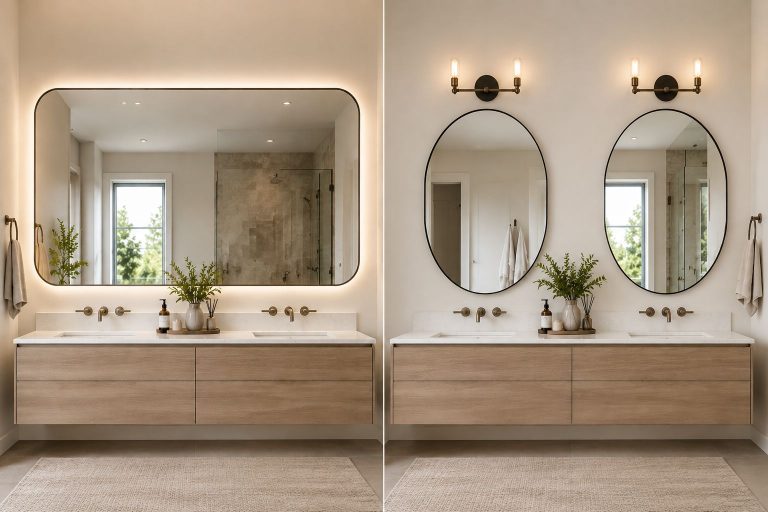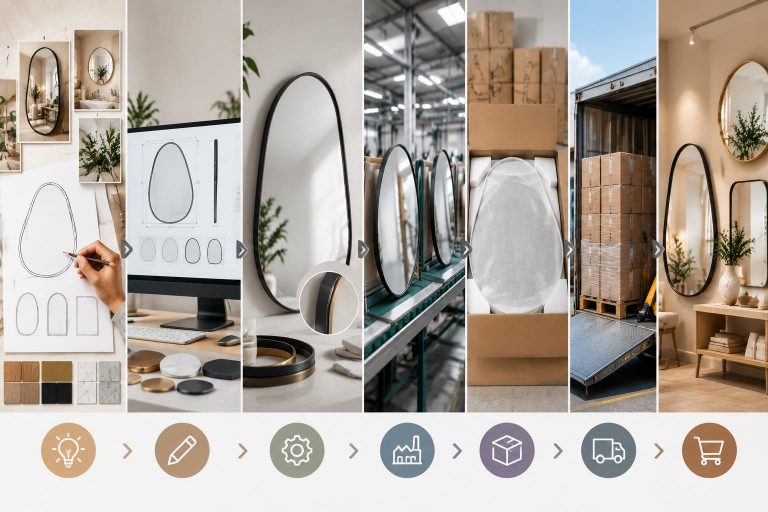
A leaning mirror or standing mirror is more than just a decorative item, especially for homeowners, interior designers, retailers and buyers of furniture. The decision for the right full length mirror can affect the room’s setting, safety, the way it is to be installed, how it will be packed and ultimately how it will be used. A floor length mirror can also be used as a decorative piece and as such one must also consider the wall space, the frame, the glass, the stability of the mirror and lastly the supplier of the said mirror.
What should buyers consider when comparing leaning mirror vs standing mirror?
This depends on your use of the mirror, where you plan to put it and how you plan to install it.
How does a leaning mirror work in different home layouts?
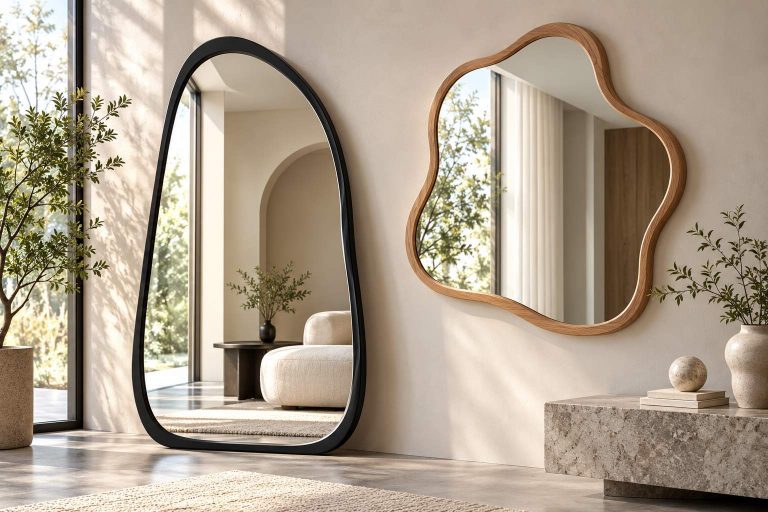
This mirror is designed to be a leaning mirror which can be placed against a wall without being mounted. It is a very popular choice for bedrooms, dressing rooms, living rooms and for retail displays as it has a very relaxed style and is very versatile.
Leaning Mirrors have the easy ability to be repositioned as needed and are very easy to install. While the Leaning Mirrors require a decent amount of floor space and a solid surface to stand on their ability to fit into homes with very small spaces can be a drawback. Also, homes with kids and/or pets would be best to use a leaning mirror that has anti-tip hardware or can be mounted to the wall to add an extra layer of safety.
How does a standing mirror provide different advantages?
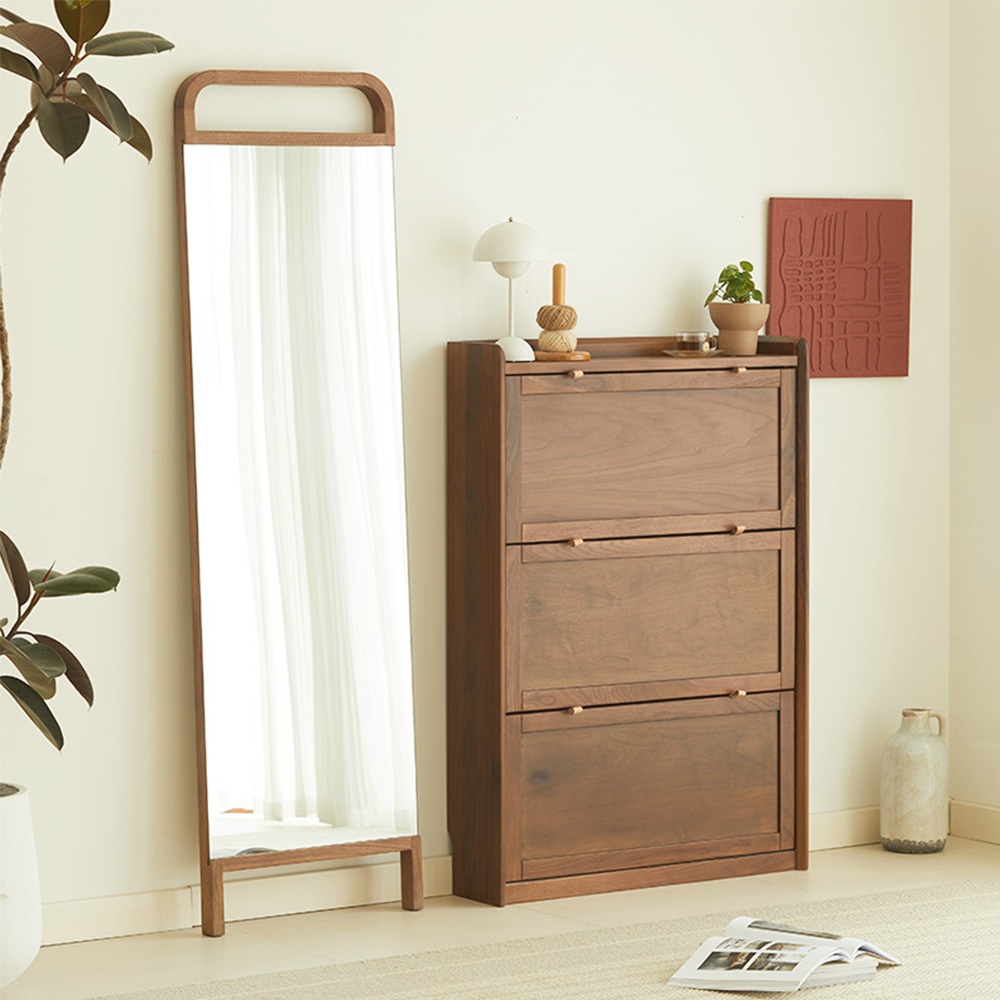
A standing mirror or freestanding mirror is a type of mirror that has a supporting structure such as a back stand or frame. It can be put up anywhere without leaning against a wall. These types of mirrors are ideal for use in rental homes or for display purposes that are temporary in nature. They can also be used in bedrooms as well as commercial establishments and offices.
While adding a support structure to a table base increases the weight of the item, the packaged size and thus the shipping costs also increase. Therefore, it is also important to check whether the stand is stable enough when in use, whether the hinges or joints are of good quality and whether spare parts are available in case they break.
| Comparison factor | Leaning mirror | Standing mirror |
| Installation | Simple placement | Ready-to-use structure |
| Space requirement | Needs wall support area | Needs floor area |
| Flexibility | Easy to move | Moderate mobility |
| Stability | Depends on support | Depends on frame design |
| Shipping considerations | Usually simpler | More complex packaging |
Which floor mirror design is better for different applications?
The priorities for different users can vary greatly. For example a home buyer may be looking for appearance, whereas a retailer or project buyer will be looking for durability and logistics.
When is a leaning floor mirror a better choice?
A leaning floor mirror is ideal when you want flexibility in a stylish product. Interior designers love to use these mirrors as they can create different effects within a room and can even make a room appear larger. The angle at which you place the mirror is key to creating different effects.
Leaning mirrors can also be a great option for commercial buyers looking to furnish clothing stores, showrooms and hotel rooms. These items can be easily moved from room to room and supplier must provide full installation instructions to avoid any risk of the mirror falling and causing injury.
When is a standing mirror more practical?
We prefer to offer standing mirrors for independent use. A standing mirror is great for use in bedrooms, dressing rooms or other places where fixed wall mounting is not desired.
Standing mirrors can be especially useful for Hospitality and Retail Projects as they can be put straight into place on arrival, thereby saving on installation costs. Prior to placing a large order it is wise to test the sturdiness of the supporting frame and the base, as well as the protection of the packaging.
How do glass quality and frame materials affect mirror durability?
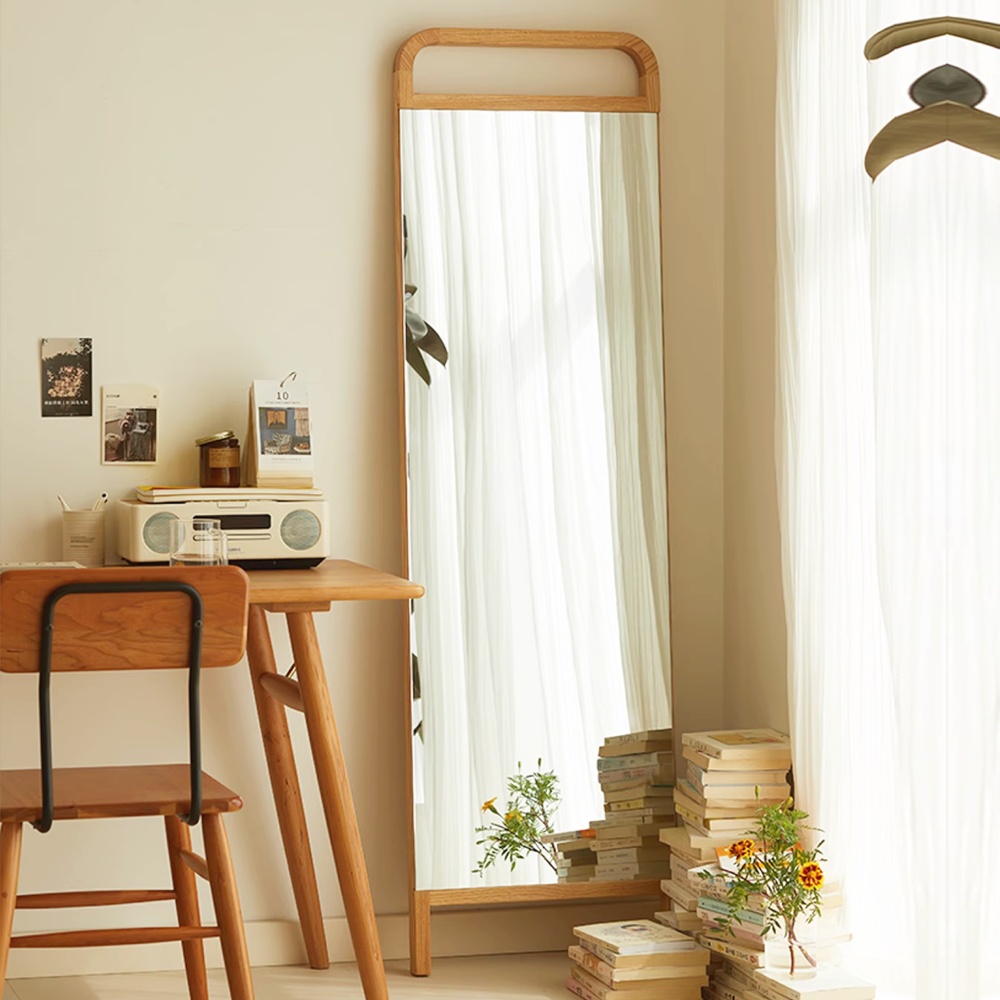
A good floor mirror is not just about the shape. The quality of the glass, the protection of the backing and the material of the frame all affect the appearance of the mirror, how safe it is and how long it will last.
What should buyers check about mirror glass?
Mirror glass should have a distortion free reflection without any dark spots or coating faults. Larger full-length mirrors are inspected more carefully because small defects are more visible on larger surfaces.
When purchasing glass for export, it is best to ask your supplier about the thickness of the glass, the edge treatment, whether the glass has a protective backing and what type of quality control inspections will be conducted on the glass prior to shipping. This is because during long trips over bumpy roads, subtle weaknesses in the glass can be exposed.
How do frame materials influence product performance?
The frame will have an impact on both how the display looks and how it is supported. There are a number of different materials that are commonly used for the frame of a display, including metal, wood, MDF and other engineered materials. These different materials have a number of characteristics including weight, moisture resistance, cost and flexibility.
For example, wooden frames have a warm, decorative character, metal frames on the other hand have a modern character and are very strong. The frame material is therefore matched to the respective area of use.
What safety and packaging issues should mirror buyers check?
Big mirrors are sensitive to damage and we go to great lengths to ensure that they are packaged properly from the day that they are made to the point of their final installation. Whether you are a consumer or a business buying for commercial use, our concerns for safety and packaging are the same as yours.
How can suppliers reduce mirror transportation risks?
Export packaging should protect against impacts, vibrations and edge damage. On the basis of the shipping conditions, buyers should check whether suppliers are using corner protection, reinforced packaging cartons, foam insert packaging, wooden packaging crates or other protective packaging measures.
For bulk orders, sample approval before mass production is important. Buyers should inspect packaging quality, mirror condition after transport simulation when available, and supplier replacement policies.
What installation concerns should be reviewed?
Before choosing a style of mirror, it is wise to consider several things first: where you plan to put the mirror, the strength of the wall where you plan to install it, the state of your floor, and the typical behavior of the people who will be using the mirror.
A leaning mirror may need anti-tip support depending on the size of the mirror and its surrounding environment. A standing up mirror on the other hand will require a sturdy base to stand up and sufficient space around it. Providing clear installation instructions will also help to prevent customer complaints and after-sales problems.
How should buyers evaluate mirror suppliers for custom projects?

Supplier selection has a huge impact on product consistency, delivery reliability and ability to customize. For hotels, retailers, furniture brands and interior projects this is very important.
What should a mirror supplier checklist include?
A practical supplier checklist may include:
- Glass specifications
- Frame material options
- Available sizes and shapes
- Custom design capability
- Packaging method
- Sample approval process
- MOQ requirements
- Production lead time
- Quality inspection process
- After-sales support
By considering these aspects, the buyer can compare suppliers on a more sound basis than just evaluating the price of the required articles.
Why do customization and communication matter?
When ordering custom mirrors the customer will usually have specified dimensions, colors, frames and packaging requirements for the mirrors. The supplier should then confirm the customer’s drawings, samples, production details and delivery dates.
There is a risk for poor communication in size, material and packaging. The supplier coordination for international orders has to be done very accurate.
Which supplier can support floor mirror customization and sourcing needs?
Qingdao Yinlongfei Handicraft can offer a variety of mirror products and home decoration items for buyers searching for floor mirrors. We can provide floor to ceiling length mirror products as well as other decorative items that can be used in conjunction with any mirror. We can assist the buyer with choosing the products, discussing any custom made mirror products and co-ordinating the production of any of the mirror items in accordance with the buyer’s required design. If the buyer is unsure whether to purchase a leaning mirror or a standing up mirror then the supplier can offer the buyer choices of sizes and styles of frames and discuss with the buyer the options for packaging of the mirror products in order to assist the buyer with placing the order. Businesses would also need to compare details of all products offered by suppliers, including product specifications, materials used, prices, delivery terms and after sales service etc.
Conclusion
Leaning mirrors vs standing mirrors, where to start? With so many options on the market, choosing the right floor length mirror can be determined by several factors including where you will place the mirror, how you plan to install it, the design of your space and the durability of the mirror. Not only should you take into consideration the quality of the glass and the frame of the leaning mirror or standing mirror, but you should also consider the safety of the product, the packaging it arrives in and the supplier from which you are purchasing the mirror. A good floor mirror comparison will allow you to determine which leaning mirror or standing mirror is right for you and your space, helping to avoid installation problems and potential damage to the product.
FAQs
1. What is the main difference between a leaning mirror and a standing mirror?
A leaning mirror leans against the wall and a standing mirror has its own stand and can stand up on its own.
2. Is a leaning floor mirror safe?
A mirror can be safe as long as it has been placed correctly and is adequately supported. Large mirrors might require anti-tip brackets in certain environments.
3. Which mirror is better for small rooms?
A leaning mirror is often used in a small room. It requires the least amount of structural support but depends on the available floor space and how you wish to place the mirror.
4. What should buyers check before ordering floor mirrors in bulk?
Things to check when looking for suppliers: glass quality, frame material, size, packaging, options for customisation, MOQ, lead time, service from supplier.
5. Are standing mirrors more expensive than leaning mirrors?
The price depends on the materials, the frame design, the size and the production requirements. Standing mirrors usually require a special structure and additional packaging.