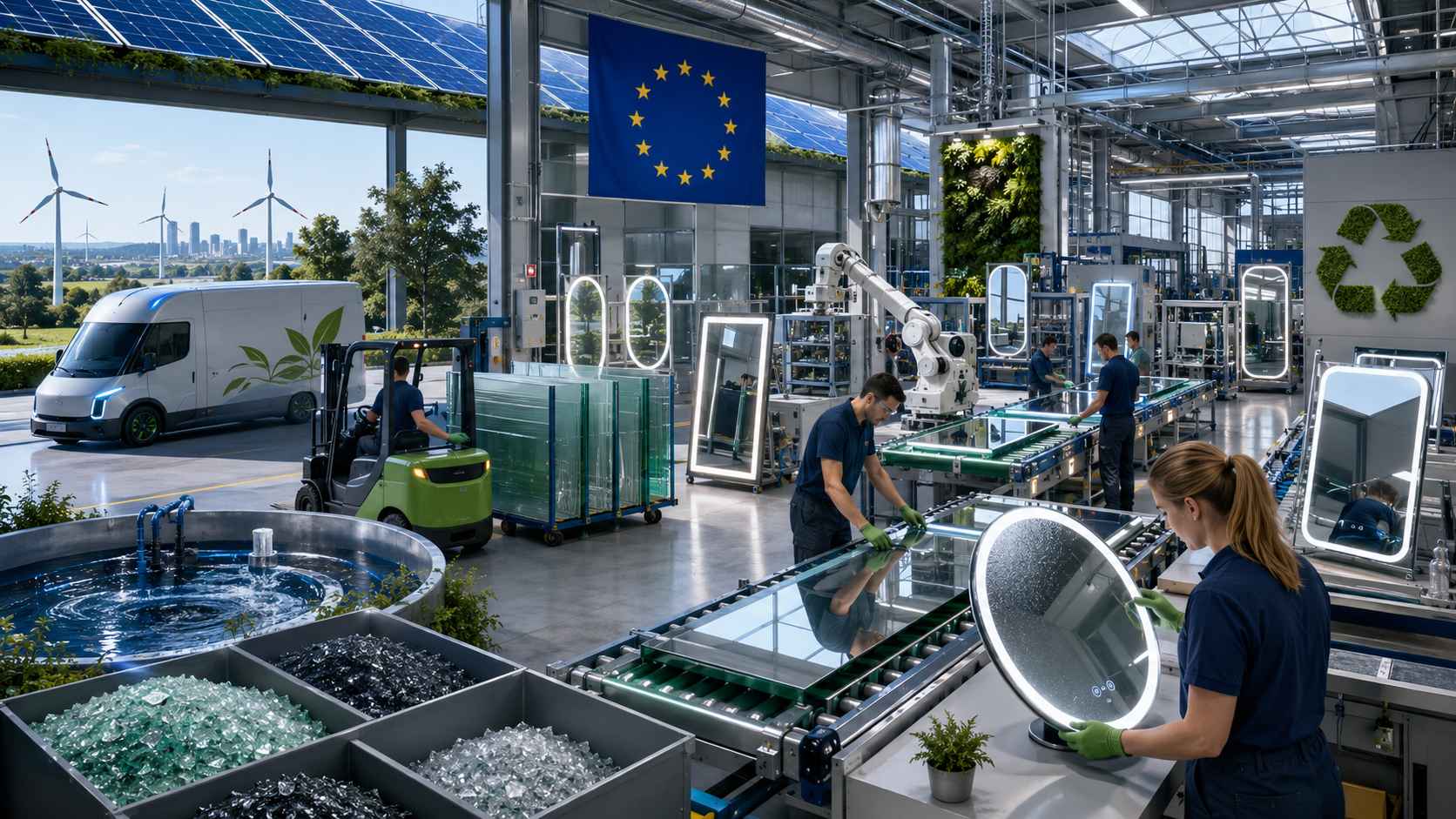
For bathroom mirror importers, retailers, hotel contractors and private-label brands the EU Green Deal is changing more than just climate protection when talking about Bathroom Mirrors. By 2026 the EU Green Deal will change design and packaging as well as documentations and sales arguments of a simple Bathroom Mirror. Apart from dimensions, frame finish, glass quality and purchase price, procurement teams will have to check material origin, packaging recyclability, and compliance of lighting used for LED-Mirrors. They also will need to check if sustainability claims made by suppliers can be proven by sufficient and reliable documents.
Why does the EU Green Deal matter for bathroom mirror buyers in 2026?
The EU Green Deal aims to support the implementation of climate neutrality by 2050. Related product policies are pressurizing manufacturers to use resources of lower environmental impact, to extend the life of their products and to prevent waste as much as possible. The Circular Economy Action Plan also focuses on product design, on increasing resource efficiency and on keeping materials in use for as long as possible.
How does policy pressure reach mirror manufacturing?
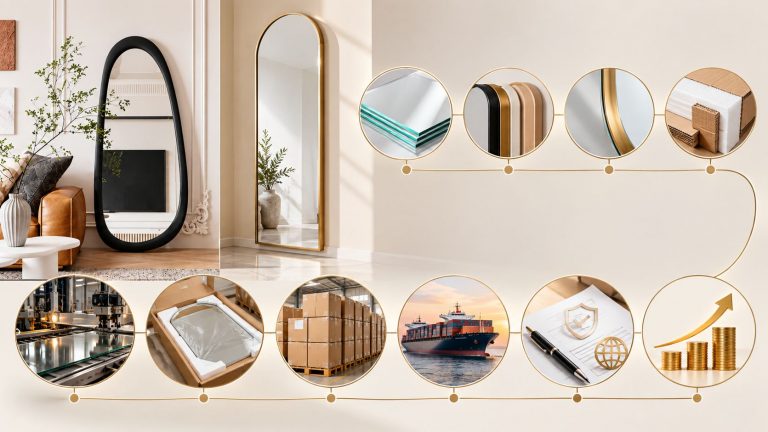
A simple-looking bathroom mirror consists of a number of components: a float glass, a reflective coating of silver or aluminum, the MDF for the mirror back, the metal or plastic frame, safety backing, adhesives, cartons, foam for protecting the glass during transport, and sometimes even an LED lighting system. Every single component has an influence on the price, the legal requirements, the durability and the disposal of used mirrors.
The change for the buyer is documentation. The supplier should be able to explain the materials used, whether coatings or adhesives contain so called restricted substances, how the mirror is packed and whether the used electrical parts are subject to the EU rules.
What should buyers check first?
Seasoned Importers start with the Product’s Bill of Materials, the outer packaging and the Sales Channel that the Product will be sold through. A framed mirror destined for a Hotel is obviously going to have a vastly different set of risks than say an LED vanity mirror being sold online through e-commerce.
As a buyer you should ask for specifications before placing an order such as: glass thickness, backing, frame, moisture resistance, mounting hardware, drop-test packaging and compliance documents required for certain markets.
Which 2026 regulations are most relevant to a Sustainable Bathroom Mirror?
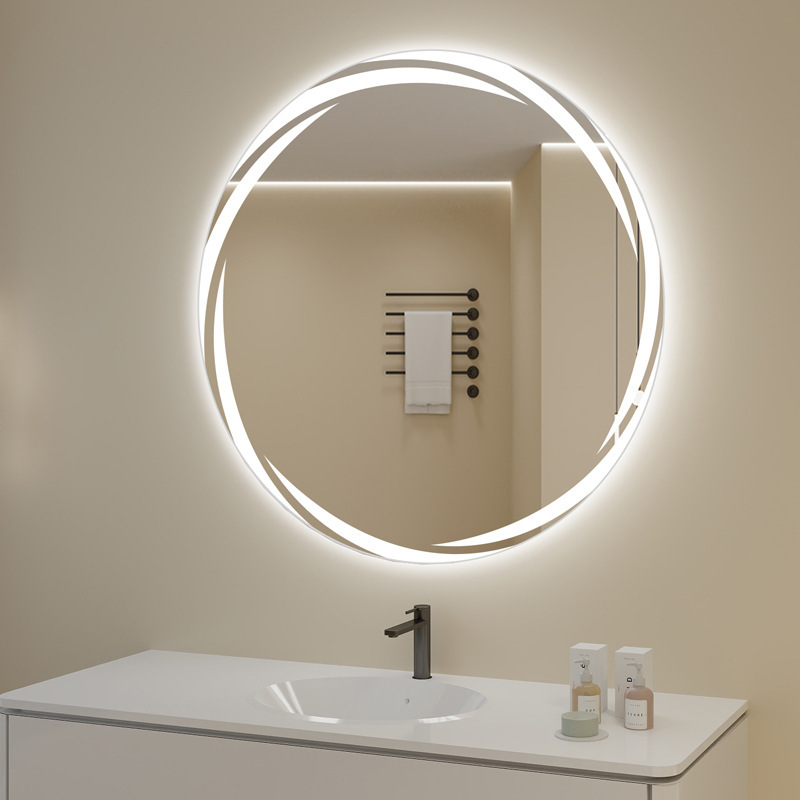
Not all EU Green Deal measures are relevant to every bathroom mirror. In order to assess supplier approval potential, one must clearly distinguish between mandatory measures and sustainability measures that customers can determine for themselves.
How does packaging regulation change export preparation?
The Packaging and Packaging Waste Regulation, Regulation (EU) 2025/40, has entered into force on 11 February 2025. The core provisions of this new Regulation shall apply 18 months after the date of entry into force, that is as of 12 August 2026. The new Packaging Waste Regulation replaces the Packaging Directive 2011/85/EU and centers more than before on the reduction of packaging, on the recyclability of packaging materials and on the prevention of waste.
Export packaging for mirrors can be very heavy. Double-wall cartons, corner protectors, foam, honeycomb paper, wooden pallets and protective film are some of the items used. It is not very helpful for buyers to demand less packaging. Instead they should ask for packaging that is safe and protected, made of recycled packaging materials, clearly labeled and with as little plastic as possible as used as necessary.
How does ESPR affect product design expectations?
Ecodesign for Sustainable Products Regulation (EU) 2024/1781. The Regulation sets out requirements for improving circularity, energy performance, and other sustainability characteristics of products placed on the EU market such as durability, reparation, recycling, disassembly and reuse.
Bathroom mirrors are not subject to the same level of detail in ESPR for specific products as are other products. However, the trend in specifying mirrors, in a framed format, with lighting modules that can be field replaced, made with safer materials, and offered with detailed documentation for comparison with other products on the market by specifiers is increasing.
How is bathroom mirror design changing under sustainability pressure?
A Sustainable Bathroom Mirror is more than just a green labeled product. It is a product that does not generate any unnecessary material waste, that functions in humid bathroom environments and is delivered to the customer in an appropriate size of packaging without any excess.
Which materials deserve closer review?
Firstly, the quality of glass is crucial. Buyers should check the thickness of the glass, the quality of the edge finishing, the consistency of the coating, and the quality of the safety backing. As for the frames, aluminum are usually good for preventing moisture, very slim, but not very strong. MDF or wood-based frames need to be properly sealed to be used in the bathroom. Plastic frames are very cost-effective but in this era of increasing recyclability and restricted substances used in production, this may be a concern for buyers.
For LED mirrors, the electrical part should be checked separately. The electrical part is covered by the RoHS Directive, which prohibits the use of hazardous substances in electrical and electronic equipment. Also the WEEE rules for waste electrical and electronic equipment apply.
What are the main trade-offs?
A thicker mirror could be more premium but could add weight and increase cost for shipping. Paper-based packaging for protection could be designed to be more recyclable but still needs to pass realistic tests for transportation. A sealed LED module is protected from moisture but is harder to repair.
| Design choice | Potential advantage | Buyer risk to check |
|---|---|---|
| Aluminum frame | Moisture resistance, modern finish | Surface scratches, corner joint quality |
| MDF or wood frame | Warm decor style, flexible colors | Swelling risk in humid bathrooms |
| LED mirror | Retail appeal, functional lighting | RoHS, WEEE, wiring, driver reliability |
| Plastic reduction in packaging | Lower waste impact | Higher breakage risk if not tested |
How should buyers evaluate suppliers for EU Green Deal readiness?
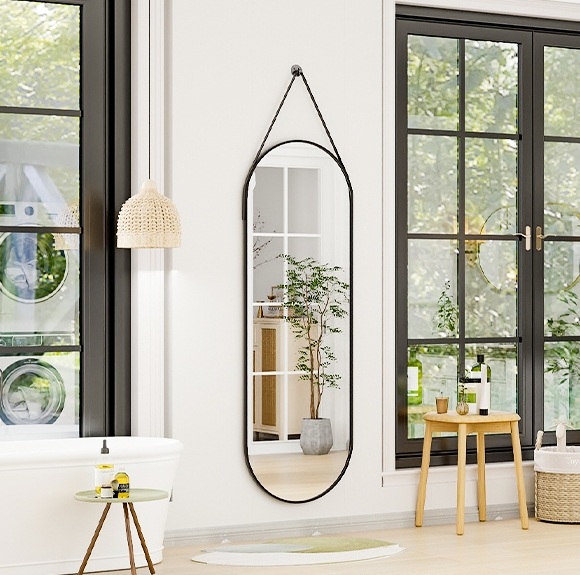
Evaluating suppliers is not just about price and should also consider other aspects of a supplier’s offer such as the materials they use, the testing, packaging and documentation provided. This is to avoid delays with shipments of goods which have been rejected due to lack of proper documentation or because of unsupported environmental claims.
What documents should be requested?
A practical buyer checklist may include:
- Material description for glass, frame, backing, adhesive, and packaging.
- Packaging specification with carton structure and protective material
- Drop-test or transport-test method when available
- RoHS documents for LED mirrors
- Discussion of WEEE-related responsibility with the EU-importer/Brand owner.
- Clear indication of which claims are supplier declarations and third-party certificates.
It is recommended that buyers are cautious of terms such as ‘eco-friendly mirror’ or ‘green product’ and demand from suppliers evidence to support such claims. EU green claims policy is evolving towards more science-based and verifiable claims.
How can buyers reduce cost without increasing risk?
The best cost reduction is achieved through specification control rather than removing protection or opting for the lowest price. For example, by specifying a number of different sizes and limiting the number of different frame styles, and approving a single packaging design that has been thoroughly tested, the buyer can keep a handle on costs by sampling before entering into a large production run.
For hotel and project buyers maintenance is important. Test the mounting strength, the corrosion resistance, the possibility to replace the LED parts, and how you will clean the mirror.
How can Qingdao Yinlongfei Handicraft support bathroom mirror sourcing?
After the technical and compliance requirements have been set by the buyer, he or she needs a supplier who is able to communicate on issues like product design, packaging, and order execution.
What role can the company play?
Qingdao Yinlongfei Handicraft Co., Ltd. is a China manufacturer that specializes in producing home decor items, for example: mirror, framed mirror, photo frame, small furniture, wood craft etc.. The company’s website lists out Qingdao Yinlongfei Handicraft’s bathroom mirror products, including LED vanity mirror and framed mirror styles, that can help buyers compare their decorative mirror options and functional mirror options.
For B2B buyers, the useful value is not a slogan but the ability to coordinate mirror style, size, frame material, packaging, and order details. The company can be considered when buyers need bathroom mirror sourcing support for retail, home decor, or project channels. Buyers should still compare specifications, compliance documents, pricing, delivery terms, and service expectations before final supplier approval.
Conclusion
The EU Green Deal is changing bathroom mirror manufacturing by making sustainability, packaging, documentation, and product durability part of normal buyer discussions. In 2026, a Bathroom Mirror for the EU market should be reviewed not only for appearance and price, but also for materials, moisture resistance, packaging safety, and compliance exposure. LED mirrors need extra attention because electrical components may trigger RoHS and WEEE obligations. The best sourcing decisions will come from clear specifications, realistic transport testing, and honest sustainability claims. Buyers who prepare these requirements early can reduce risk while building a more credible Sustainable Bathroom Mirror product line.
FAQs
1. Does the EU Green Deal directly ban traditional bathroom mirrors?
No. The EU Green Deal does not ban bathroom mirrors. Its effects are mostly confined to a number of related policies relating to circular design, packaging, waste, energy-related products and honest environmental claims.
2. What makes a Bathroom Mirror more sustainable for EU buyers?
A more sustainable Bathroom Mirror is made of durable materials, has a suitable, moisture-resistant construction, sustainable packaging, transparent material information and is repairable if needed.
3. Are LED bathroom mirrors subject to more compliance checks?
Yes. LED bathroom mirrors may involve electrical and electronic equipment rules, including RoHS substance restrictions and WEEE-related responsibilities, depending on the product and market role.
4. How should importers handle packaging changes in 2026?
Importers should ask suppliers for packaging specifications, recyclability details, and transport protection methods. Reducing plastic is useful only if the mirror still arrives safely.
5. Can suppliers claim a mirror is eco-friendly without proof?
They should avoid unsupported claims. Buyers should request clear evidence, such as material information, test reports, certificates, or documented packaging choices, before using sustainability claims in marketing.