An LED bathroom mirror can be specified by its outline, light behavior, controls and installation, but those choices only work when they match the room and the way people use it. For retailers and project buyers, the useful question is not which mirror has the longest feature list. It is which combination will remain clear, comfortable and easy to explain across the intended assortment.
Match the light to the viewing task
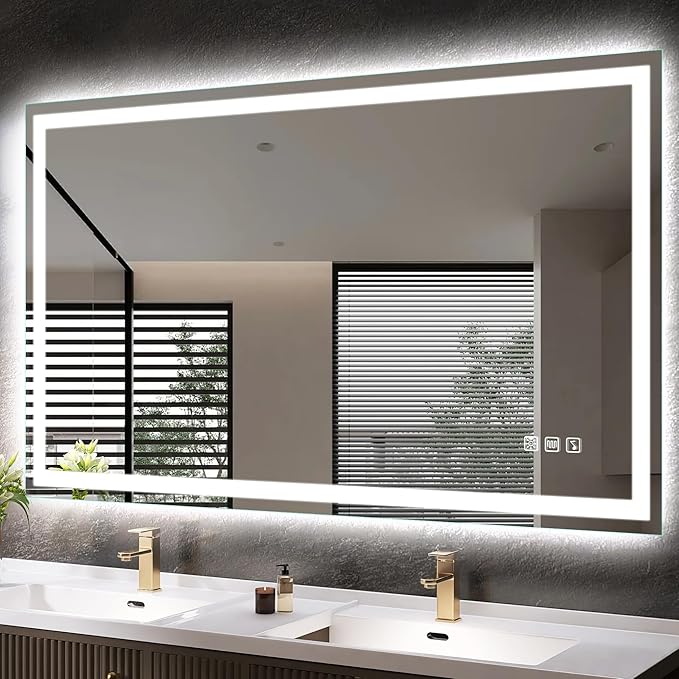
Light placement changes what a mirror does. A front-lit design sends light forward from the mirror perimeter; a backlit design directs light toward the wall and creates a softer outline. The difference affects the visual effect and how much direct task light reaches the face, so a product photograph alone is not enough to compare them.
For close-up grooming, ask how evenly light falls across the face and whether brightness is adjustable. A backlit bathroom mirror may suit ambient lighting, but the label alone does not establish adequate task illumination. Confirm output for the exact configuration.
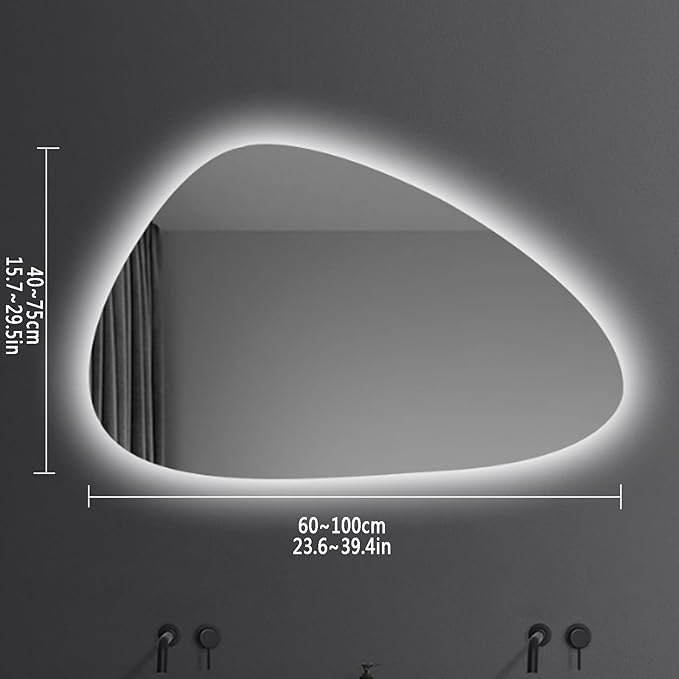
Shape, wall fit and range planning
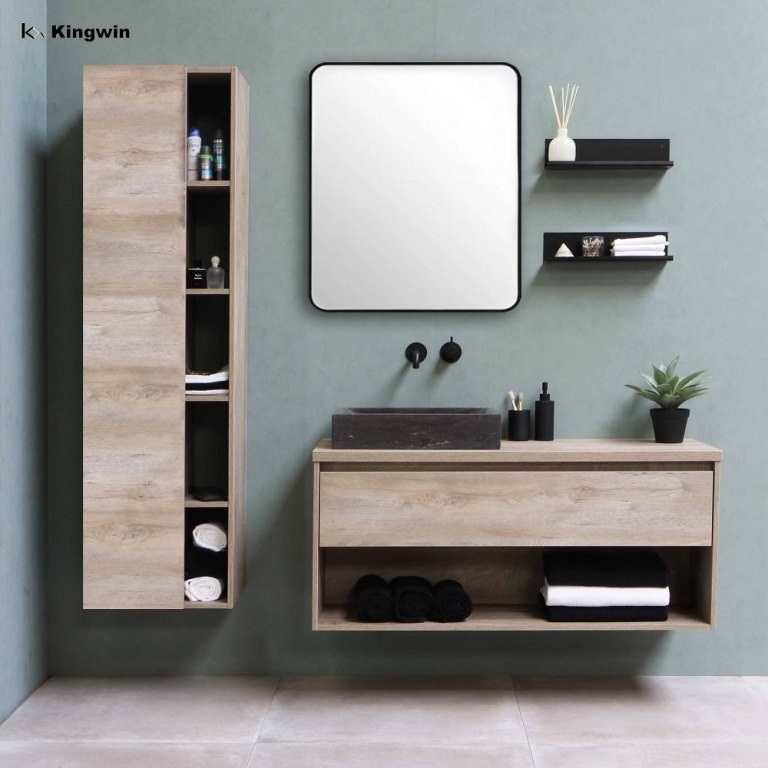
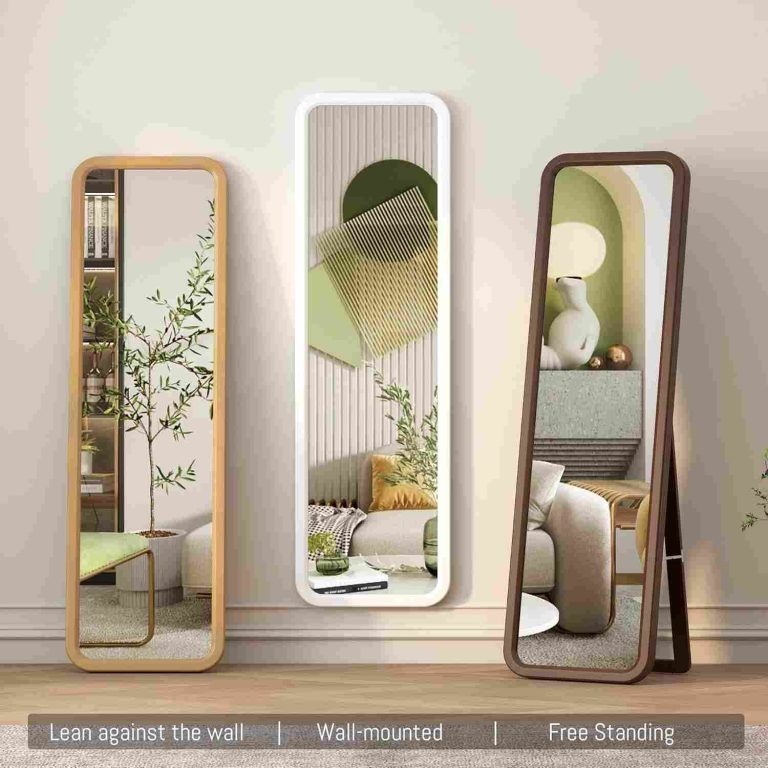
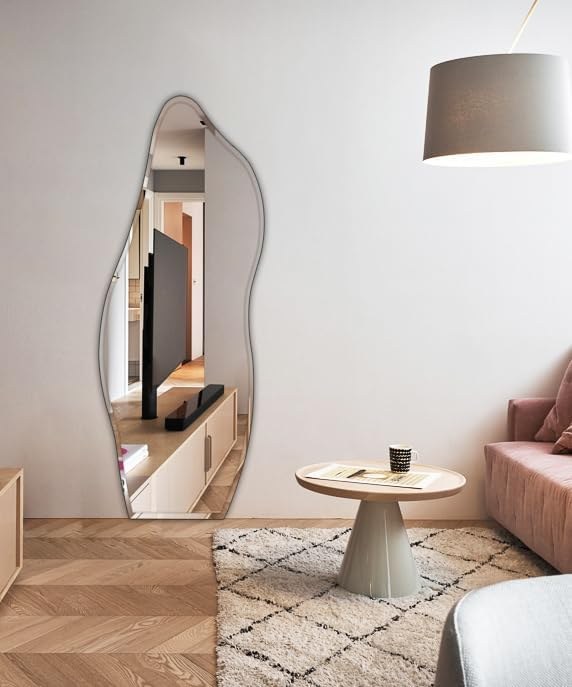
Shape affects both merchandising and fit. Round and oval mirrors soften a vanity; rectangular and irregular outlines create a stronger architectural feature. Compare overall dimensions with the usable wall area and nearby lights, cabinets and taps.
For a wall mounted lighted makeup mirror, check eye line, available size, orientation, mounting hardware and wiring for the exact SKU. A styled product photo cannot confirm fit across different bathroom layouts.
Keep controls simple to demonstrate
Controls should be evaluated as part of the user experience, not as a list of add-ons. A touch switch is easy to locate on a clean mirror face, while a dimmer or selectable color temperature gives users more control over the appearance of the light. A demister pad addresses a separate problem: condensation on the reflective surface after hot water is used.
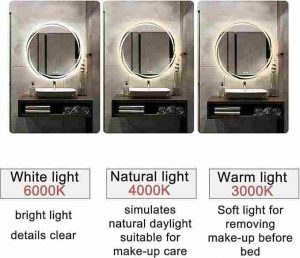
The documented round LED bathroom mirror example in the company product materials lists touch activation, dimming, three color choices and a demister pad. These are example features for that product description, not a promise that every LED mirror includes them. The same materials list color temperatures of 3000K, 4000K and 6000K for the specified LED option. Buyers should confirm which settings apply to the model under review and whether the switch remembers the last selection after power is turned off.
Compare one documented LED mirror configuration
The rounded LED mirror specification gives a useful example of how to read a feature sheet. Its values describe one listed configuration; they should not be transferred to the irregular backlit or pebble-shaped models.
|
Specification in the rounded LED mirror example |
Listed value |
What a buyer should confirm |
|---|---|---|
|
Mirror glass |
3, 4 or 5 mm silver or aluminum mirror |
Which thickness and mirror type apply to the chosen SKU |
|
LED color temperature |
3000K, 4000K or 6000K |
Whether one setting or selectable settings are supplied |
|
LED source |
2835 or 5050 SMD LEDs; CRI above 80 is listed |
The exact LED strip, color option and applicable test evidence |
|
Optional functions |
Defogger and touch switch |
Whether each function is included in the quoted configuration |
Thickness is a component specification, not a complete measure of image quality or durability. Likewise, a listed LED color temperature does not establish the light’s output at the user’s face. A model-by-model comparison should keep glass, lighting, controls and dimensions in separate fields so a lower-cost configuration is not mistaken for an equivalent one.
Treat installation and inspection as one specification
An LED bathroom mirror combines glass, electrical components, mounting parts and packaging. A buyer’s order specification should therefore identify the exact model, dimensions, light options, controls, mounting method, cable arrangement and destination-market requirements. Ask for the relevant product documentation for the market where the mirror will be sold; a general factory or management-system certificate does not establish that a particular mirror meets every electrical rule in every country.
Inspection can then follow the same requirements. A sample review can check the mirror face, edges, finish, switch response, light settings, demister operation if included, supplied hardware and the clarity of installation instructions. For a production lot, agree what will be checked, how defects will be recorded and what packaging condition is acceptable. These are buyer-side acceptance points to define with the supplier, not claims that a test has already been completed on every model.
An irregular backlit mirror bathroom model may need different size, mounting and finish checks from a standard round vanity mirror. Confirm the exact shape, lighting and included controls rather than assuming that a shared category means shared features. Kingwin Decor’s mirror range includes LED bathroom mirror products; buyers can use the selected model’s configuration as the starting point for a model-specific discussion.
Build a range around clear differences
A coherent LED bathroom mirror range can distinguish models by shape, light placement, controls and size. A simple comparison sheet helps sales teams explain which model suits ambient styling and which is intended for vanity use.
For a trade order, settle the model and market requirements before comparing price or packaging. This keeps the specification, sample approval and production inspection tied to the same version.
The practical specification is model-specific
LED bathroom mirror selection is clearest when each SKU is evaluated against its room role, lighting behavior, controls, mounting details and inspection criteria. Use a documented model example to understand the available options, then confirm every value against the exact product being quoted. That keeps the range easier to compare and reduces the chance that a feature listed for one mirror is assumed to belong to another.
FAQ
What is the difference between a front-lit and backlit bathroom mirror?
Front-lit mirrors direct light forward from the perimeter, while backlit designs illuminate the wall behind the glass. Their appearance and task-light effect differ, so compare the actual light output and intended use rather than relying on the product name.
Does every LED bathroom mirror include a demister?
No. A demister is an optional or model-specific function. Confirm whether it is included in the selected configuration and how it is operated.
Which color temperature should a buyer select?
That depends on the intended room effect and the exact product options. Some documented configurations list warm, neutral and cooler settings, but availability varies by model; verify the supplied settings before approving a sample.
Can specifications from one LED mirror be applied to another shape?
No. Glass thickness, lighting, controls, dimensions and mounting details need to be checked against each SKU. Similar appearance or a shared product family does not prove identical construction.
What should be checked before a production order?
Confirm the model-specific drawing or specification, included functions, mounting and wiring details, destination-market documents, sample approval criteria and packaging expectations. Agree how those points will be inspected for the production lot.