
Ever stepped into a room and felt something was missing? A bare wall begging for love. A corner that feels too tight. That’s when a gorgeous decorative mirror saves the day. It throws light around and ties everything together. But store-bought pieces usually fall short. Custom sizes and finishes? That’s the game-changer. They turn an okay mirror into your mirror. One that slides perfectly into that awkward spot or matches the old dresser you refuse to part with.
If you’re a designer juggling client whims or a homeowner dreaming up a statement piece, teaming up with a manufacturer isn’t as daunting as it sounds. It’s about clear chats, smart specs, and a dash of back-and-forth. In this guide, we’ll break it down, from sizing up your space to nailing those wood tones that warm up a room. By the end, you’ll have the know-how to craft something standout, like a wood floor mirror that leans just right against your entryway wall. Let’s dive in.
Why Bother with Custom Dimensions? It’s All About Fit and Flow
Picture this: You’re outfitting a cozy breakfast nook in a Brooklyn brownstone. Standard mirrors? Too bulky, swallowing the light from that one skinny window. Go custom, and suddenly you’ve got a 120cm-wide piece that hugs the corner without overwhelming it. Dimensions aren’t just numbers—they’re the secret sauce for making a space breathe.
In my chats with interior folks over coffee (you know, the ones buried in swatches), the big win is adaptability. A floor-standing decorative mirror might need to slot between a console and a doorway, so tweaking the height from 160cm to 150cm can make or break the layout. Data backs it up: Studies from design mags like Dwell show that properly scaled mirrors can amp up perceived room size by up to 25%, turning tight quarters into airy retreats.
But it’s not all math. Think lifestyle. Got kids barreling through hallways? A shorter, wider wood floor mirror at 80cm deep keeps it out of tackle-zone range. Or for that sunroom glow-up, stretch it to 180cm tall to capture every ray. The key? Start with your room’s bones—measure twice, sketch once. Custom lets you sidestep the “close but no cigar” trap of ready-mades.
Common Sizing Pitfalls and How to Dodge Them
- Overlooking Angles: Leaners look killer, but a 10-degree tilt changes the effective height. Test with tape on the wall first.
- Forgetting Clearance: Add 5-10cm buffer for feet or furniture. Nobody wants a toe-stubber.
- Ignoring Proportions: Aim for the “golden ratio”—mirror height about 1/3 to 1/2 of the wall it’s against. Feels balanced, every time.
Nail these, and your decorative mirror isn’t just decor; it’s a room reshaper.
Finishes That Stick: Picking Woods and Tones for Lasting Charm
Finishes are where personality creeps in. A raw oak edge screams rustic farmhouse, while a soft matte black whispers modern edge. For wood floor mirrors, it’s about harmony—matching that espresso coffee table or contrasting the crisp white trim.
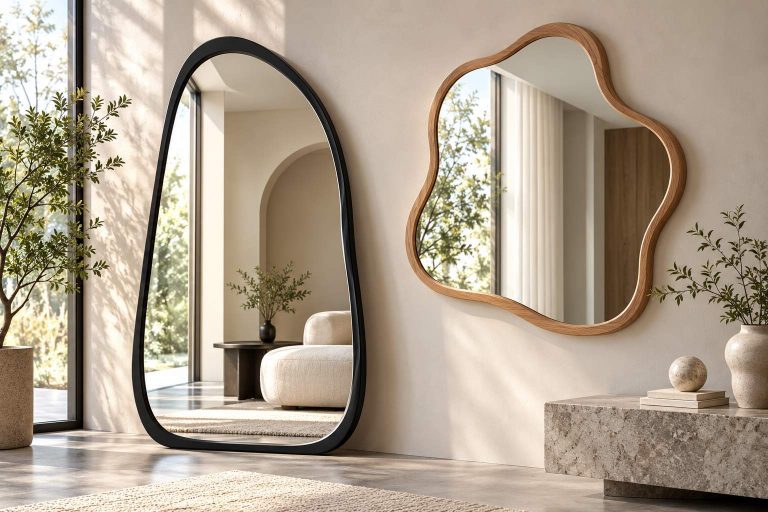
Take a wavy-edged beauty, say one with a scalloped frame in natural wood. That subtle grain pulls warmth from the floorboards below, making mornings feel less rushed. But swap to gold leaf accents? Boom—it’s got that old-world glam for a dining nook. Industry vets swear by sampling under real light; fluorescents wash out tones, but your phone’s warm filter? Spot on for truth-telling.
From experience, here’s the rub: Trends fade, but quality holds. Opt for engineered woods sealed against humidity—think bathrooms or coastal spots where fog’s a daily foe. And colors? Earthy neutrals like walnut or ash play nice year-round, but custom distressing adds that lived-in patina without the wait.
| Finish Type | Vibe Match | Best For | Pro Tip |
|---|---|---|---|
| Natural Wood (e.g., Oak Grain) | Farmhouse/Cozy | Entryways, Bedrooms | Seal with beeswax for a soft sheen—holds up to fingerprints like a champ. |
| Matte Black | Industrial/Modern | Lofts, Home Offices | Pair with brass hardware; the contrast pops without screaming. |
| Antique Gold | Vintage/Eclectic | Dining Rooms | Lightly sand edges for authenticity—mimics heirlooms on a budget. |
| Whitewashed | Coastal/Scandi | Sunrooms, Kitchens | Easy clean; reflects light to brighten those north-facing walls. |
Mix these with your dimensions, and you’ve got a wood floor mirror that’s not just functional—it’s a conversation starter.
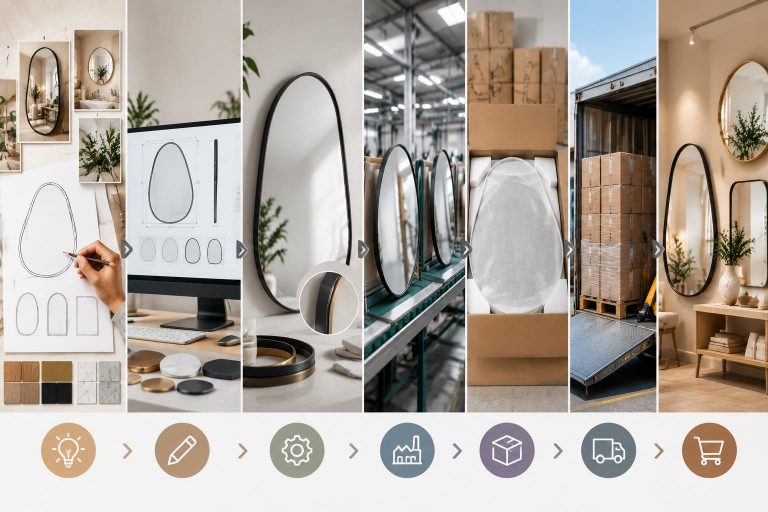
Your Roadmap: Steps to Seamless Manufacturer Teamwork
Alright, vision locked. Now, how do you turn sketches into shipped goods? It’s less “lone wolf” and more tag-team. Manufacturers shine when you feed them details, not dreams. Let’s map it out.
Step 1: Sketch It Out—Get Crystal on Your “Why”
Grab a notebook. Jot the must-haves: “Full-length for outfit checks, wavy top for whimsy, 165cm tall to match door height.” Share mood boards—Pinterest pins of sun-dappled vanities or sleek hotel lobbies. This weeds out mismatches early. One designer I know skipped this and ended up with a mirror too “cottage-core” for her client’s sleek pad. Lesson? Align upfront.
Step 2: Dial in the Specs—Dimensions, Materials, the Works
Time for the nitty-gritty. Email diagrams: “80cm wide, 165cm high, 3mm silver glass, engineered pine frame in walnut finish.” Throw in tolerances—±2cm wiggle room keeps costs sane. For finishes, specify sheen levels (matte vs. semi-gloss) and edge treatments like beveled for that luxe bevel.
Pro move: Use a shared doc for revisions. Track changes like “Bump width to 85cm for better reflection arc.” It cuts email ping-pong by half.
Step 3: Prototype and Tweak—No Shame in Round Two
Samples are gold. Pay the fee (usually $50-200, refunded on bulk), then live with it. Hang that proto wood floor mirror in situ—does the wave catch the light right? Too yellow under LEDs? Note it. Iterations here save headaches later; most pros budget two rounds.
Real talk from a retailer buddy: Her first wavy mirror run had uneven distressing. One call to the maker fixed it—now it’s a bestseller.
Step 4: Seal the Deal—From MOQ to Delivery
Minimum order? Often 200-500 units, but samples bridge the gap. Lock in lead times (4-8 weeks typical) and shipping deets. Final sign-off? Double-check against your original sketch. Boom—custom decorative mirrors en route.
Lessons from the Trenches: Stories and Smarts for Smooth Sailing
I’ve seen it all in this game. A boutique hotel chain once botched a batch by skimping on glass thickness—warped under heat. Fix? Upgrade to 5mm, add anti-scratch coating. Cost up 15%, but returns? Zilch.
Success side: That same chain looped in their maker early for a 160cm arched floor mirror. Custom gold wash on oak? Guests raved, bookings spiked 12% post-renov. Bullet these takeaways:
- Budget Buffer: Tack on 20% for tweaks. Frames eat costs—wood sourcing varies seasonally.
- Commune Constantly: Weekly check-ins beat monthly surprises. Tools like Slack keep it casual.
- Sustainability Check: FSC-certified woods? Not just greenwashing—clients notice, loyalty sticks.
- Scale Smart: Start small, test markets. One viral Insta post, and you’re reordering triple.
These nuggets? Pulled from years of floor mirror flips and finish fiascos. Apply ’em, and your collab hums.
Teaming Up with the Right Maker: A Nod to Qingdao Yinlongfei

When you’re ready to roll, picking a partner who gets the grind matters. Enter Qingdao Yinlongfei Handicraft Co. Ltd.—a crew that’s been crafting home decor standouts since the early ’90s, zeroing in on mirrors and wood wonders since their 2003 reboot. From their 10,000-square-meter setup in Qingdao, they churn out everything from scalloped floor mirrors to sleek frames, all with an eye on quality that snags nods from big-box giants.
What sets them apart? A squad of R&D pros with two decades under their belts, turning your napkin doodle into a prototype fast. They’re all about OEM tweaks—custom sizes like that 80cm x 165cm wavy number, finishes from raw pine to gilded edges—and they’ve got the certs (ISO, BSCI, FSC) to prove they’re playing clean. Ship to 40+ countries? Check. English-speaking team for easy back-and-forth? You bet. If custom decorative mirrors are your jam, they’re the steady hand that turns ideas into heirlooms.
Wrapping It Up: Your Custom Mirror Awaits
There you have it—your playbook for turning “what if” into “wow.” Custom dimensions keep things practical, finishes add the flair, and solid collab seals the magic. Whether it’s a wood floor mirror waving hello in the hall or a sleek leaner in the lounge, the right partner makes it painless. Dip a toe in, sketch that vision, and watch your space transform. You’ve got this.
Frequently Asked Questions
How can custom dimensions in a decorative mirror change the feel of a small living room?
Short answer: They make it feel twice as big. A tailored wood floor mirror, say 120cm wide instead of a bulky 150cm, hugs the wall without crowding. Bounce light from a lamp or window, and suddenly that corner nook opens up—perfect for late-night reads without the squeeze.
What’s the best finish for a wood floor mirror in a modern farmhouse setup?
Go for a natural oak with light distressing. It nods to rustic roots but keeps lines clean—no fuss, all warmth. Matches shiplap walls like a glove, and that subtle grain? It hides smudges from daily chaos way better than glossy stuff.
How long does it typically take to collaborate on custom finishes for decorative mirrors?
Figure 4-6 weeks from sketch to sample. Share your vibe early—gold accents or matte black?—and iterate once or twice. Rush jobs? Possible, but build in buffer for those “aha” tweaks that make it yours.
Can I customize the size of a wavy wood floor mirror for an entryway?
Absolutely. Start with a base like 80cm x 165cm, then tweak height for your ceiling or width for door clearance. Makers handle the curves seamlessly, ensuring it leans steady and reflects that welcome-home glow just right.
Why choose a manufacturer experienced in wood floor mirrors for my project?
Experience means fewer headaches. They know how to balance weight for stability, source durable engineered woods, and match finishes to your palette. End result? A piece that lasts, looks sharp, and fits your flow—no compromises.