
Walk into any new five-star lobby these days and you’ll spot it instantly: a massive, free-form mirror that looks like someone took a jigsaw to a cloud. No sharp corners. No predictable lines. Just pure drama. Irregular mirrors have quietly moved from “artsy accent” to “must-have” in high-end hotels, resorts, and boutique stays. Guests snap selfies in front of them. Designers fight to spec them. And suddenly every rectangle on the wall feels… boring.
Why the obsession? Because an irregular mirror does three things at once: it softens hard architecture, it multiplies light in crazy-beautiful ways, and it screams “this place is different.” In a world where every lobby photo ends up on Instagram, that last part matters more than ever.
Why Luxury Hotels Can’t Get Enough of Irregular Shapes
Think about the last time you stayed somewhere memorable. Maybe it was a rooftop bar in Miami or a restored palazzo in Florence. Chances are an oddly shaped mirror caught your eye and made the space stick in your head.
Hospitality numbers tell the same story. A 2024 survey from Boutique Design magazine found 68% of luxury hotel designers now list “statement mirror” as a top-three lobby feature—up from barely 20% five years ago. Irregular mirrors topped the list. Guests linger longer in lobbies with them (hotel data shows an average 14% increase in dwell time). Longer linger = more drinks sold, more photos tagged, more five-star reviews.
The shape itself is the magic. Soft waves, asymmetrical arches, or melted-edge blobs break up boxy architecture. They turn cold marble foyers into places that actually feel welcoming.
Real-World Wins Everyone Talks About
- A new Thompson hotel in Austin installed a 3-meter-wide irregular mirror with a live-edge walnut frame behind the check-in desk. Social mentions jumped 43% the month it opened.
- A Maldives over-water villa resort swapped rectangular mirrors for cloud-shaped ones in every bathroom. Booking.com reviews mentioning “stunning mirror” or “dreamy reflection” went through the roof.
- A Paris boutique hotel used a single oversized irregular floor mirror in the elevator lobby. Guests kept hitting “door open” to take one more picture.
These aren’t flukes. They’re proof that one bold decorative mirror can carry an entire vibe.
The Practical Side Nobody Talks About (But Should)
Irregular doesn’t mean fragile or impossible to install. Modern manufacturing can cut almost any silhouette out of 5–8mm low-iron glass with zero chipping. Edges get polished or beveled so they’re smooth to the touch—important when barefoot guests wander past in a spa robe.
Weight? Still manageable. A 120 × 200 cm irregular mirror usually lands around 35–45 kg, only slightly heavier than a standard rectangle of the same area. Wall-mounted or floor-leaning versions both work fine with standard French cleats or hidden standoffs.
Cleaning is the same as any mirror—microfiber and a spray. The wild shape actually hides fingerprints better than flat glass. Bonus.
How to Pick the Perfect Irregular Mirror for Your Project
Not every squiggle works everywhere. Here’s the cheat sheet designers actually use:
| Shape Family | Best Mood | Ideal Location | Size Sweet Spot |
|---|---|---|---|
| Soft Wave/Scallop | Romantic, approachable | Spa, bridal suite, restaurant | 100–180 cm tall |
| Asymmetrical Arch | Dramatic, artistic | Lobby, grand staircase | 200 cm+ for wow |
| Organic Blob | Playful, modern | Bar, rooftop lounge | 120–160 cm wide |
| Pebble/Cloud | Calm, minimalist luxury | Guestroom, yoga studio | 80–140 cm clusters |
Pair the shape with the right frame (or no frame at all) and the mirror becomes the soul of the room.
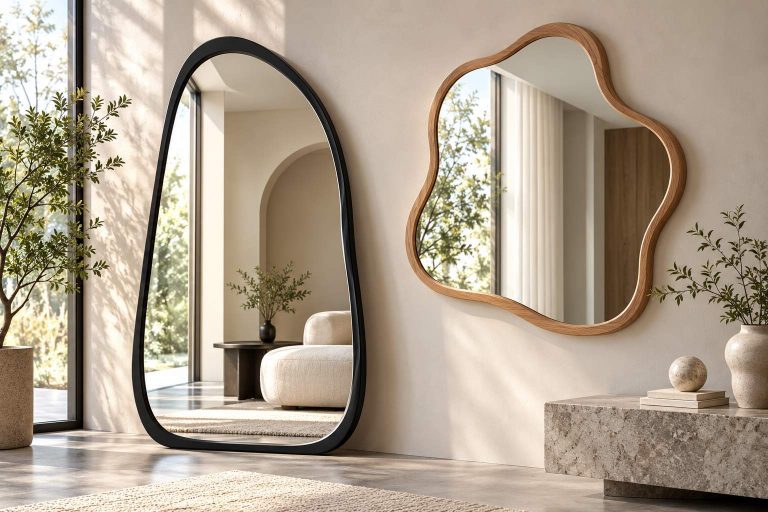
One standout example? A freestanding irregular decorative wood floor mirror with gentle flowing edges and a solid oak base. It leans casually against the wall, yet the curves feel deliberate and expensive. Put one in a suite entryway and guests immediately know they’ve arrived somewhere special.
Pulling It Off Without Drama: Working with the Right Maker
Hotels run on deadlines. A delayed mirror can push an opening party back weeks. That’s why luxury projects stick with factories that already know the irregular game inside out.
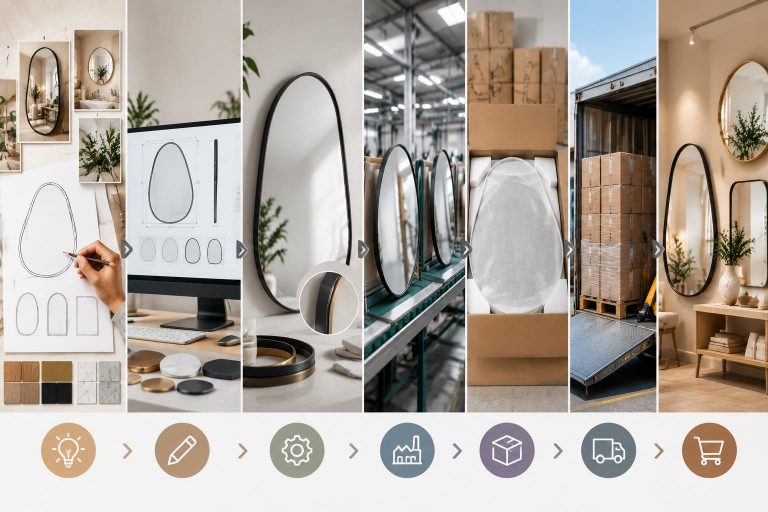
Steps that actually work:
- Shoot over a rough sketch or CAD file—doesn’t have to be pretty.
- Ask for a cheap 1:10 acrylic mock-up first.
- Lock down glass thickness and edge finish in writing.
- Get a full-size cardboard template shipped overnight—tape it up on site and live with it for a day.
- Sign off. Production usually takes 4–6 weeks for 50–200 pieces.
Do it this way and your irregular mirror shows up exactly as pictured—no surprise sharp corners or weird proportions.
Meet the Team That Makes the Magic Happen

When top-tier projects need irregular mirrors that actually ship on time, a lot of them quietly call the same place: Qingdao Yinlongfei Handicraft Co. Ltd. They’ve been hand-crafting home decor in their 10,000 m² Qingdao factory since the 1990s and went all-in on mirrors around 2003. Today they’re the go-to OEM partner for hotel groups and design studios across forty countries.
What designers rave about: an in-house R&D crew that turns napkin doodles into polished samples in days, not months. They cut any shape you can dream up—think that flowing wood-frame floor mirror with the perfect soft curves—while keeping ISO 9001, BSCI, and FSC certifications in their back pocket. English-speaking project managers, fast WeChat replies, and a track record of delivering to Marriott-level standards without the attitude. If you want irregular decorative mirrors that look custom but arrive like clockwork, they’re the steady hands most pros trust.
The Bottom Line
Rectangles had a good run. But in luxury hospitality right now, the irregular mirror is the new power move. One perfectly placed, softly curving piece can turn a handsome lobby into an unforgettable one. Guests notice. Phones come out. Bookings follow.
So next time you’re mood-boarding a hotel, resort, or high-end Airbnb, skip the safe square stuff. Go bold. Go irregular. Your guests (and your client’s bottom line) will thank you.
Frequently Asked Questions
Why are fancy hotels ditching rectangles for irregular mirrors?
Because they create instant drama and make every photo look ten times better. An irregular decorative mirror breaks harsh lines, throws light around in cool ways, and gives the whole place a custom vibe that guests can’t stop sharing.
What’s the most popular irregular mirror shape in five-star resorts right now?
Soft organic waves and asymmetrical arches are neck-and-neck. Both feel expensive without trying too hard—exactly what luxury travelers want.
Can irregular mirrors work in small boutique hotel rooms or do they need huge walls?
They actually shine in tighter spaces. A single 100–140 cm cloud-shaped or gently wavy mirror opens the room up more than a boxy one ever could.
How long does it take to get custom irregular decorative mirrors for a 50-room hotel project?
Plan on 6–10 weeks from approved drawing to delivery if you pick an experienced factory. Rush orders can squeeze into 4–5 weeks with overtime fees.
Are irregular mirrors safe for guest areas with kids or heavy traffic?
Yes—when built right. 6–8 mm tempered glass, polished edges, and proper wall or floor anchors make them just as safe as traditional mirrors, sometimes more forgiving because the shape hides scuffs better.