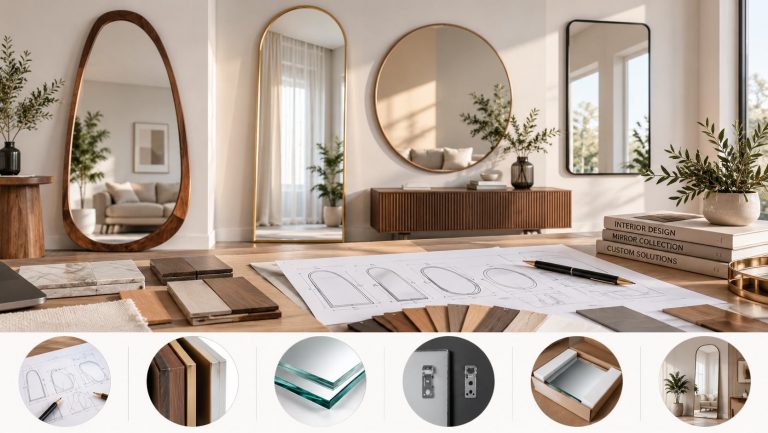
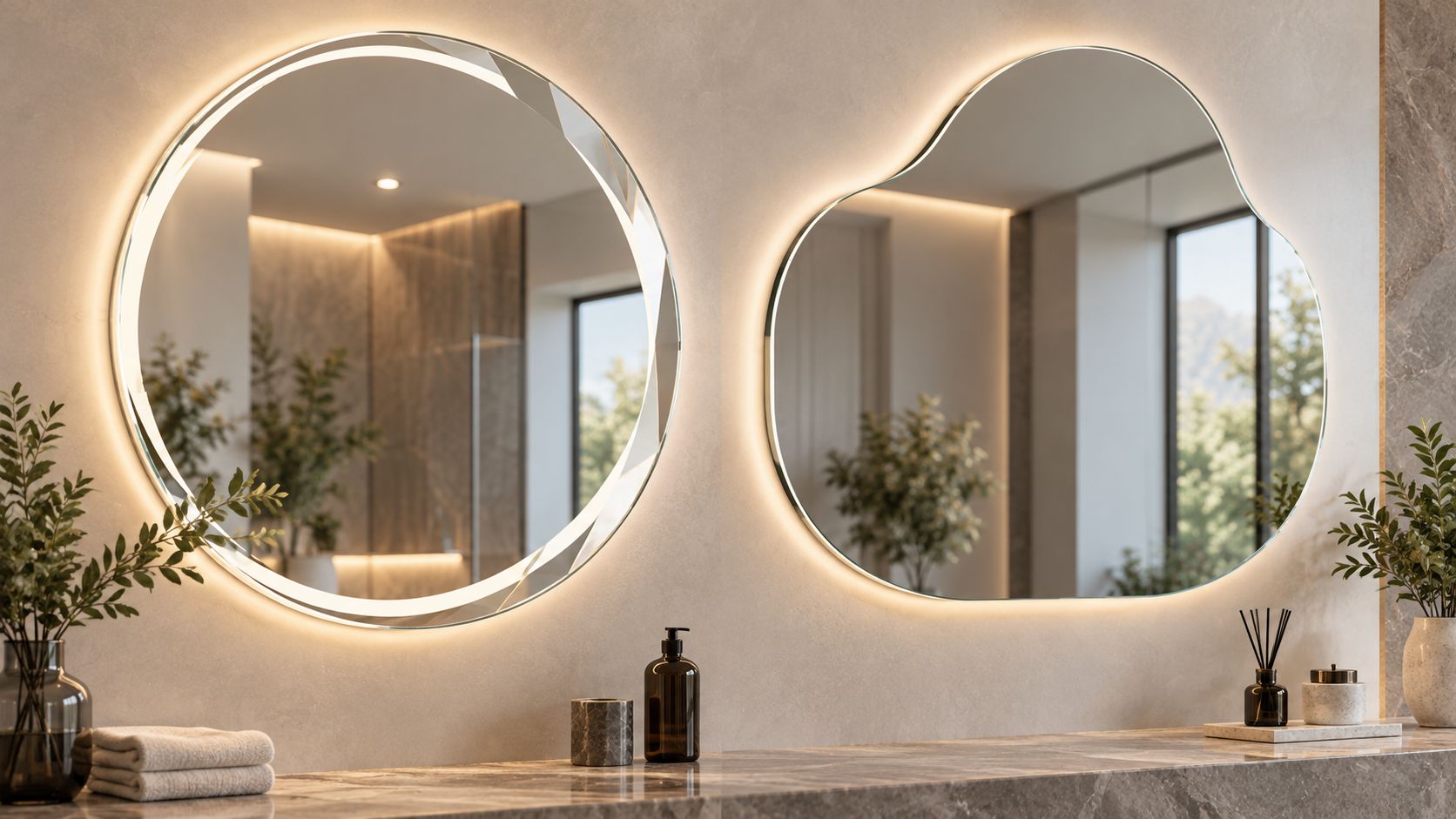
Mirror edge treatment is easy to overlook when buyers focus on shape, frame, and glass type, yet it changes the finished appearance and manufacturing requirements. A beveled edge creates a visible decorative border by cutting the glass surface at an angle, while a flat-polished edge keeps the perimeter visually simpler. For framed mirrors, some of that edge may be hidden; for frameless or partially exposed designs, it becomes part of the product’s visual identity. B2B buyers should therefore decide whether the edge is a design feature, a construction detail, or both before sampling.
What Is the Practical Difference Between Beveled and Flat-Polished Mirror Edges?
The difference is not simply “decorative versus basic.” Each treatment changes how the glass looks at the perimeter and how much attention that perimeter receives in the finished product.
Beveling Turns the Glass Edge Into a Visible Design Element
A beveled mirror has an angled border that catches light differently from the main surface. The bevel width and consistency affect the finished appearance, especially when the glass edge remains visible.
On a framed design, a bevel may still be visible inside the frame opening, depending on how much glass the frame covers. The manufacturer’s mirror category gives buyers a useful overview of decorative, bathroom, wall, and full-length formats before they decide whether visible edge treatment belongs in the design.
Flat Polishing Keeps the Perimeter More Neutral
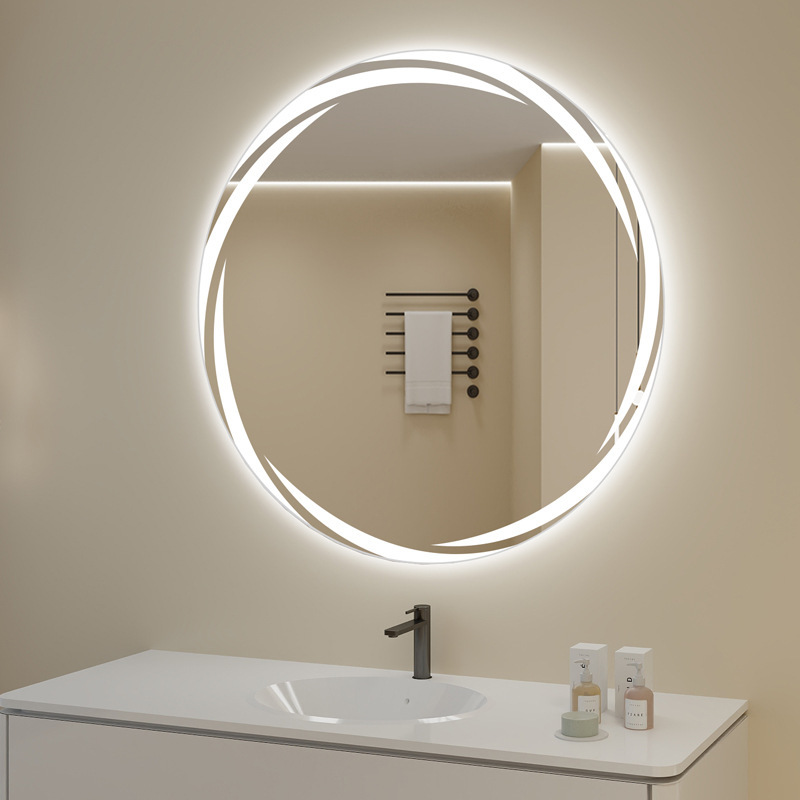
A flat-polished edge creates a smooth finished perimeter without the angled decorative band associated with beveling. It can suit minimalist designs or constructions where the frame already carries most of the visual character.
If the glass edge will be visible, the expected finish and exposed area should still appear in the approved sample or drawing.
When Does a Beveled Edge Add Real Value to a Mirror Design?
Beveling makes the most sense when the border contributes to the intended look.
The Bevel Needs to Work With Shape and Frame Proportion
A narrow bevel on a large decorative mirror can read differently from a wider bevel on a smaller vanity mirror. Curves, arches, irregular shapes, and corners also change how the border is perceived.
The buyer should judge the bevel on the actual mirror dimensions rather than approve it from a small glass sample. A production-intent sample shows whether the border feels balanced against the frame and overall size. Buyers can review the company’s wall decor mirror range before finalizing an exposed-edge specification.
Decorative Value Should Match the Target Market
A hotel, furniture brand, or home-decor retailer may use beveled glass to support a more decorative position.
The decision should follow the intended customer and product style.
What Should Buyers Specify About a Beveled Edge Before Sampling?
Simply writing “beveled mirror” leaves too much open to interpretation. The finished border needs enough definition that the supplier can build the same look the buyer expects.
Bevel Width and Visible Coverage Need a Reference
The buyer should define the intended bevel width or approve it on a controlled sample. If the glass sits inside a frame, the drawing should show how much of the beveled area remains visible after assembly.
A frame lip can cover part of the bevel, so the assembled sample matters. On curved or irregular mirrors, the bevel should also follow the perimeter consistently rather than vary visibly around tighter sections.
Glass Thickness Should Be Reviewed at the Same Time
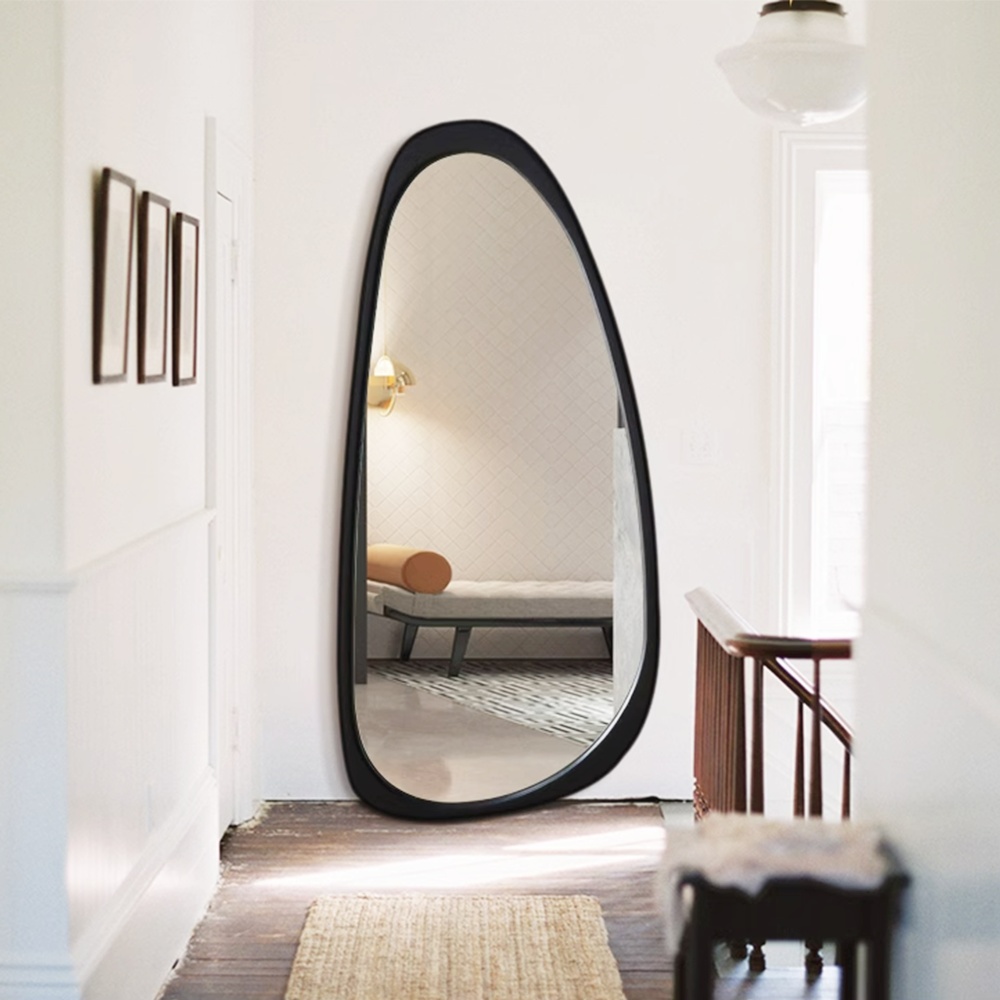
Glass thickness and edge treatment are related manufacturing decisions. Buyers should avoid changing one after approval without checking how the finished perimeter looks and fits the frame.
If the order includes several sizes, the supplier should confirm whether the same treatment will be used across all versions.
When Is a Flat-Polished Edge the Better Commercial Choice?
Flat polishing can be more appropriate when the product needs a restrained look, when the edge is mostly hidden by a frame, or when the buyer wants the frame rather than the glass perimeter to carry the design.
Framed Mirrors May Not Benefit From a Decorative Bevel
If the frame covers most of the edge, a decorative treatment that customers barely see may add complexity without adding meaningful value.
Buyers should look at the assembled product rather than the material list. The question is not whether beveling sounds more premium, but whether the finished design visibly benefits from it. A clean polished edge may better suit a contemporary design where a decorative border would compete with the frame profile.
Channel and Price Position Can Change the Decision
A private-label retailer may reserve beveled glass for a more decorative range while using flat-polished edges in a broader-volume collection.
The company’s products page can help buyers compare different mirror constructions.
What Should Inspectors Check on Mirror Edges Before Shipment?
Once the edge treatment is approved, inspection should focus on whether production matches the agreed appearance and whether processing stays consistent across the batch.
Bevel Consistency Is Easier to See Across Multiple Units
Inspectors should compare the visible border around the mirror, especially at corners, curves, and transitions. The width should look consistent with the approved sample, and the surface should not show obvious chips or processing defects.
For framed mirrors, inspection should also confirm that the frame covers the edge as intended. If assembly shifts the glass position, a balanced border can appear uneven.
Flat-Polished Edges Still Need a Defined Standard
Where the perimeter remains exposed, it should be smooth, visually consistent, and free from obvious damage that affects appearance or handling.
The approved sample, drawing, and inspection standard should describe the same construction. If a supplier proposes changing edge treatment on a repeat order, the change should be reviewed before production.
Professional Technical Support
For custom mirror development, Qingdao Yinlongfei Handicraft Co., Ltd. can discuss glass processing, dimensions, shapes, frames, finishes, and other OEM or ODM requirements during sampling. Buyers who want a product-level reference for decorative glass processing can review the European Vintage Large Baroque Hanging Mirror page while preparing their own specification. The final order should still define the exact edge treatment, visible coverage, glass thickness, and approved appearance required for that design.
Conclusion
Beveled and flat-polished edges serve different design and commercial purposes, so neither should be treated as a default “better” option. A bevel can add visible detail when the glass perimeter is part of the design, while flat polishing can suit cleaner products or mirrors where the frame dominates. Buyers reduce ambiguity by deciding edge treatment together with glass thickness, shape, frame coverage, and target positioning, then approving those details on a representative sample. This makes inspection clearer and helps repeat orders stay close to the original design.
FAQs
1. Is a Beveled Mirror Edge More Expensive Than a Flat-Polished Edge?
It can involve additional processing, but the commercial difference depends on mirror size, shape, glass specification, bevel width, quantity, and the supplier’s process.
2. Does Every Frameless Mirror Need a Beveled Edge?
No. Frameless mirrors can use different edge treatments. The choice should follow the intended appearance, exposed perimeter, application, and approved product specification.
3. Should Buyers Specify Bevel Width on the Drawing?
Yes, when the bevel is an important visible feature. The drawing or approved sample should make the intended border clear enough for production and inspection.
4. Can the Same Bevel Be Used Across Several Mirror Sizes?
Possibly, but buyers should review how the border looks at each scale. A bevel proportion that suits a small mirror may not create the same balance on a larger design.
5. What Should Inspectors Check on Beveled Mirror Glass?
Inspectors should compare bevel width and consistency, corners or curves, visible chips, glass position inside the frame, and overall appearance against the approved sample.